Background and Rationale
Airport infrastructure and capacity are critical to AOT’s business operations, serving as the foundation for revenue generation and long-term sustainable growth. In particular, the development of airports to accommodate future expansion in the aviation industry—including passenger traffic, cargo, and service operations—is essential. Appropriate infrastructure development enhances operational efficiency, reduces costs, and strengthens AOT’s competitive advantage. Furthermore, it increases the company’s potential to generate revenue from both aeronautical and non-aeronautical activities.
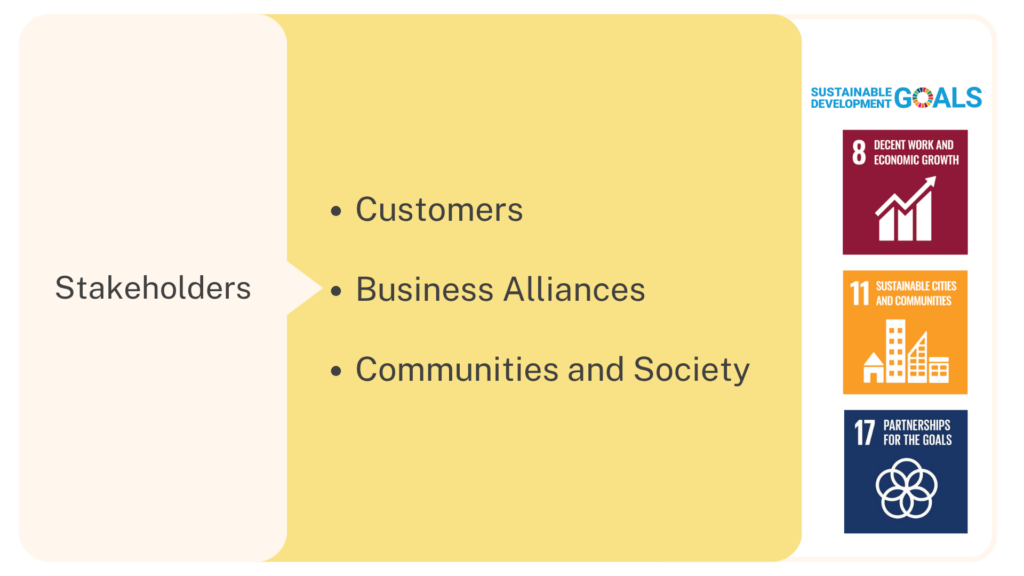
AOT emphasizes managing airport capacity by developing infrastructure and airport facilities, with a focus on leveraging digital technologies to meet the evolving needs of passengers, airlines, and service users efficiently. These efforts have a direct impact on customers and operational partners, and an indirect influence on local communities, society, and the media. Effective infrastructure management enhances the overall passenger experience and satisfaction among airlines and airport operators, thereby enabling AOT to deliver high-quality services and build trust across all stakeholder groups.
Moreover, improving service quality not only helps attract investors and create new business opportunities but also fosters collaboration between AOT and its partners. This goes hand in hand with building resilient infrastructure, which contributes to societal value creation, such as job creation. At the same time, media outlets can disseminate news related to AOT’s business activities, which are of broad public interest, thereby strengthening the organization’s image and enhancing stakeholder confidence in AOT.
Impact from Business Operations
Infrastructure and capacity are critical foundations for AOT’s sustainable revenue generation and growth. By accommodating increasing passenger volumes and developing multimodal logistics, AOT enhances operational efficiency, reduces congestion, and elevates service quality to international standards. These factors directly bolster AOT’s competitiveness, driving the organization toward becoming a global aviation hub and a world-class airport operator.
Furthermore, this development reduces operational costs, improves airport management agility, and ensures a seamless travel experience, while simultaneously driving growth in both aeronautical and non-aeronautical commercial revenues.
Challenges and Opportunities
While infrastructure expansion is a key competitive advantage, AOT faces several challenges, including physical space constraints at airports, lengthy project approval processes, and the necessity of operating under a 24/7 service environment. Conversely, these challenges present significant opportunities for AOT to innovate. By leveraging digital technology and Data-Driven Infrastructure Planning, AOT can predict passenger behavior and maximize space utilization. Furthermore, diversifying into non-aeronautical (Non-Aero) commercial activities allows the organization to generate alternative revenue streams and enhance long-term business sustainability.
Commitment and Related Policies, Regulations, and Standards
AOT's Commitment
AOT is committed to becoming a High-Performance Airport Operator, with a strategic focus on strengthening the organization and enhancing international competitiveness. Developing infrastructure and expanding capacity serve as the vital foundation for revenue generation and sustainable growth, ensuring readiness for the continuous expansion of the aviation and tourism industries.
AOT prioritizes operational efficiency and the enhancement of the passenger experience. This is achieved through the integration of digital technology and data analytics to improve agility and management quality. Furthermore, developing appropriate infrastructure not only bolsters competitiveness but also creates opportunities for expansion into Non-Aero businesses, ultimately driving long-term sustainability and building confidence among all stakeholders.
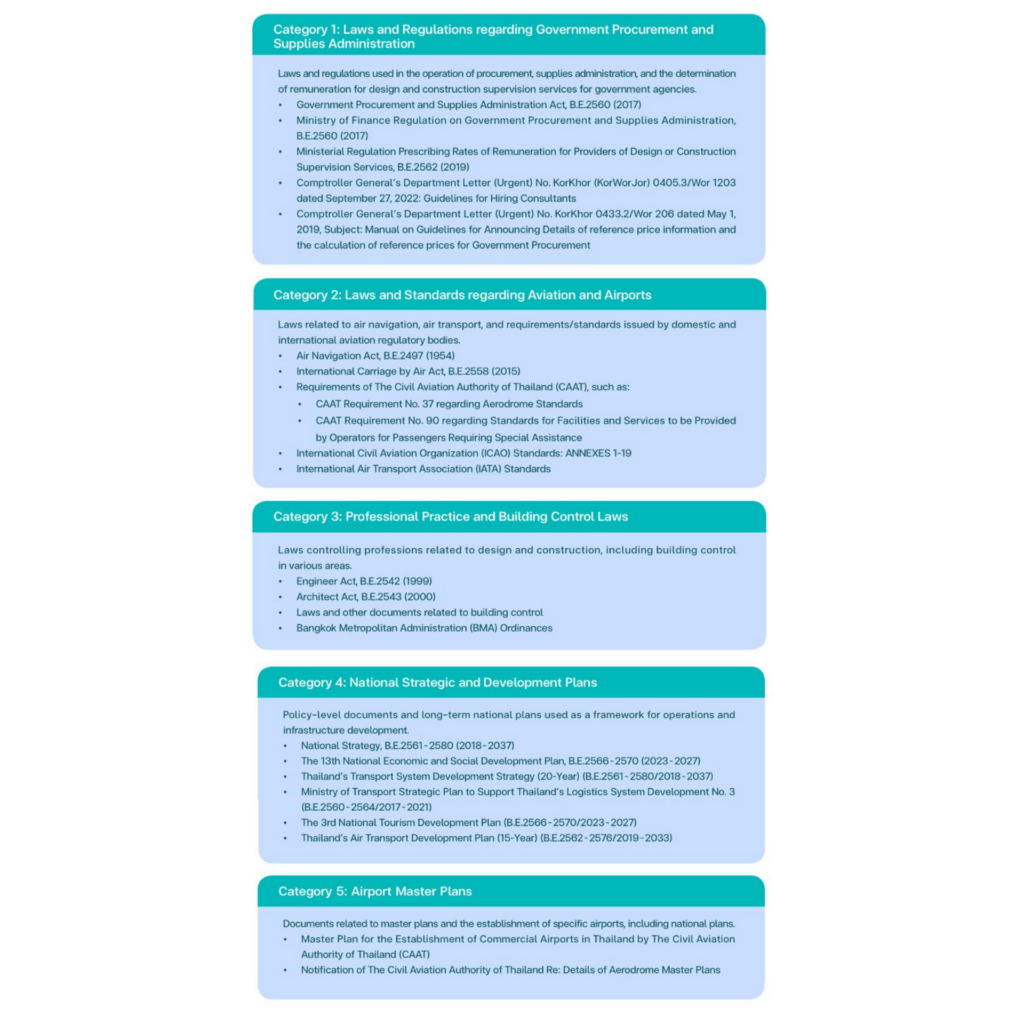
Relevant Policies, Regulations, and Standards
Strategic objective-level indicators and corresponding targets have been established to enhance airport capacity and expand business opportunities, in alignment with two strategic objectives: SO1 and SO2, as detailed below.
Goals and Performance
| Key Performance Indicators (KPIs) | Performance | Annual Targets | |||
|---|---|---|---|---|---|
| 2025 | 2025 | 2026 | 2027 | ||
| SO1: Strengthen Airport Capacity and Competitiveness to support passenger growth and air cargo expansion, ensuring compliance with airport safety and security standards. | |||||
| 1. Total passenger handling capacity (Million passengers/year) | 116 | 116 | 116 | 116 | |
| 2. Air cargo handling capacity at Suvarnabhumi Airport (BKK) (Million tons/year) | 1.7 | 1.7 | 1.7 | 1.7 | |
| SO2: Maximize Financial Return through Business Development by increasing passenger volume via marketing activities, strategic partnerships to expand flight routes and frequency, and developing non-aero businesses. | |||||
| 1. Total number of passengers (Million passengers/year) | 125.98 | 130 | 140 | 150 | |
| 2. Total number of flights (Flights/year) | 755,429 | 806,569 | 856,679 | 905,761 | |
| 3. Air cargo volume at Suvarnabhumi Airport (BKK) (Million tons/year) | 1.48 | >1.40 | >1.50 | >1.60 | |
| 4. Cargo terminal utilization rate at Suvarnabhumi Airport (BKK) (%) | 78 | 82 | 88 | 95 | |
| 5. Non-aeronautical revenue as a percentage of total operating revenue (%) | 54 | 55 | 55 | 55 | |
Management Approach
AOT operates in accordance with its strategic plans and relevant operational guidelines to expand airport capacity and drive business development. Our goal is to ensure continuous, multi-dimensional sustainable development that comprehensively addresses the needs of all stakeholders. By enhancing both internal and external capabilities, we strive to become a “World-Class Airport” as outlined in our corporate vision:
“AOT operates and manages world-class airports by focusing on quality of service and safety while maintaining balanced revenue growth.”
This is executed under our core mission to “operate and promote airport businesses, including related or continuous activities, with a steadfast commitment to sustainable development.”
Practices/Operations
AOT’s operational guidelines for infrastructure and airport capacity analysis begin with a comprehensive forecast of passenger volume and flight movements. This process takes into account various factors, including economic conditions, tourism trends, and airline fleet expansion plans.
These forecasts are then integrated with airport-specific data—such as aircraft types, flight schedules, and Level of Service (LoS) requirements—to calculate the capacity of runways, taxiways, aprons, and passenger terminals. These calculations are conducted in accordance with the standards and regulations of the International Civil Aviation Organization (ICAO), as well as the Airport Development Reference Manual (ADRM) by the International Air Transport Association (IATA). This ensures that AOT’s infrastructure is equipped to support growth efficiently and sustainably.
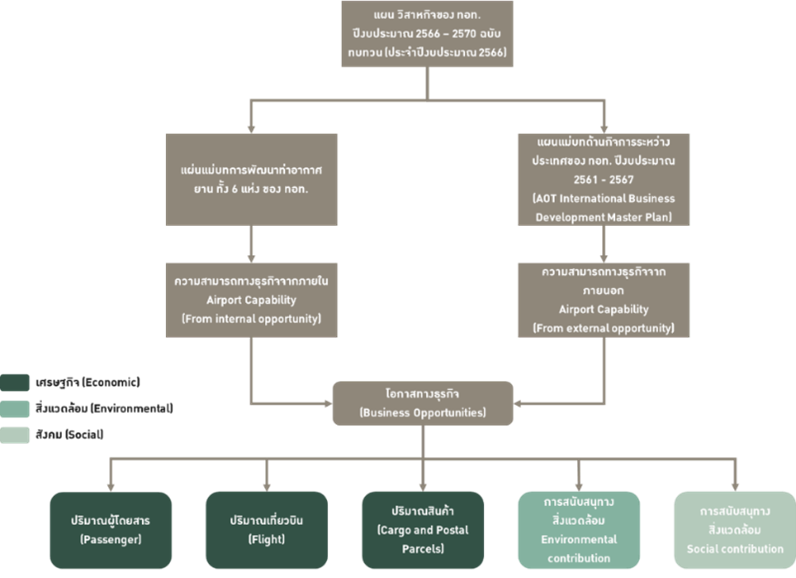
To achieve this goal, AOT has implemented three core plans:
- AOT Corporate Plan (Fiscal Years 2023–2027, revised edition for FY2024)
- Airport Development Master Plans for all six airports under AOT’s responsibility, to increase capacity in response to growing air traffic demand
- AOT International Business Development Master Plan (FY2018–2024), aimed at enhancing AOT’s business capabilities through international cooperation and trade association engagement aligned with AOT’s strategic direction
AOT Corporate Plan for Fiscal Years 2023–2027 (Revised Edition for FY2024)
AOT has formulated its operational plans under the AOT Corporate Plan for Fiscal Years 2023–2027 (Revised Edition for FY2024) – SMILE, which serves as a strategic framework for achieving sustainable growth and enhancing service excellence across all airports under its responsibility.
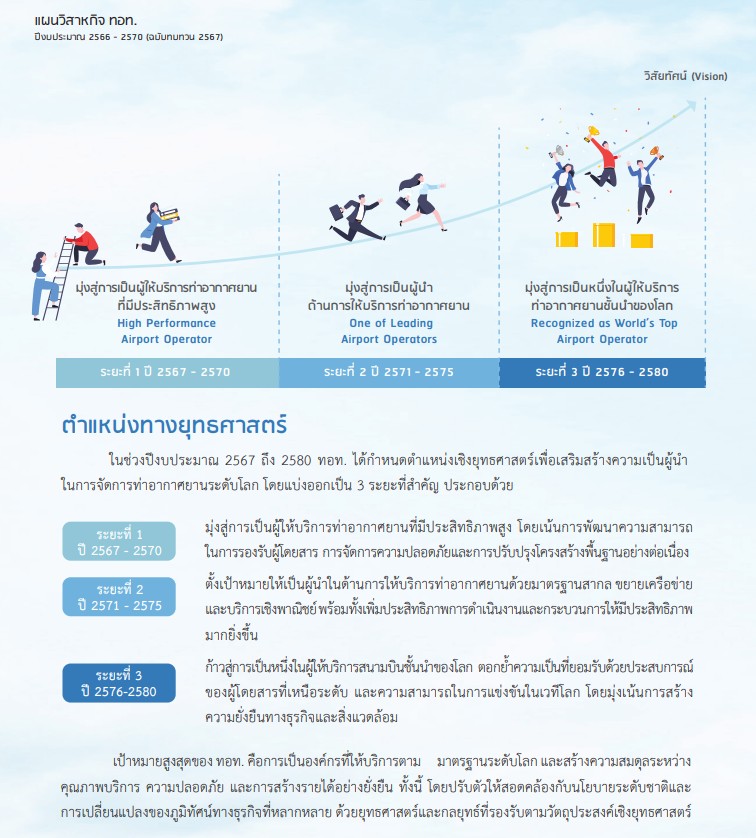
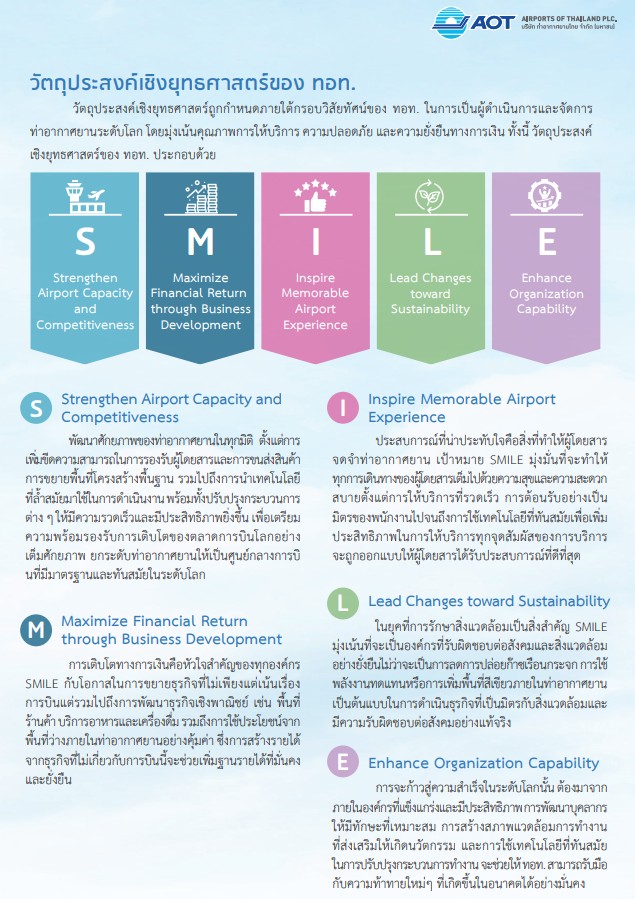
To support the organization’s strategic direction, AOT has established strategic-level key performance indicators (KPIs) as outlined below.

| Key Performance Indicators (KPIs) | Actual Performance 2025 | Target | ||
|---|---|---|---|---|
| 2025 | 2026 | 2027 | ||
| Strategy 1: Expand passenger handling capacity under airport safety and security standards | ||||
| Strategic Objective 1.1: Develop airport infrastructure under safety and security standards | ||||
| 1. Passenger handling capacity by airport (Million passengers/year) | ||||
| Suvarnabhumi Airport (BKK) | 65 | 60 | 60 | 60 |
| Don Mueang International Airport (DMK) | 30 | 30 | 30 | 30 |
| Phuket International Airport (HKT) | 12.5 | 12.5 | 12.5 | 12.5 |
| Chiang Mai International Airport (CNX) | 8 | 8 | 8 | 8 |
| Hat Yai International Airport (HDY) | 2.5 | 2.5 | 2.5 | 2.5 |
| Mae Fah Luang - Chiang Rai International Airport (CEI) | 3 | 3 | 3 | 3 |
| 2. Achievement level of airport development plan implementation (%) | ||||
| Suvarnabhumi Airport (BKK) | 100 | 100 | 100 | 100 |
| Don Mueang International Airport (DMK) | 100 | 100 | 100 | 100 |
| Chiang Mai International Airport (CNX) | 100 | 100 | 100 | 100 |
| Strategic Objective 1.2: Enhance airport infrastructure utilization efficiency | ||||
| 1. Runway accidents (Zero Accident) (Times) | 0 | 0 | 0 | 0 |
| 2. Percentile of passenger volume per hour served within design capacity at BKK and DMK | 95th Percentile (per year) | 95th Percentile (per year) | 95th Percentile (per year) | 95th Percentile (per year) |
| 3. Minimum Connecting Time (MCT) at BKK (Minutes) | 75 | 75 | 75 | 75 |
| Strategy 2: Develop cargo and air transport handling capacity | ||||
| Strategic Objective 2.1: Develop infrastructure related to air cargo transport activities | ||||
| 1. Achievement level of air cargo capacity expansion plan at BKK (%) | No Plan | 100 | 100 | 100 |
| Strategy 3: Develop aeronautical business operations | ||||
| Strategic Objective 3.1: Develop proactive flight route marketing strategies | ||||
| 1. Total passenger volume by airport (Million passengers/year) | ||||
| BKK | 60.00 | 64.44 | 69.11 | 73.68 |
| DMK | 29.15 | 33.33 | 36.03 | 38.68 |
| HKT | 16.39 | 16.00 | 17.39 | 18.76 |
| CNX | 8.82 | 10.01 | 10.76 | 11.50 |
| HDY | 3.03 | 3.69 | 3.93 | 4.15 |
| CEI | 1.90 | 2.49 | 2.73 | 2.95 |
| 2. Total flight movements by airport (Flights/year) | ||||
| BKK | 346,678 | 376,818 | 397,323 | 417,407 |
| DMK | 197,520 | 223,725 | 238,847 | 253,658 |
| HKT | 98,711 | 97,692 | 104,845 | 111,851 |
| CNX | 57,783 | 69,210 | 73,821 | 78,337 |
| HDY | 19,731 | 23,819 | 25,120 | 26,394 |
| CEI | 12,263 | 15,305 | 16,724 | 18,114 |
| Strategy 5: Develop service quality and processes to enhance efficiency and satisfaction for passengers and stakeholders | ||||
| Strategic Objective 5.1: Develop passenger satisfaction drivers and stakeholder collaboration | ||||
| 1. Percentage of passengers completing immigration processes within standard service times (%) | ||||
| 1.1 Passenger immigration/emigration processes at BKK | ||||
| • International Arrival (within 40 mins) | xx | ≥98 | ≥98 | ≥98 |
| • International Departure (within 55 mins) | xx | ≥98 | ≥98 | ≥98 |
| • Domestic Arrival (within 35 mins) | xx | ≥98 | ≥98 | ≥98 |
| • Domestic Departure (within 40 mins) | xx | ≥98 | ≥98 | ≥98 |
| 1.2 Passenger immigration/emigration processes at DMK | ||||
| • International Arrival (within 35 mins) | xx | ≥98 | ≥98 | ≥98 |
| • International Departure (within 45 mins) | xx | ≥98 | ≥98 | ≥98 |
| • Domestic Arrival (within 30 mins) | xx | ≥98 | ≥98 | ≥98 |
| • Domestic Departure (within 30 mins) | xx | ≥98 | ≥98 | ≥98 |
AOT’s Airport Infrastructure and Capacity Analysis Guidelines begin with a comprehensive forecast of passenger traffic and flight movements, taking into account economic factors, tourism trends, and airline fleet plans. Specific airport variables—such as aircraft types, flight schedules, and service levels—are then used to calculate the capacity of runways, taxiways, aprons, and passenger terminal areas. These calculations are aligned with international standards, including the IATA Airport Development Reference Manual (ADRM), ACRP Report 25, and ICAO, ensuring that AOT’s infrastructure can support growth efficiently and sustainably.
1. Systematic Demand Forecasting
- Utilizing forecasting models integrated with economic drivers to project passenger volumes and flight movements.
Scenario-based Forecasting: Given the volatility of air traffic demand, forecasts are developed across multiple scenarios, such as High, Base, and Low cases. This multi-scenario approach enables AOT to prepare infrastructure for both rapid expansion and economic slowdowns.
2. Factors for Peak-Hour and Airport Congestion Analysis
3. Runway and Apron System Capacity Analysis
4. Passenger Terminal Area Analysis based on Level of Service (LoS)
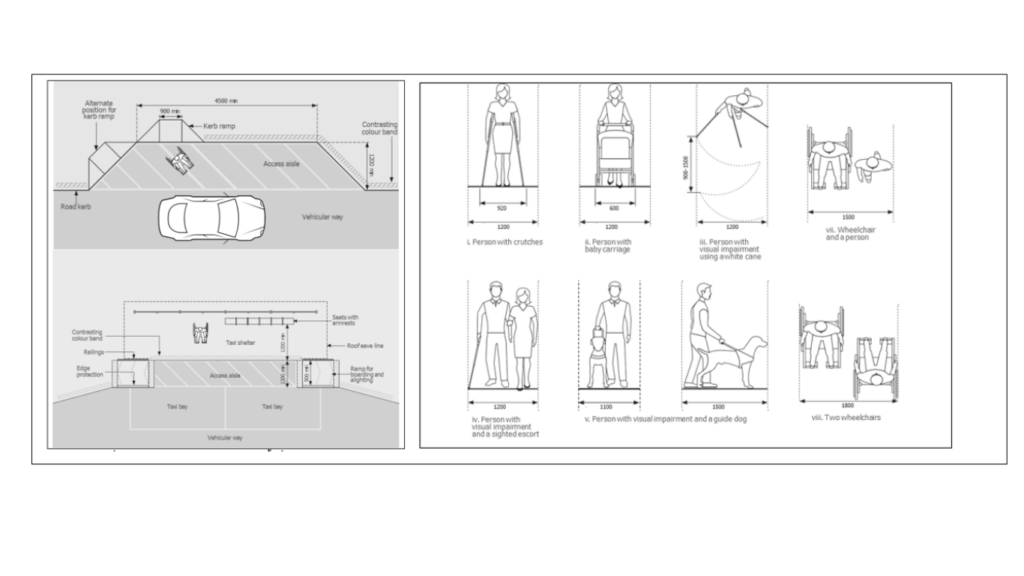
Furthermore, in developing infrastructure, AOT integrates core engineering and architectural principles with Universal Design. This ensures that the environment, products, and various systems are accessible and functional for all groups of people.
Infrastructure and Capacity
Operation Plan FY2025
Infrastructure and Capacity Development Action Plan
Regarding key initiatives, AOT has analyzed the Action Plans for Fiscal Years 2025 – 2026 in accordance with AOT’s criteria for action plan evaluation and selection. The analysis identified internal operational plans that are strategically aligned and linked with corporate indicators and targets. These have been selected as the AOT Action Plans for Fiscal Year 2025, as detailed below:
| Key Plans and Projects |
|---|
|
The integration of these two strategic components enables AOT to enhance passenger access to services while maintaining international standards in airport business management. The approach emphasizes strengthening economic, environmental, and social performance.
AOT’s business development efforts are focused on two main areas:
 |
🤝 |
|---|---|
| Internal Capabilities and Business Opportunities | External Capabilities and Business Opportunities |
| Focuses on developing infrastructure, human resources, and internal operational systems. | Emphasizes building strategic partnerships and responding to opportunities within the external environment. |
Airport Accessibility and Business Opportunity from Internal Development
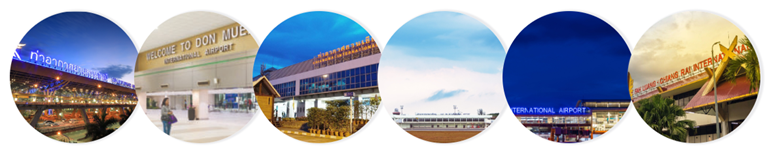
Expansion of Airport Capacity Under AOT’s Airport Development Master Plan for Optimized Passenger Service Management
AOT has developed an Airport Development Master Plan to support the strategic expansion of airport capacity, with the objective of achieving optimal efficiency in passenger service management. This master plan is aligned with Thailand’s 20-Year National Strategy and has been approved by the AOT Board of Directors, the Ministry of Transport, the Office of the National Economic and Social Development Council (NESDC), and the Cabinet.
The Airport Development Planning Department, under the Engineering and Construction Group, is responsible for overseeing the implementation of the capacity enhancement efforts across all six AOT-operated airports. The master plan is regularly monitored and reviewed to ensure alignment with changing aviation industry dynamics and the successful achievement of long-term development goals.
Currently, AOT has established long-term airport development targets under this master plan through the year 2040 (B.E. 2583), as outlined below.
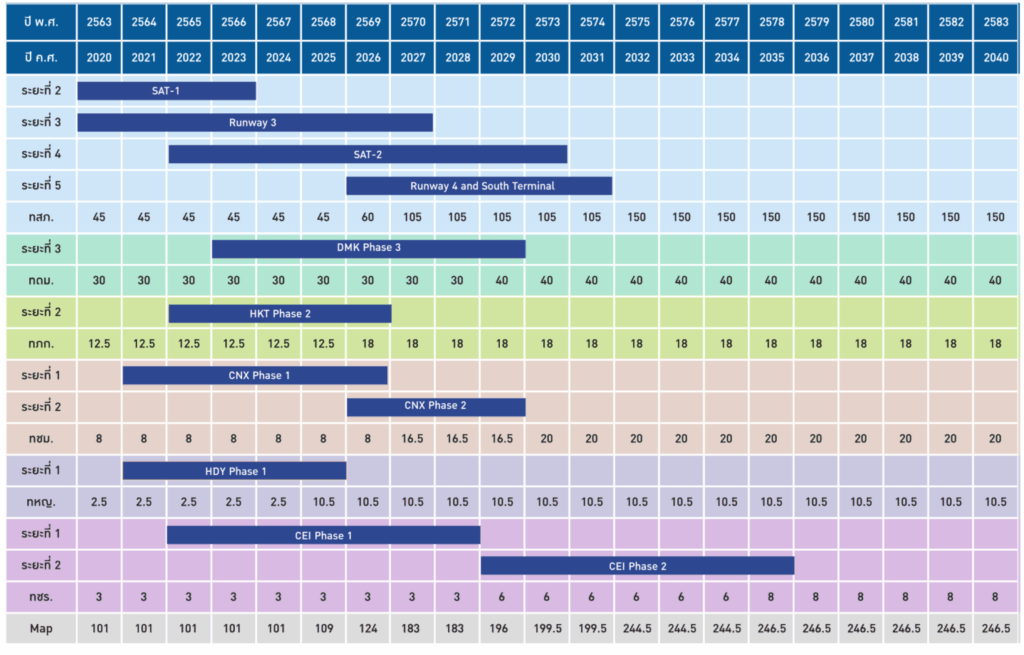
Unit: Million passengers per year
Note: The figures presented are based on future planning and may be subject to revision and adjustment as appropriate.
Sustainable Revenue

Satellite 1 Terminal Building (SAT-1)
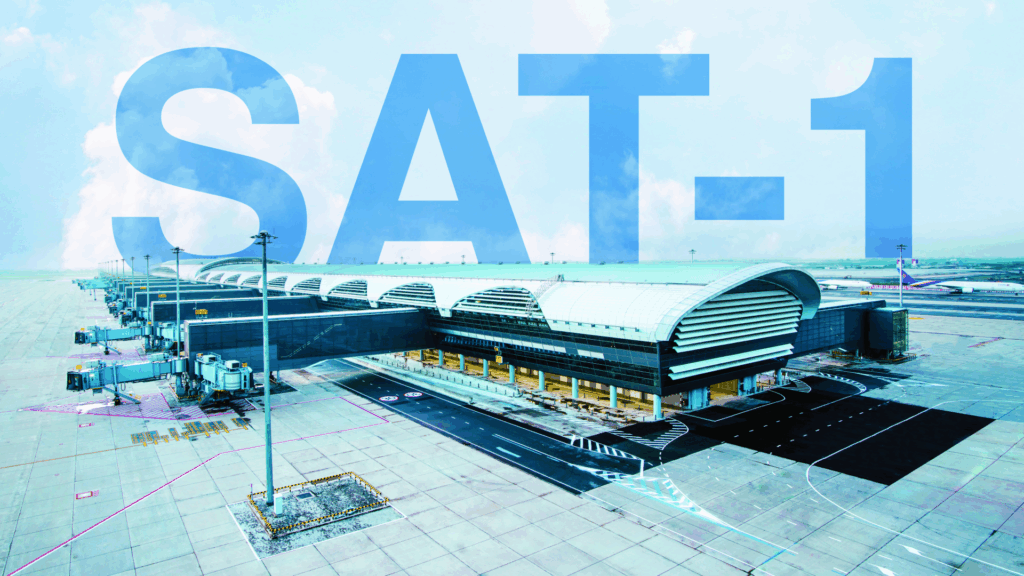
AOT has constructed Satellite 1 (SAT-1) as part of the Suvarnabhumi Airport Development Project, with an investment of approximately THB 39.76 billion. The purpose of this project is to expand the airport’s capacity to accommodate increasing numbers of international travelers and to alleviate congestion, raising Suvarnabhumi Airport’s passenger handling capacity from 45 million to 60 million passengers per year.
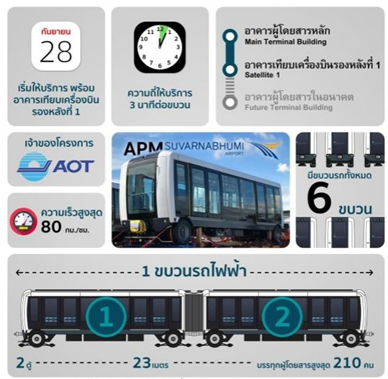
The SAT-1 terminal incorporates modern technologies to improve passenger experience, including the Automated People Mover (APM) system. AOT places strong emphasis on maintaining a high Level of Service (LOS) to ensure optimal comfort, convenience, and safety for all passengers.
SAT-1 includes 28 contact aircraft stands directly connected to the terminal. The building was designed with a strong focus on environmental sustainability, featuring sustainable architectural design, a wastewater treatment system for water reuse, natural lighting, heat-insulating materials, and solar panels to reduce energy consumption. These features align with AOT’s strategic plan to transform Suvarnabhumi Airport into a Green Airport that is environmentally responsible and energy efficient
Outstanding Activities and Key Projects in FY2025
Enhancing and Promoting the Use of Public Transportation for Convenient, Cost-Effective, and Environmentally Friendly Airport Access
| Objectives | To connect ground transportation systems with the airport. |
|---|---|
| Benefits to AOT from the Project/Activity | The development of connectivity networks between the airport, ground transportation systems, and rail mass transit helps improve the efficiency of passenger services and freight transport. Connecting with expressways, motorways, elevated tollways, and various electric train systems makes traveling to and from the airport more convenient, fast, and safe. It reduces congestion in surrounding areas and increases the capacity to accommodate passenger volume in the long term. Furthermore, it enhances the airport's competitiveness, reduces logistics costs, and promotes the economy and tourism in the surrounding areas. This creates commercial opportunities and strengthens AOT's image as a "Regional Aviation and Logistics Hub" that grows sustainably in all dimensions. |
AOT recognizes the importance of seamless ground transportation connectivity and has continuously developed airport ground access infrastructure in accordance with its Airport Development Master Plan. These efforts are carried out in collaboration with government agencies, state enterprises, and the private sector.
The initiative focuses on improving connections to city centers via various modes of public transportation, including public buses, taxis, and rail systems. Notably, Suvarnabhumi Airport and Don Mueang Airport are integrated with mass transit rail lines, offering passengers greater convenience, reduced travel costs, and lower environmental impact.
| Airport | Land Transportation | Rail Transportation |
|---|---|---|
| Suvarnabhumi Airport (BKK) |
|
|
| Don Mueang International Airport (DMK) |
|
|
| Phuket International Airport (HKT) |
|
|
| Chiang Mai International Airport (CNX) |
|
|
| Hat Yai International Airport (HDY) |
|
|
| Mae Fah Luang – Chiang Rai International Airport (CEI) |
|
|
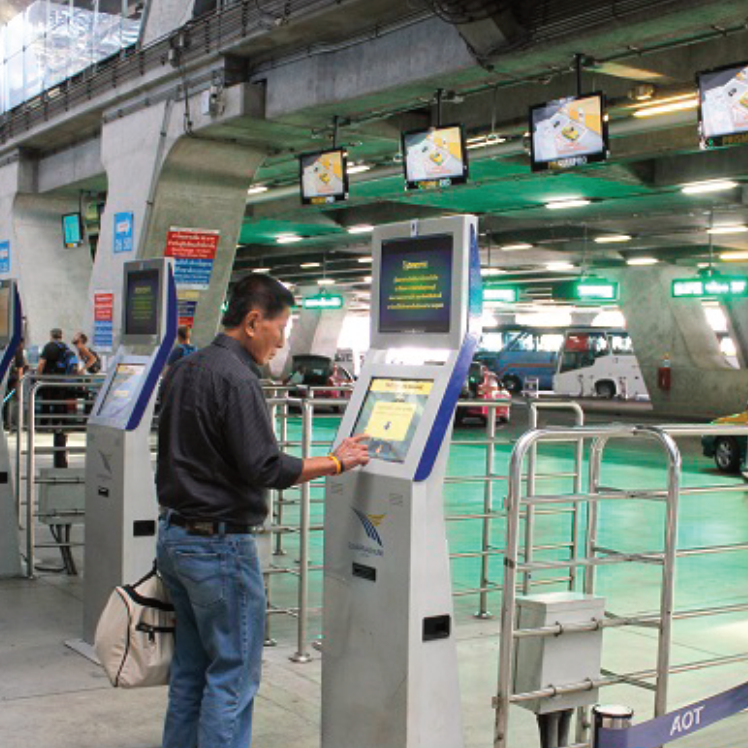
Accessible Smart Taxi Kiosks and Integrated Ground Transport Facilities at Suvarnabhumi Airport
AOT has installed automated taxi kiosks at Suvarnabhumi Airport that are accessible to persons with disabilities, supporting convenient airport access for all passengers. Facilitating seamless travel to and from the airport and enhancing integration with ground transportation systems are key factors in maximizing the efficiency and utility of national infrastructure.
To further enhance convenience, AOT has also implemented real-time intelligent display systems for public bus location tracking. These displays are installed in accessible areas and are designed to support use by persons with disabilities, contributing to a more inclusive and user-friendly travel experience at Suvarnabhumi Airport.
Freezone Smart Access Project at Suvarnabhumi Airport
AOT has implemented Face Recognition technology and License Plate Recognition (LPR) systems at Access Control (AC) points and Checking Posts (CP). Additionally, ID Card Self-Service Kiosks have been installed to facilitate the issuance of temporary 24-hour entry-exit permits for individuals and vehicles within the regulated areas of the Suvarnabhumi Airport Free Zone. These initiatives aim to monitor access within the Free Zone and enhance operational efficiency between AOT and external agencies.
The development of connectivity networks between airports and ground transportation, including mass transit rail systems, enables AOT to significantly elevate its service capacity for both passengers and cargo. Integration with expressways, elevated tolls, motorways, and electric rail systems—such as the Airport Rail Link, the SRT Red Line, and various regional rail networks—ensures that travel to and from airports is more convenient, rapid, and secure. This directly boosts capacity to handle increasing passenger and cargo volumes while reducing congestion and travel time in surrounding areas.
Furthermore, these projects support AOT’s corporate strategic goals to “Strengthen Airport Capacity and Competitiveness.” By reducing logistics costs and enhancing the connectivity between airports and the national transport network, AOT stimulates the local economy, supports tourism, and creates commercial development opportunities. These efforts reinforce AOT’s image as a “Regional Aviation Hub,” committed to sustainable growth across economic, social, and environmental dimensions

Airport Accessibility and Business Opportunity from External Development
Sister Airport Agreement: SAA
Sister Airport Agreement (SAA) Partnerships
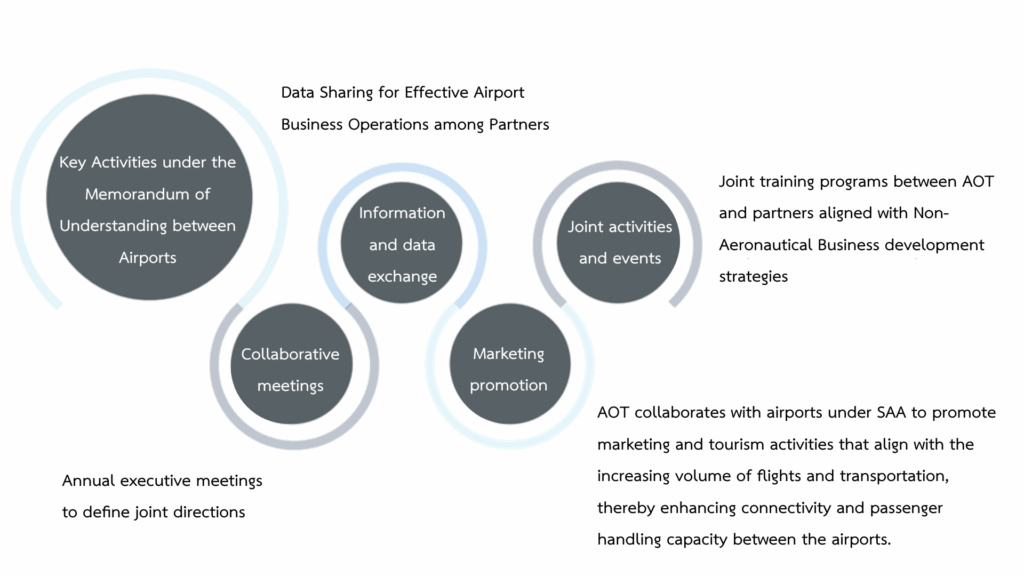
Since 2009, AOT has established Sister Airport Agreements (SAA) with international airport operators. As of now, a total of 14 organizations across 10 countries, covering 18 airports, have entered into SAA partnerships with AOT.
To ensure effective implementation, AOT holds annual high-level executive meetings with its SAA partners to jointly define the direction of collaborative activities and to exchange visions on airport management. In addition to formal meetings, AOT and its partner airports maintain ongoing information exchange through email correspondence and operational questionnaires, enabling mutual understanding and cooperation on a variety of operational topics.
These exchanges are aimed at strengthening marketing and tourism promotion, increasing air traffic and cargo volumes between AOT-operated airports and their SAA counterparts.
Sustainable Design: The Foundation of Future Airports
Climate change, the transition to a low-carbon economy, and increasing stakeholder expectations for responsible business practices are reshaping infrastructure development worldwide. In the aviation sector, airports are no longer viewed solely as transportation hubs; they are critical infrastructure that drives economic growth, tourism, connectivity, and national development.
AOT recognizes that “design is the starting point of sustainability.” Decisions made during the planning and design stages have long-term implications for energy and resource efficiency, greenhouse gas emissions, operational costs, climate resilience, and the quality of airport services throughout the lifecycle of an asset.
Sustainable Design therefore extends beyond constructing environmentally friendly buildings. It adopts a life-cycle approach to infrastructure development by integrating sustainability considerations into material selection, energy-efficient design, water management, indoor environmental quality, appropriate technologies, and climate-resilient solutions. These principles enable airport facilities to operate efficiently while minimizing environmental impacts over the long term.
Given the scale and complexity of airport infrastructure, sustainable design must also balance operational efficiency, safety, passenger experience, and responsible resource utilization. Through its Green Airport Building approach, AOT is committed to developing resilient infrastructure that enhances operational performance, optimizes lifecycle costs, and supports the sustainable growth of Thailand’s aviation industry.
In addition, commercial buildings and airport retail spaces designed under Sustainable Design principles contribute to enhancing the long-term value of AOT’s assets while creating new business opportunities. Well-designed commercial areas provide a healthier indoor environment, improve energy and utility efficiency, enhance tenant attractiveness, and support effective space utilization. These factors strengthen the revenue-generating potential of airport commercial developments while creating shared value for business partners, passengers, investors, and other stakeholders.
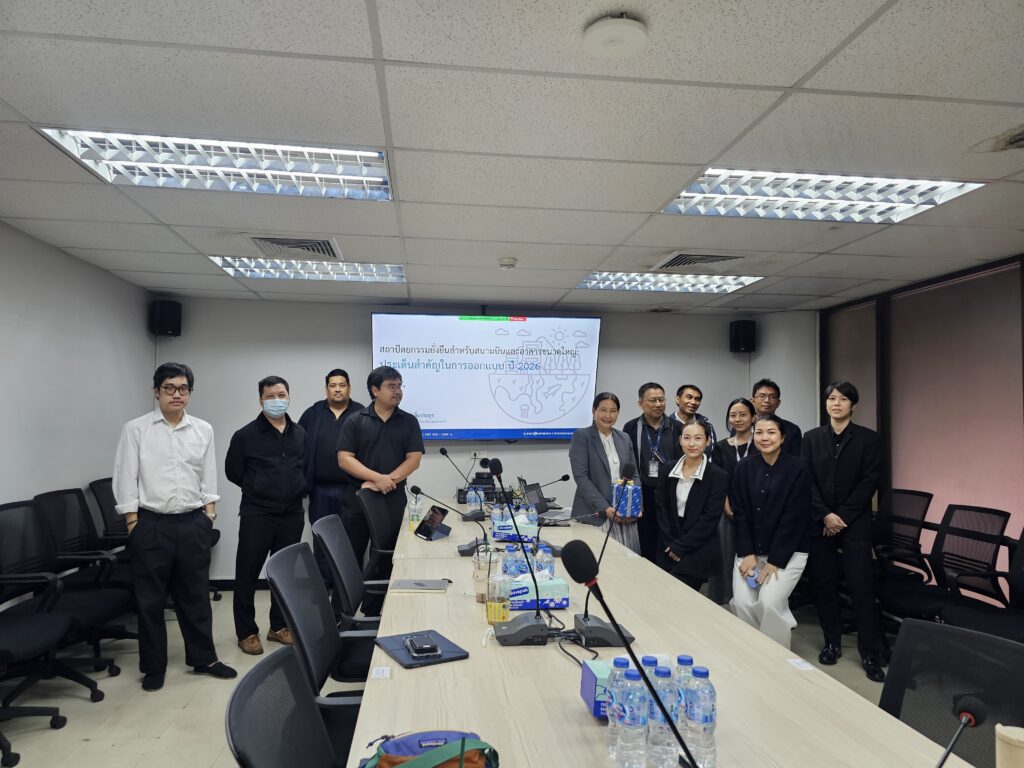
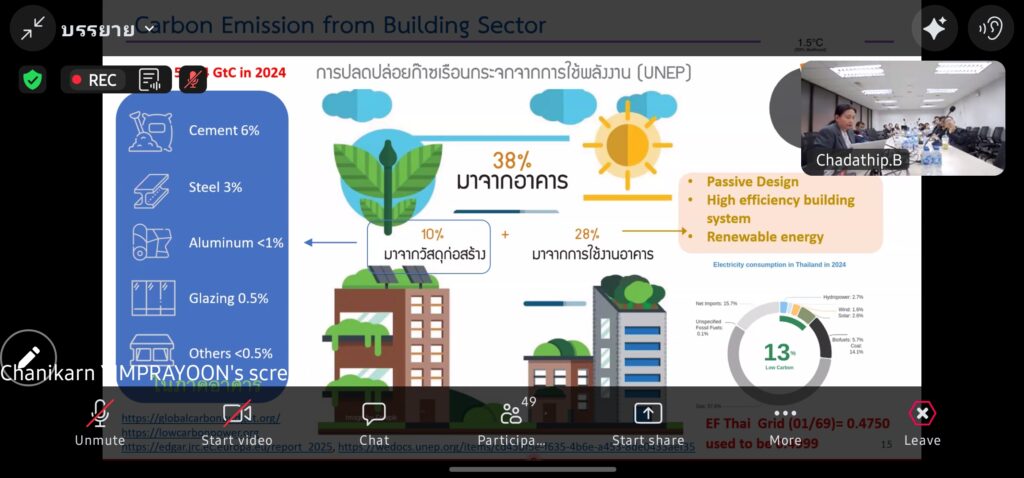
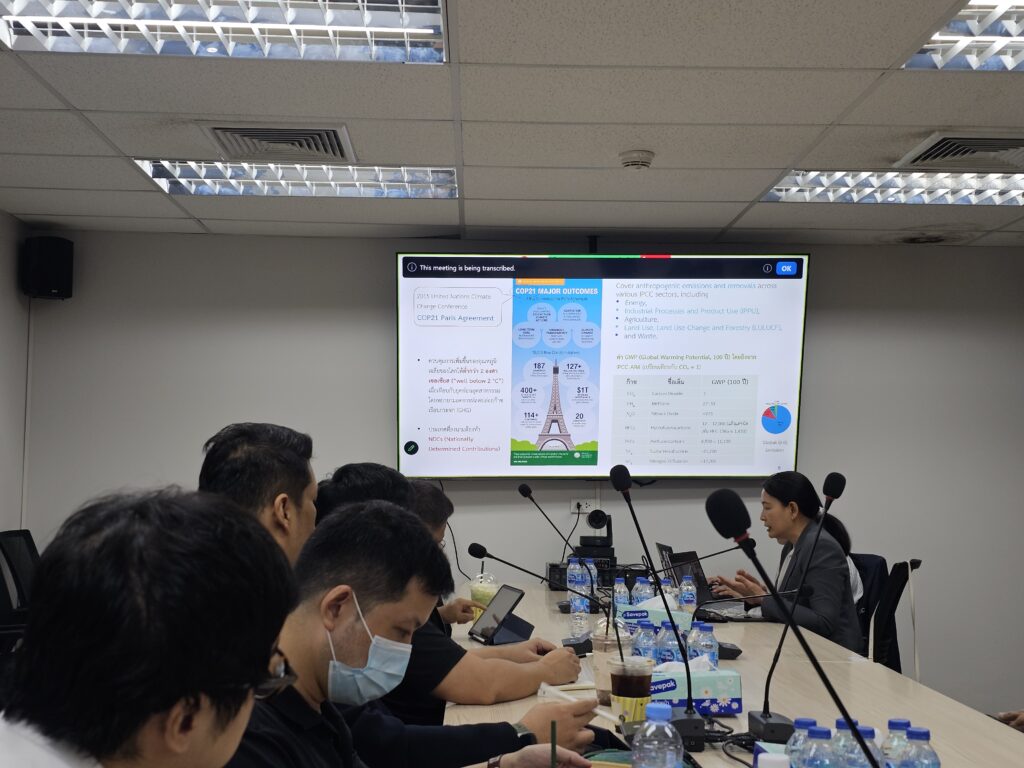
Recognizing that sustainable infrastructure begins with knowledgeable professionals in organizing the training program “Sustainable Architecture for Airports and Large Buildings: Key Design Considerations 2026” for employees involved in planning, design, construction, project management, and infrastructure development. These functions play a key role in the development and improvement of airport infrastructure and facilities. The program was designed to strengthen internal capabilities in Sustainable Design and support the integration of sustainability principles into future airport development projects.
The training covered key topics including energy-efficient building design, passive design strategies, environmentally preferable materials, water efficiency and water recycling systems, indoor environmental quality, climate-resilient design, and the application of green building standards, together with case studies from leading airports and large-scale developments. Participants also explored approaches to designing buildings with efficient water management systems, including rainwater harvesting, wastewater treatment, and water reuse for appropriate non-potable applications, contributing to more sustainable water resource management across airport facilities.
Knowledge gained from the program will be applied to future development projects as well as the renovation and enhancement of passenger terminals, office buildings, supporting facilities, and commercial spaces. By integrating Sustainable Design principles into project development, AOT aims to improve resource efficiency, reduce environmental impacts, enhance operational performance, and maximize long-term value across its infrastructure portfolio.
AOT believes that developing people is fundamental to developing sustainable infrastructure. By strengthening the capabilities of employees responsible for planning, design, and project delivery, the organization is building a strong foundation for future airport development that aligns with international best practices while delivering long-term economic, environmental, and social value for passengers, business partners, communities, shareholders, and all stakeholders.
Identifying Investment Opportunities and Joint Venture Initiatives to Promote AOT’s Non-Aeronautical Business Development
To expand its non-aeronautical business potential, AOT has explored investment opportunities and the establishment of joint ventures through Memoranda of Understanding (MoUs) with international airport partners. These collaborations cover areas such as training, consulting services, joint ventures, and future-focused investment projects, which aim to deliver mutual benefits in terms of airport operational efficiency, financial capability, strategic partnerships, and enhanced leadership roles.
In the early stages, AOT focuses on delivering training programs that leverage its organizational strengths in key areas, including:
- Aviation safety and security
- Capacity enhancement to support business growth
- Crisis management and business continuity
- Development of non-aeronautical revenue streams
- Stakeholder engagement and management
These training initiatives serve as a strategic foundation for identifying and pursuing long-term investment opportunities. For example, AOT’s expertise in airport safety and security management can be offered through training collaborations, enabling partner airports to gain necessary certifications and operational readiness. This is essential for airports anticipating passenger growth and needing robust emergency response and security capabilities to meet international standards and business demands.
Sustainable Design จุดเริ่มต้นของสนามบินแห่งอนาคต
การเปลี่ยนแปลงสภาพภูมิอากาศ การเปลี่ยนผ่านสู่เศรษฐกิจคาร์บอนต่ำ และความคาดหวังของผู้มีส่วนได้เสียที่ให้ความสำคัญกับการดำเนินธุรกิจอย่างยั่งยืน กำลังเปลี่ยนแนวทางการพัฒนาโครงสร้างพื้นฐานทั่วโลก โดยเฉพาะอุตสาหกรรมการบิน ซึ่งสนามบินไม่ได้เป็นเพียงศูนย์กลางการเดินทาง แต่ยังเป็นโครงสร้างพื้นฐานสำคัญที่ขับเคลื่อนเศรษฐกิจ การท่องเที่ยว และการพัฒนาประเทศ
ทอท. ตระหนักว่า “การออกแบบ คือจุดเริ่มต้นของความยั่งยืน” เนื่องจากการตัดสินใจตั้งแต่ขั้นตอนการวางแผนและออกแบบ ส่งผลต่อประสิทธิภาพการใช้พลังงานและทรัพยากร การปล่อยก๊าซเรือนกระจก ต้นทุนการดำเนินงาน ความสามารถในการรองรับการเปลี่ยนแปลงสภาพภูมิอากาศ ตลอดจนคุณภาพการให้บริการของสนามบินตลอดอายุการใช้งานของโครงการ
แนวคิด Sustainable Design จึงไม่ได้มุ่งเพียงการสร้างอาคารที่เป็นมิตรต่อสิ่งแวดล้อม แต่เป็นการออกแบบที่คำนึงถึงคุณค่าตลอดวงจรชีวิตของอาคาร ตั้งแต่การเลือกใช้วัสดุ การออกแบบเพื่อประหยัดพลังงาน การบริหารจัดการน้ำ การยกระดับคุณภาพสิ่งแวดล้อมภายในอาคาร การเลือกใช้เทคโนโลยีที่เหมาะสม ตลอดจนการออกแบบที่สามารถรองรับการเปลี่ยนแปลงของสภาพภูมิอากาศในอนาคต เพื่อให้สนามบินสามารถดำเนินงานได้อย่างมีประสิทธิภาพ ควบคู่กับการลดผลกระทบต่อสิ่งแวดล้อม
สำหรับสนามบินซึ่งเป็นอาคารขนาดใหญ่และมีความซับซ้อน การออกแบบยังต้องสร้างสมดุลระหว่างประสิทธิภาพการดำเนินงาน ความปลอดภัย ประสบการณ์ของผู้โดยสาร และการใช้ทรัพยากรอย่างคุ้มค่า แนวคิด Green Airport Building จึงเป็นอีกหนึ่งแนวทางสำคัญที่ ทอท. มุ่งผลักดัน เพื่อพัฒนาโครงสร้างพื้นฐานที่มีความยืดหยุ่น ลดต้นทุนการดำเนินงาน และพร้อมรองรับการเติบโตของอุตสาหกรรมการบินในอนาคต
อีกทั้ง อาคารและพื้นที่เชิงพาณิชย์ที่ได้รับการออกแบบตามแนวคิด Sustainable Design ยังช่วยเพิ่มมูลค่าให้กับทรัพย์สินของ ทอท. และสร้างโอกาสทางธุรกิจในระยะยาว อาทิ การพัฒนาพื้นที่เชิงพาณิชย์ที่ตอบโจทย์ผู้ประกอบการ การออกแบบพื้นที่ที่มีคุณภาพสภาพแวดล้อมภายในอาคารที่ดี การลดต้นทุนด้านสาธารณูปโภค และการเพิ่มความน่าสนใจของพื้นที่ให้เช่า ซึ่งล้วนเป็นปัจจัยที่ช่วยเพิ่มศักยภาพในการสร้างรายได้จากการบริหารพื้นที่เชิงพาณิชย์ของสนามบิน พร้อมทั้งสร้างคุณค่าร่วมให้แก่ผู้ประกอบการ ผู้โดยสาร และผู้มีส่วนได้เสียทุกภาคส่วน
“สถาปัตยกรรมยั่งยืนสำหรับสนามบินและอาคารขนาดใหญ่ : ประเด็นสำคัญในการออกแบบ ปี 2026” ให้แก่พนักงานและผู้ปฏิบัติงานที่เกี่ยวข้องกับการวางแผน ออกแบบ ก่อสร้าง การบริหารโครงการ และการพัฒนาอาคารและโครงสร้างพื้นฐาน ซึ่งเป็นหน่วยงานที่มีบทบาทสำคัญในการพัฒนาและปรับปรุงโครงการโครงสร้างพื้นฐานขององค์กร โดยมีวัตถุประสงค์เพื่อเสริมสร้างศักยภาพภายในด้าน Sustainable Design และสนับสนุนการบูรณาการหลักการด้านความยั่งยืนในการวางแผน ออกแบบ และพัฒนาโครงการสนามบินในอนาคต การอบรมการออกแบบอาคารอย่างยั่งยืน ครอบคลุมประเด็นสำคัญ อาทิ การออกแบบอาคารประหยัดพลังงาน (Energy Efficiency) การออกแบบเชิงรับ (Passive Design) การเลือกใช้วัสดุที่เป็นมิตรต่อสิ่งแวดล้อม (Green Materials) การบริหารจัดการน้ำ การยกระดับคุณภาพสิ่งแวดล้อมภายในอาคาร (Indoor Environmental Quality) การออกแบบเพื่อรองรับการเปลี่ยนแปลงสภาพภูมิอากาศ (Climate Resilient Design) ตลอดจนแนวทางการประยุกต์ใช้มาตรฐานอาคารเขียวและกรณีศึกษาจากสนามบินชั้นนำ
องค์ความรู้จากการอบรมจะถูกนำไปประยุกต์ใช้ในการพัฒนาโครงการใหม่ รวมถึงการปรับปรุงอาคารผู้โดยสาร อาคารสำนักงาน อาคารสนับสนุน และพื้นที่เชิงพาณิชย์ของ ทอท. เพื่อยกระดับประสิทธิภาพการใช้ทรัพยากร ลดผลกระทบต่อสิ่งแวดล้อม เพิ่มประสิทธิภาพการดำเนินงาน และสร้างคุณค่าในระยะยาวให้แก่ทรัพย์สินและบริการขององค์กร
ทอท. เชื่อมั่นว่า การพัฒนาศักยภาพของบุคลากรคือรากฐานสำคัญของการพัฒนาองค์กรอย่างยั่งยืน เพราะเมื่อองค์ความรู้ด้าน Sustainable Design ถูกนำไปประยุกต์ใช้กับการออกแบบและพัฒนาโครงการอย่างเป็นรูปธรรม จะช่วยยกระดับมาตรฐานการพัฒนาสนามบินของไทยให้สอดคล้องกับแนวปฏิบัติระดับสากล พร้อมสร้างโครงสร้างพื้นฐานที่มีประสิทธิภาพ เป็นมิตรต่อสิ่งแวดล้อม และสร้างคุณค่าร่วมให้แก่ผู้โดยสาร ผู้ประกอบการ ชุมชน และผู้มีส่วนได้เสียทุกภาคส่วนในระยะยาว
Proactive Engagement with Airports Council International (ACI) to Advance Global Airport Standards
AOT actively engages with Airports Council International (ACI), the global trade association of the world’s airports, to discuss and advocate for international standards in airport management. These standards cover passenger services, economic policies, environmental sustainability, and aviation safety and security.
ACI plays a vital role in promoting cooperation among airports worldwide and safeguarding the interests of its members and aviation stakeholders by developing global standards, policies, training programs, and sharing best practices in areas such as airport operations, information systems, security, and environmental management.
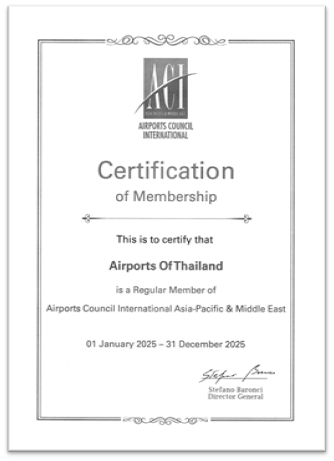
AOT has been a member of ACI since 1991, and has been honored to represent the Asia-Pacific region in knowledge exchange on critical topics such as airport safety and security, environmental management, economic development, human resource management, airport IT systems, and slot allocation. In addition, AOT has contributed to ACI’s COVID-19 task forces, helping to shape recovery strategies for the global aviation industry.
These leadership roles not only enhance AOT’s visibility and influence on both national and international levels but also strengthen business opportunities, market positioning, and AOT’s reputation as a leading airport service provider.
AOT publicly discloses its financial contributions to trade associations, both domestic and international, in its Sustainability Report each year to ensure transparency and demonstrate adherence to global best practices.
Furthermore, AOT evaluates its support for trade associations by considering each organization’s activities, objectives, and policy positions, particularly in relation to climate change. This includes alignment with global frameworks such as the Paris Agreement, and contributes to AOT’s efforts in advancing the climate change agenda through lobbying and trade association engagement (Climate Alignment).
Implementation
International Business Revenue Enhancement Program
International Business operations serve as a key driver for Non-Aeronautical Revenue, helping to diversify risks and strengthen AOT’s financial position. This is achieved alongside the enhancement of operational and safety standards through active participation in regional (ASEAN, APAC) and global platforms.
These engagements pave the way for Strategic Partnerships, including cooperation agreements with the International Civil Aviation Organization (ICAO) to develop infrastructure master plans and pioneering projects. Key initiatives include feasibility studies for Cargo Hubs, the promotion of Sustainable Aviation Fuel (SAF), and the goal of achieving Net Zero Airports. Furthermore, these activities expand regional networks and develop personnel through specialized training, resulting in an improved passenger experience and overall operational efficiency.
This approach aligns with Strategic Objective (SO2), supporting the sustainable elevation of AOT’s infrastructure, capacity, and business opportunities.
- Aviation Training Services for Overseas Airports
This initiative represents AOT’s international business expansion through the provision of aviation training and related services. It aims to generate non-aeronautical revenue and enhance AOT’s global presence in alignment with Strategic Objective SO2 and Strategy 4 (Strategic Objective 4.2), which focuses on the utilization of assets, vacant spaces, and other business ventures. By building partnerships and sharing expertise, AOT aims to indirectly increase passenger volume, elevate the operational standards of target airports, and “Maximize Financial Return through Business Development.” Key projects for Fiscal Year 2025 are as follows:
ARFF Training (Pilot Project) – YACL, Myanmar: Specialized training in Aircraft Rescue and Fire Fighting.
Aviation Administration and Financial Training – CAAN, Nepal.
Airport Strategic Plan/Business Plan & Airport Revenue Generation – CAAN, Nepal.
Training Expansion Program – Bokeo International Airport, Lao PDR.
International Delegations and Government Cooperation
AOT participates in regional and international seminars and workshops to stay informed on global aviation policies, standards, and best practices. These engagements support AOT’s 7 core strategies and foster strategic cooperation to build economic and technical networks. The primary objectives are to strengthen partnerships, enhance standards in safety, security, and environment, and improve passenger experience—while integrating the knowledge gained into AOT’s own airport development. Key projects for Fiscal Year 2025 include:
The 42nd ICAO Assembly (Montreal): A global forum for the deliberation of civil aviation policies, standards, and budgets. Thailand maintains consistent participation to demonstrate its strategic role and national aviation development direction.
The 50th–52nd ASEAN ATWG and Related Meetings: Driving initiatives such as ASAM, ATEC/ATTC SWG, ASAAP, and SAF. AOT served as a speaker on “AOT’s Airport Decarbonization” at the 6th ASEAN Sustainability Forum in Chiang Mai.
The 60th Conference of Directors General of Civil Aviation, Asia-Pacific (Sendai, Japan): An exchange of best practices regarding safety standards, management, security, environment, and regulatory enhancement.
ICAO Asia/Pacific WHM Workshop & AP-WHM/WG/7 (Nepal): An expert forum on Wildlife Hazard Management (WHM) to exchange best practices and monitor the progress of state action plans.
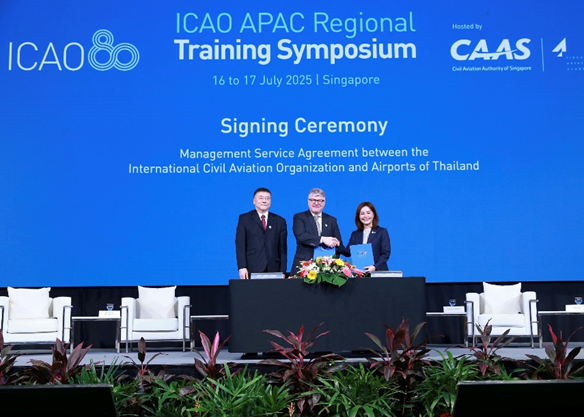
Ad-hoc Missions supporting the Thai Government and AOT: Including study visits to Brussels, Schiphol, and Charles de Gaulle airports; TÜRASAŞ and iGA Istanbul Airport; participation in the ICAO APAC Regional Aviation Training Symposium 2025 (Singapore); and the MSA Signing Ceremony between ICAO and AOT. These missions cover cooperation in Safety & Security Procedures, Master Plan Development, Cargo Hub Feasibility Studies, and Environmental Sustainability (SAF and Net Zero Airports) to elevate standards through knowledge and technology sharing.
Executive Speaking Engagements (4 Key Forums):
IATA World Passenger Symposium 2024 – Fireside Chat: Modernizing Passenger Experience (October 30, 2024, Bangkok).
IATA One ID Asia-Pacific Workshop 2024: Modernizing Passenger Experience (November 1, 2024, Bangkok).
ICAO APAC International Women’s Day 2025: “Empowered to Lead: Breaking Barriers in Every Field” (February 10, 2025, at ICAO APAC Office).
Canada–Thailand Dialogue: Aerospace Cooperation (May 26, 2025, Bangkok).
- Systems Support and Networking
It is a process of information support, follow-up, and coordination aimed at enhancing administrative efficiency and operational transparency at the international level. The objective is to establish effective management and cooperation mechanisms, supported by data-driven decision-making systems, and to elevate the organization’s image through global networks.
Key projects for 2025 include:
Summarizing AOT representative meeting reports for publication via the Web Portal.
Preparing travel information and data.
Supporting the ICAO Global Ambassadors Programme.
Coordinating site visits and study tours for delegations, such as the Ministry of Land, Infrastructure, Transport and Tourism (MLIT) of Japan and the Civil Aviation Authority of Thailand (CAAT).
Revenue Enhancement from Commercial Activities Project
AOT continues to drive revenue growth from air cargo operations through the expansion of cargo terminals and the construction of a new warehouse facility near Satellite Terminal 2 (SAT-2). These physical expansions are integrated with the adoption of advanced technologies to enhance management efficiency.
Furthermore, AOT aims to attract world-leading air cargo carriers to co-invest in establishing a Regional Air Cargo Distribution Center at Suvarnabhumi Airport. In addition, AOT is exploring new revenue streams and launching new projects to expand investment and support the continuous growth of the aviation industry, as detailed below:
1. Projects under the Public-Private Partnership (PPP) Act B.E. 2562 (2019) at AOT’s Six Airports
Currently, AOT is in the process of selecting private operators for the following projects at Suvarnabhumi Airport:
- The Third Operator for Ground Handling and Equipment Services, Ground Passenger Services, and other related businesses.
- The Third Operator for Air Cargo Warehouse Services.
In addition, AOT is preparing for the selection of private partners for upcoming projects, such as Light Aircraft Maintenance Services, 400 Hz Power Supply Systems, and Pre-Conditioned Air (PC-Air) Systems, among others.
2. Don Mueang International Airport Development Project
Construction of the Junction Building and Parking Garage, including hotel service areas. This project aims to serve as a seamless multimodal transport hub, connecting air travel to the SRT Red Line suburban railway and various public transportation systems.
3. Property Development Roadmap
A strategic plan for the commercial development of land assets and real estate under AOT’s management.
Property Development Roadmap Project
On April 29, 2025, AOT hosted the “AOT Property Showcase: The Six Pillars of Opportunity” to promote commercial potential, build investor confidence, and invite partnerships for developing over 2,512 rai (approx. 400 hectares) of land across its six airports, as well as the Junction Building at Don Mueang International Airport. The development framework for private sector utilization encompasses diverse sectors, including Hotels, Transportation & Logistics, Offices & Business Centers, Retail & Shopping Malls, Tourism & Recreation, MICE (Meetings, Incentives, Conventions, and Exhibitions), Residential, Sports, and Healthcare. The event welcomed over 200 investors from more than 90 companies.
This initiative aims to drive Non-Aero Revenue by transforming vacant land and commercial assets into high-value developments. The AOT Property Showcase and Property Tour successfully strengthened AOT’s brand image among both domestic and international investors, resulting in development proposals for 24 projects. Furthermore, the AOT Property Network was established to foster collaboration between AOT and the private sector. The project gained significant public traction, with media coverage spanning over 146 channels across online and television platforms.
| Objectives | To develop the utilization of outdoor assets, vacant land, or other businesses to increase Non-Aero revenues. |
|---|---|
| Number of Participants | More than 200 investors from over 90 companies participated. |
| Benefits to AOT from the Project/Activity |
|

Signing Ceremony of the Management Service Agreement (MSA) between the International Civil Aviation Organization (ICAO) and Airports of Thailand Public Company Limited (AOT)
| Objectives | To support and promote AOT's operations in development standards, knowledge sharing, and technological exchange. The focus is on fostering cooperation and exchanging best practices in human resources development and enhancing passenger experience, aiming to establish AOT as a regional aviation hub. |
|---|---|
| Number of Participants | Over 500 participants from various aviation industry sectors, including national civil aviation authorities, airports, airlines, and aviation educational institutions. |
| Benefits to AOT from the Project/Activity |
|
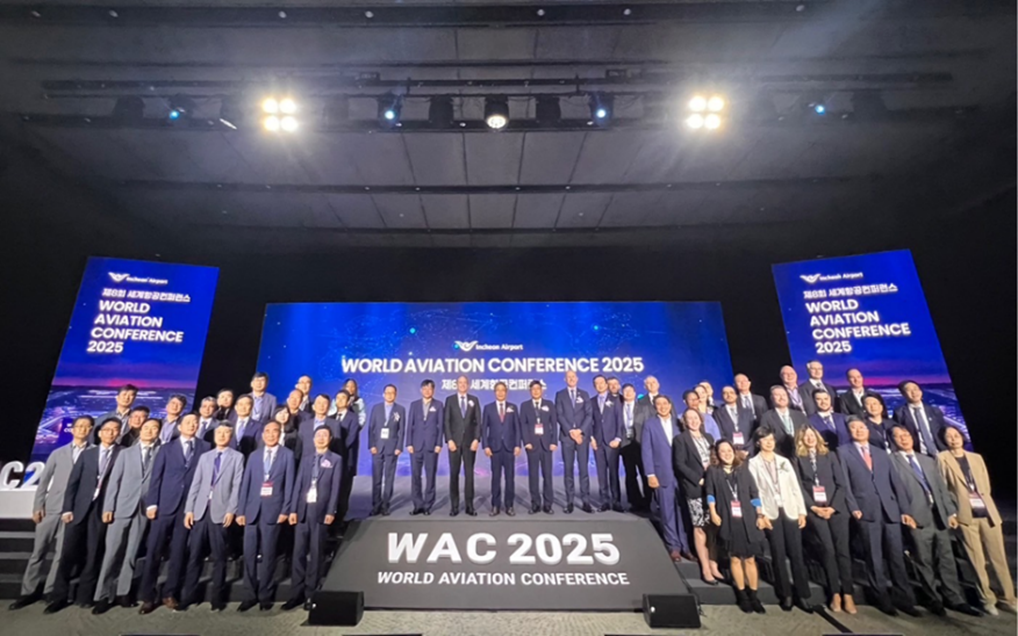
World Aviation Conference (WAC) 2025 “The Future of Aviation Industry - Advanced Tech and Sustainability”
| Objectives | To serve as a platform for exchanging perspectives on the future development of the aviation industry, focusing on the application of advanced technology and automation to enhance service quality, efficiency, safety, and sustainability. |
|---|---|
| Number of Participants | Representatives from AOT, as well as leaders from the business sector, academic institutions, and research agencies, with over 1,000 attendees. |
| Benefits to AOT from the Project/Activity |
|
Verification and Assurance
1. Internal Audit
N/A
2. External Assurance:
The certification of the Suvarnabhumi Airport Aerodrome Manual (AOM), Issue 02, Revision 6, which confirms compliance with the Civil Aviation Authority of Thailand (CAAT) Regulation on Standards for Public Aerodrome Manuals B.E. 2562 (2019).