Background and Retionale
The integration of technology and innovation into airport management is a key strategy for enhancing AOT’s operational efficiency and elevating the passenger experience. In particular, the implementation of Biometric systems, Smart Airport solutions, and Digital Services aims to streamline verification processes and reduce waiting times at passenger service points and baggage screening areas. Furthermore, the adoption of appropriate technologies enables the efficient handling of increasing passenger volumes, mitigates operational risks, and strengthens the corporate image as a leader in modern airport services.
However, investment in technology must carefully consider cost-effectiveness, alignment with actual operational needs, and long-term functional sustainability to avoid the inefficient use of resources. Developing digital technology in tandem with employee upskilling and utilizing data-driven insights for service planning will empower AOT to respond effectively to passenger demands and establish a long-term competitive advantage.
Impact from Business Operations
AOT’s business strategy emphasizes the integration of digital technology and innovation in airport management to enhance operational efficiency and service quality. Key implementations include the Common Use Passenger Processing System (CUPPS), which streamlines the passenger journey from arrival to boarding. Other critical systems include Automated Border Control (ABC): Streamlining immigration procedures, Baggage Reconciliation System (BRS): Ensuring accuracy in luggage handling before departure and Automated Biometric Identification System (Biometric): Enhancing identity verification.
These technologies significantly reduce processing times particularly for travel document checks improve baggage management precision, and minimize wait times at various service points, resulting in a seamless and expedited experience for all passengers.
Challenges and Opportunities
Investing in digital technology and innovation entails significant capital risks, particularly regarding high installation costs and complex system integration. Successful implementation demands a high degree of personnel adaptability to ensure seamless operation and ongoing system maintenance, alongside rigorous cybersecurity management. Without meticulous planning, these factors could undermine investment cost-effectiveness and overall operational efficiency.
Despite these challenges, innovation remains a vital catalyst for enhancing the passenger experience—making it more convenient, rapid, and secure through data-driven insights. Key initiatives include:
Real-Time Passenger Tracking: Monitoring and managing passenger density.
Airport Collaborative Decision Making (A-CDM): A unified data system for stakeholder coordination.
Automated Border Control (ABC): Expediting immigration checkpoints.
Artificial Intelligence (AI) Applications: Predicting the needs of passengers, airlines, and service users.
Real-Time Flight Notifications: Providing instant updates via mobile applications.
These advancements not only bolster AOT’s image as a modern, forward-thinking organization that meets the expectations of today’s travelers but also strengthen internal workflows. By fostering an innovative culture among its workforce, AOT is transforming into a truly innovation-driven enterprise.
Consequently, managing digital technology and innovation by balancing risk with in-depth data analytics is a core strategy. This approach transforms challenges into sustainable opportunities, positioning AOT as a definitive leader in the future of the aviation industry.
Commitment and Related Policies
AOT has enhanced its innovation framework, building upon the 2023 policy established to promote creativity and innovation management. This includes a comprehensive policy review for the 2025 fiscal year, aligned with the State Enterprise Assessment Model (SE-AM) criteria set by the State Enterprise Policy Office (SEPO) to ensure multidimensional coverage. The AOT Board of Directors has approved the “AOT Policy on Creativity Promotion and Innovation Management,” officially signed by the Chairman of the Board. This signifies AOT’s commitment to transitioning into the digital era for the benefit of society, the economy, and the environment, with key focus areas as follows:
- Empowering Personnel: Driving employees to develop creative thinking skills for internal innovation, focusing on AOT’s Innovation Themes as defined in the Revised Innovation Master Plan (FY 2023-2027).
- Shared Responsibility: Mandating that every department is responsible for collaboratively driving AOT’s innovation agenda.
- Knowledge & Tech Integration: Supporting the application of Knowledge Management (KM), scientific research, and digital technology to develop innovations that solve operational challenges and elevate service standards.
- Practical Application: Promoting the implementation of innovation in AOT’s daily operations and airport development, including commercial and social utilization.
- Systematic Management: Developing an Innovation Management (IM) system to facilitate operational execution, monitoring, evaluation, and performance reporting.
- Innovative Culture: Cultivating an environment conducive to creativity and building a sustainable corporate innovation culture.
- Resource Allocation: Supporting innovation projects through the adequate and appropriate allocation of budgets and necessary resources.
Relevant Policies, Regulations, and Standards
Category 1: Laws and Regulations
- Electronic Transactions Act B.E. 2544 (2001) and Electronic Transactions Act (No. 2) B.E. 2551 (2008)
- Royal Decree on Rules and Procedures for Electronic Transactions in the Public Sector B.E. 2549 (2006)
- Computer-Related Crime Act B.E. 2550 (2007) and Computer-Related Crime Act (No. 2) B.E. 2560 (2017)
- Personal Data Protection Act (PDPA) B.E. 2562 (2019)
- Cybersecurity Act B.E. 2562 (2019)
- Notification of the Electronic Transactions Commission Re: Policies and Guidelines for Maintaining Information Security of Government Agencies B.E. 2553 (2010)
- Notification of the Electronic Transactions Commission Re: Policies and Guidelines for Personal Data Protection of Government Agencies B.E. 2553 (2010)
Category 2: Aviation and Airport Standards
- Information Security Standard ISO 27001 or ISO/IEC 27001:2013
Category 3: Related AOT Policies
- AOT Digital Governance Framework
- AOT Policy on Promotion of Creativity and Innovation Management
- AOT Data Privacy Policy
- AOT Cybersecurity Policy and Code of Practice and Framework for AOT Cybersecurity Standards
- AOT Information and Communication Technology Security Policy (AOT ICT Security Policy)
- AOT Personal Data Protection Policy
- AOT Data Policy
- AOT Green ICT Management Policy
- AOT Artificial Intelligence Policy
Management Approach
AOT has integrated Innovation into its Core Values, which are strictly upheld and continuously developed. The organization is committed to using information technology as a primary driver to become the “smartest airport,” while creating innovations that strive toward world-class airport excellence. This approach aims to create new, balanced revenue opportunities and deliver sustainable value to the Thai economy and society. AOT has developed a Digital Technology and Innovation Master Plan aligned with the corporate enterprise plan, with the Digital Technology and Innovation Business Unit serving as the primary responsible entity.
To this end, AOT has developed a Digital Technology and Innovation Master Plan aligned with its Corporate Plan, with the Digital Technology and Innovation Department serving as the primary responsible unit.
The guiding frameworks include:
- AOT Human Resource Master Plan (Fiscal Years 2023–2027)
- AOT Knowledge Management Master Plan (Fiscal Years 2025–2029) and Fiscal Year 2025 Action Plan
- AOT Digital Action Plan for Fiscal Years 2024–2027 (Revised Edition for Fiscal Year 2025)
AOT Corporate Strategic Plan for Fiscal Years 2023–2027 (Revised Edition for Fiscal Year 2025)
Under Strategic Goal 5: Enhance service processes and quality to improve operational efficiency and stakeholder satisfaction. Strategy 5.2, which aims to drive the adoption of technology to enhance user experience. Additionally, under Strategic Goal 7: Strengthen organizational management capabilities, AOT outlines Strategy 7.2, focusing on improving work processes to increase efficiency and advance digital transformation. This includes enhancing customer experience through the adoption of modern technologies, developing workforce capabilities, streamlining operational processes, and implementing supportive tools to ensure the organization is well-prepared to support both core operations and future business opportunities.
| Indicators | Performance FY2025 | Targets | ||
|---|---|---|---|---|
| 2025 | 2026 | 2027 | ||
| Sub-strategy 5.2: Driving technology to elevate the user experience | ||||
| 1. Percentage of passengers utilizing installed technology (%) | ||||
| 1.1 Common Use Self Service (CUSS) | ||||
| - Suvarnabhumi Airport (BKK) | 25.96 | ≥25 | ≥25 | ≥25 |
| - Don Mueang Int'l Airport (DMK) | 20.70 | 20 | 22 | ≥25 |
| - Chiang Mai Int'l Airport (CNX) | 14.68 | 20 | 22 | ≥25 |
| 1.2 Common Use Bag Drop (CUBD) | ||||
| - Suvarnabhumi Airport (BKK) | 17.46 | 17 | 22 | ≥25 |
| Sub-strategy 7.2: Process development for efficiency and Digital Transformation | ||||
| 1. Achievement level of AOT Digital Roadmap implementation (%) | Integrated into FY 2025 Action Plan | 100 | 100 | 100 |
| 2. Achievement level of AOT Innovation Master Plan implementation (%) | Integrated into FY 2025 Action Plan | 100 | 100 | 100 |
AOT Innovation Master Plan (Fiscal Years 2023–2027, Revised in FY2024)
Recognizing the potential of innovation as a key driver for future organizational growth, AOT developed a scenario-based strategic plan through Scenario Planning using insights from diverse experts. This process aimed to identify key Innovation Themes, such as potential new businesses and targeted innovation within specific processes to enhance passenger satisfaction. The envisioned scenarios were then used to assess AOT’s organizational readiness, forming the basis for designing a suitable Corporate Innovation System.
Future Scenario Study
AOT adopted Foresight methodologies based on the STEEP framework—comprising Social, Technological, Economic, Environmental, and Political dimensions—to prioritize and define innovation themes. This framework aligns with emerging trends and helps anticipate risks and opportunities, supporting the organization’s long-term innovation direction.

Innovation Development in Accordance with the State Enterprise Assessment Framework
Driving AOT’s Innovation and Digital Technology Systems
The development of innovation governance and management within the organization must be aligned with the State Enterprise Assessment Model (SE-AM), the national performance evaluation framework for state enterprises administered by the State Enterprise Policy Office (SEPO), Ministry of Finance. The model emphasizes a holistic view of innovation system, encompassing seven key dimensions:
- Leadership for sustainable innovation management
- Innovation strategy
- Customer- and market-driven innovation
- Knowledge-based innovation
- Innovation-focused culture
- Innovation processes
- Innovation results
The analysis of AOT’s innovation readiness has helped identify areas for improvement, as well as opportunities and gaps in enhancing the organization’s innovation capabilities. Further details are available in the AOT Innovation Master Plan (Fiscal Years 2023–2027, Revised in FY2024).
The development of innovation and technology has been recognized as a key strategic priority that supports AOT’s broader operations, especially in light of the rapid shift to the digital era. Accordingly, the Innovation Master Plan has been designed to align with other master plans within AOT. This ensures coherence and integration across all strategic initiatives, reinforcing the organization’s commitment to collaborative and mutually supportive development across all operational dimensions.
Driving AOT’s Innovation and Digital Technology Ecosystem
AOT promotes both digital technology and innovation in parallel, recognizing them as critical enablers for enhancing organizational efficiency through structured management. A key element in establishing a systematic innovation process is the development of a Corporate Innovation System, which fosters an innovative culture—a creative environment where both internal and external personnel are encouraged to express diverse ideas and take initiative in developing new solutions aligned with AOT’s strategic goals.
To support this, AOT has established relevant policies, action plans, and operational guidelines that actively encourage innovation and digital technology development.
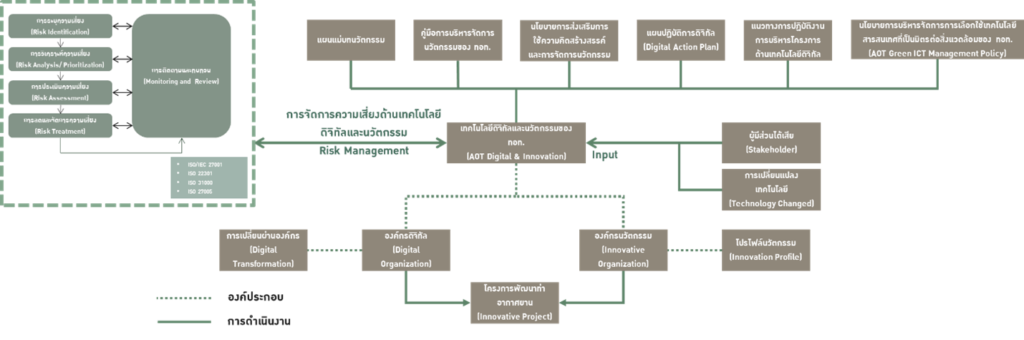
With AOT’s integrated management framework for digital technology and innovation, the organization has outlined an approach that fosters mutual reinforcement between the two domains. The strategy aims to drive the organization’s transformation into both an Innovative Organization and a Digital Organization, while advancing data-driven operations supported by robust and efficient information systems across all departments and business levels. By integrating digital technologies and innovation into airport business operations, AOT enhances value creation through comprehensive services in key areas such as airport safety and security, customer experience, and airport quality enhancement in response to global trends.
Digital technology and innovation are also recognized as key enablers that unlock organizational potential, enabling AOT to explore new business opportunities and models.
However, the challenge lies not only in the adoption of technology itself. The knowledge, understanding, and adaptability of personnel, along with legacy practices, also pose significant challenges. Therefore, the organization must work to adapt both its workforce and operational processes to align with emerging technologies and innovations. In the initial stage, this includes the equalization of technology—ensuring the selection and application of tools that are appropriate to AOT’s specific context and operational needs.
To ensure effective and high-quality implementation of its strategies, AOT actively monitors the progress of digital technology and innovation management across departments. This is done through strategic-level performance indicators defined in the Innovation Master Plan and Digital Action Plan. Progress is regularly reported to senior executives, who review and determine additional measures to promote success in line with organizational goals.
Driving Innovation to Create Value and New Business Opportunities at AOT
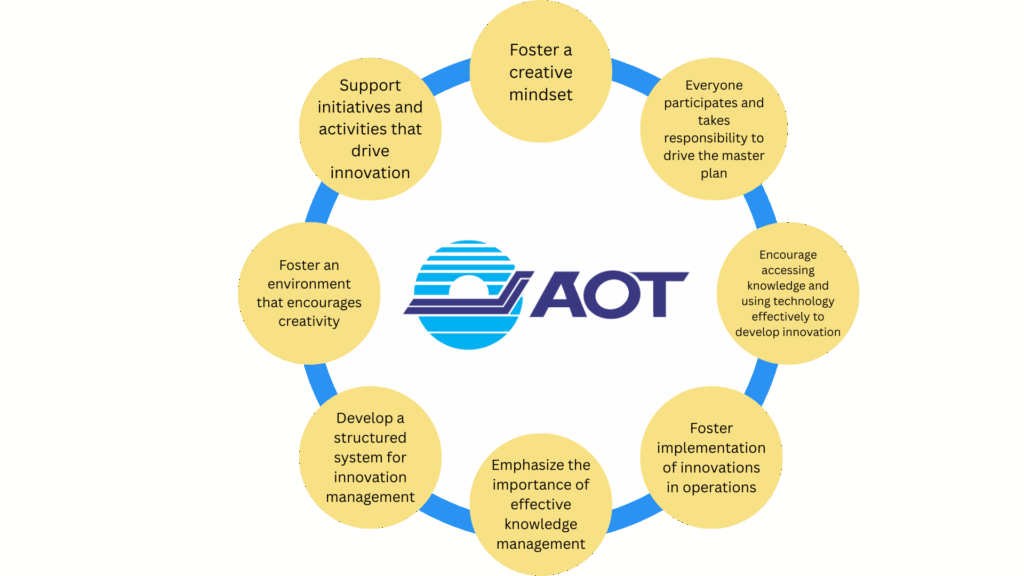
AOT has developed the AOT Innovation Management Manual, which compiles up-to-date knowledge on creativity and innovation management to serve as a practical guide for AOT personnel. The manual covers key topics including types and levels of innovation, creative idea generation processes, and fostering an innovation culture. It also outlines policies to support the organization’s transformation into an innovative enterprise through the Policy on the Promotion of Creativity and Innovation Management, which emphasizes innovation management across all areas of service, work processes, and new business/mission models at all organizational levels.
In this regard, AOT is committed to encouraging its personnel to apply creative thinking and innovation management throughout the organization. The policy includes 8 key components, which are designed to embed innovation into the organization’s core practices and culture.
To facilitate the transition into a high-performance innovative organization (Strategy 4: Developing Non-Aeronautical Operations, focusing on Non-Aero Business Model Innovation under Sub-strategy 4.2: Creating new business opportunities through AOT’s assets), AOT prioritizes the development of new business models. Leveraging AOT’s existing assets to generate new commercial opportunities remains a core innovation theme.
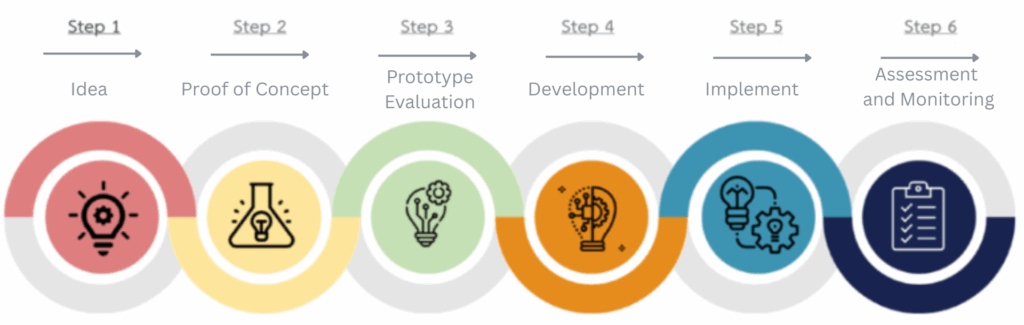
At the operational level, AOT has established a comprehensive Innovation Project Management Framework consisting of 6 key stages:

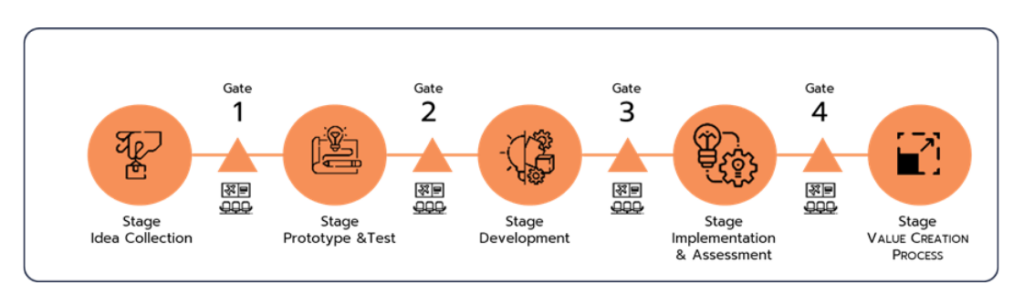
To drive new business model concepts and create commercial opportunities from existing assets, AOT has established a structured Innovation Development Framework consisting of the following 5 key stages:
Phase 1: Idea Collection The process of gathering and capturing creative and innovative ideas from various sources.
Phase 2: Prototyping & Testing The process of developing a prototype and conducting initial tests to evaluate feasibility (Proof of Concept).
Phase 3: Development The full-scale creation and refinement of the innovation to meet operational standards.
Phase 4: Implementation and Assessment Deploying the innovation into actual operations and evaluating its performance and outcomes against set targets.
Phase 5: Value Creation Process The process of scaling, enhancing, and further developing the innovation to maximize its long-term value and impact.
Digital Technology Integration
AOT has established an operational framework aimed at facilitating the organization’s transition toward digital transformation, in alignment with AOT’s unique context. This framework supports a transformation that is both effective and responsive to the expectations of all stakeholders in a comprehensive manner.
In addition, AOT’s digital transformation direction takes into account both national and global trends, ensuring that implementation and integration are harmonized with the organization’s ongoing operations. The organization is undergoing a holistic transformation to enhance its capabilities, modernize its infrastructure, and strengthen its competitiveness—driven by digital technology as a core enabler of success.
To achieve this, AOT must develop or adapt three fundamental factors essential to enabling digital transformation: 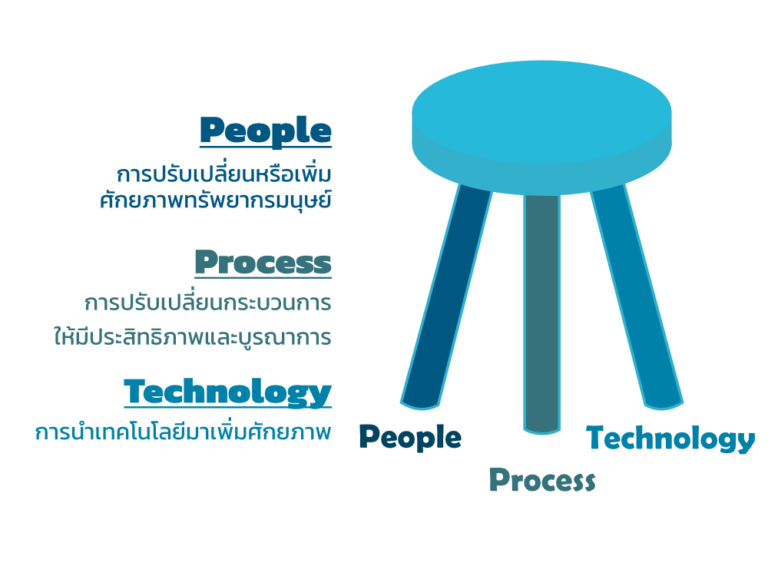
In addition, AOT’s organizational enhancement strategies—as outlined in the Digital Action Plan (Fiscal Years 2024–2027)—identify key focus areas that align with and support the organization’s digital transformation. These strategies comprehensively address the following four core areas:
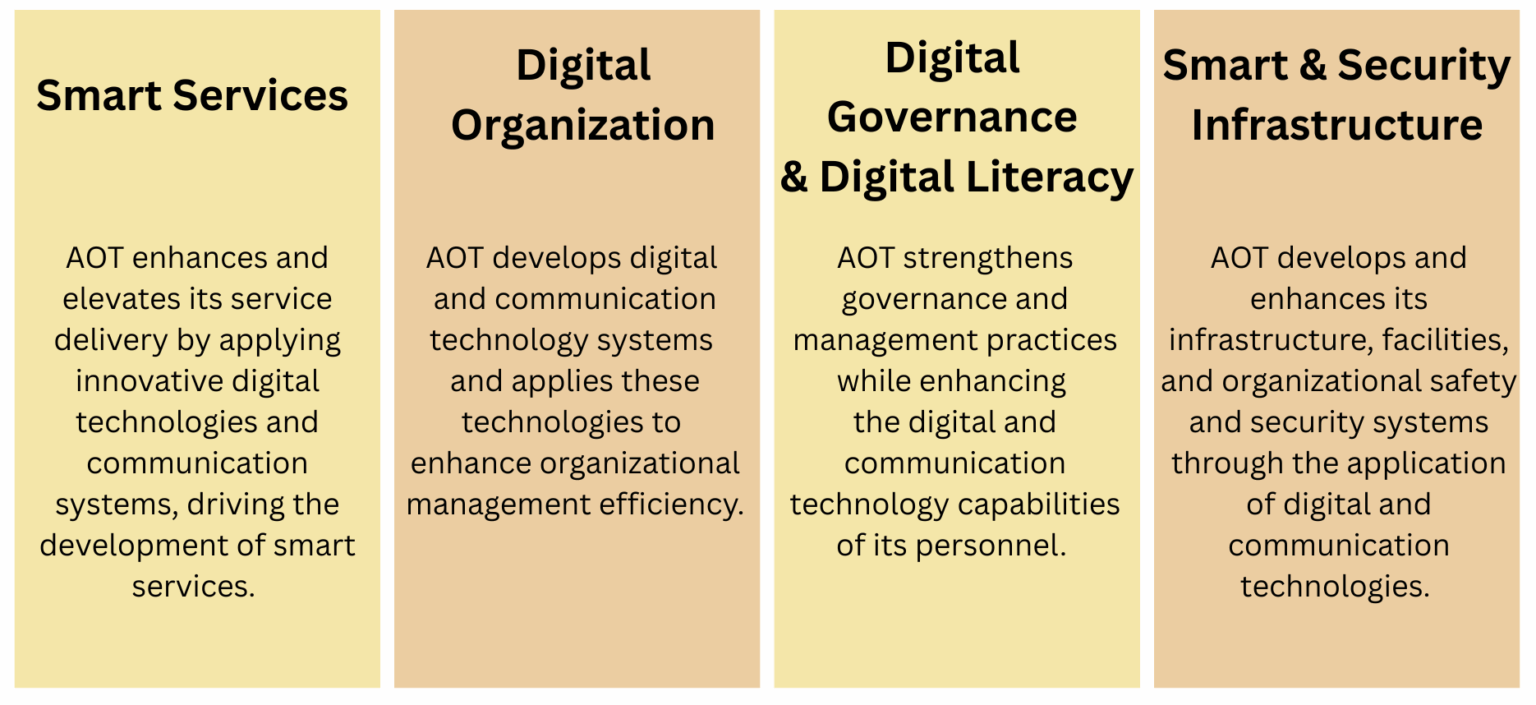
In transitioning toward a digital organization, AOT has established its approach based on the four strategic pillars outlined above. These strategies form the foundation of AOT’s digital implementation framework, aimed at achieving the goal of Smartest Airport Operation under the AOT Digital Roadmap 2024–2027. The four strategic areas serve as the core drivers in guiding the organization’s development in alignment with the planned focus areas.
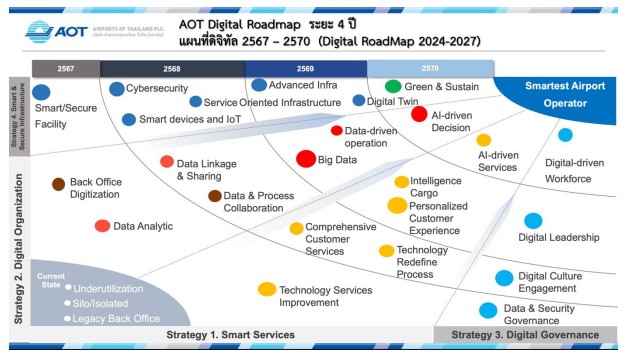
In integrating existing operations with digital technologies and new innovations, AOT ensures that implementation aligns with the expectations and needs of its relevant internal stakeholders. These include support for safety and security operations, corporate governance and board affairs, environmental initiatives under the Green Airport concept, and human resource development and management. All efforts are carried out within the framework of strategic plans and policies.
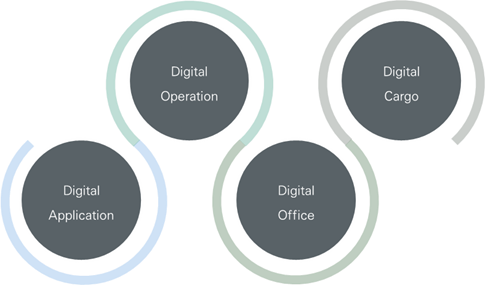
To maximize the effectiveness of digital and innovative tools, AOT has structured its initiatives into four key components: Digital Application (M1), Digital Operation (M2), Digital Office (M3), and Digital Cargo (M4). These four pillars serve as the foundation for transforming AOT into a digitally empowered organization, ensuring comprehensive attention to all critical aspects of its business operations.
Digital Application (M1)
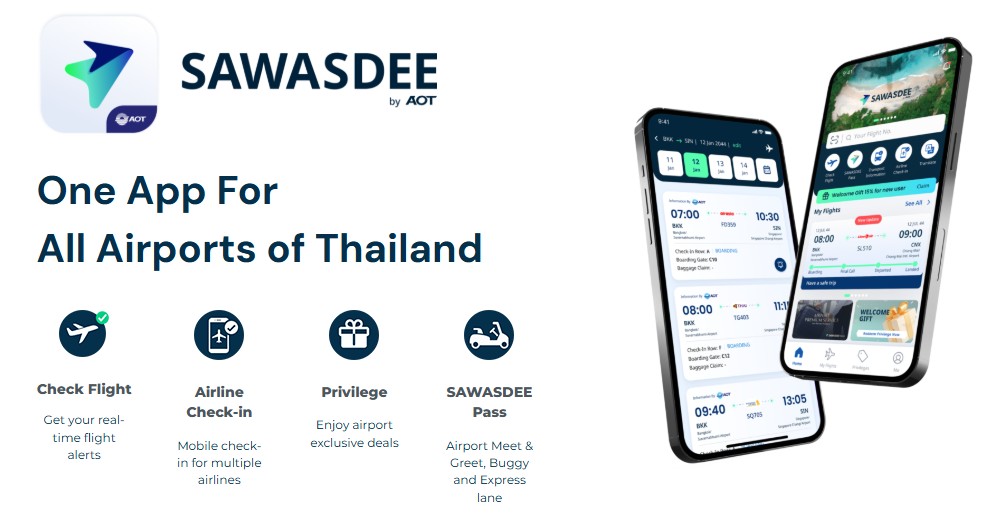
AOT has developed the “Sawasdee by AOT” application as a digital tool to connect passengers with airport services, enabling convenient and real-time access to essential information such as flight schedules, boarding gates, airport maps, and baggage claim areas. The app also facilitates access to information about tourist attractions, shops, restaurants, accommodations, and other services. Furthermore, the application leverages passenger behavior data to deliver information-driven user experiences tailored to individual needs. In addition to enhancing the travel experience, the platform also supports local businesses by promoting their services through a digital marketplace, thereby creating new economic opportunities for regional entrepreneurs.
A Life Airport
AOT Digital Airport
AOT has set a strategic direction for the application of digital technology to enhance passenger convenience within its airports under the concept of a “Living Airport.”
In alignment with this vision, AOT launched its redesigned mobile application—“SAWASDEE by AOT”—in 2021, transforming the original “AOT Airports Application” into a more engaging and user-friendly platform. The application delivers a seamless and attractive airport experience for passengers, while also promoting digital transformation for commercial operators within the airport premises toward becoming a Digital Airport.
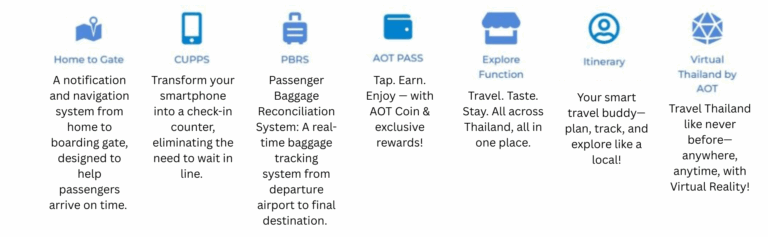
The application features a range of functions, including:
Digital Operation (M2)
Quality service is at the heart of AOT’s operations. We are committed to continuously enhancing the passenger experience by leveraging digital technology and communication. By introducing the Common Use Passenger Processing System (CUPPS), we have reduced processing steps to ensure a faster and more seamless journey for all passengers.
Digital Office (M3)
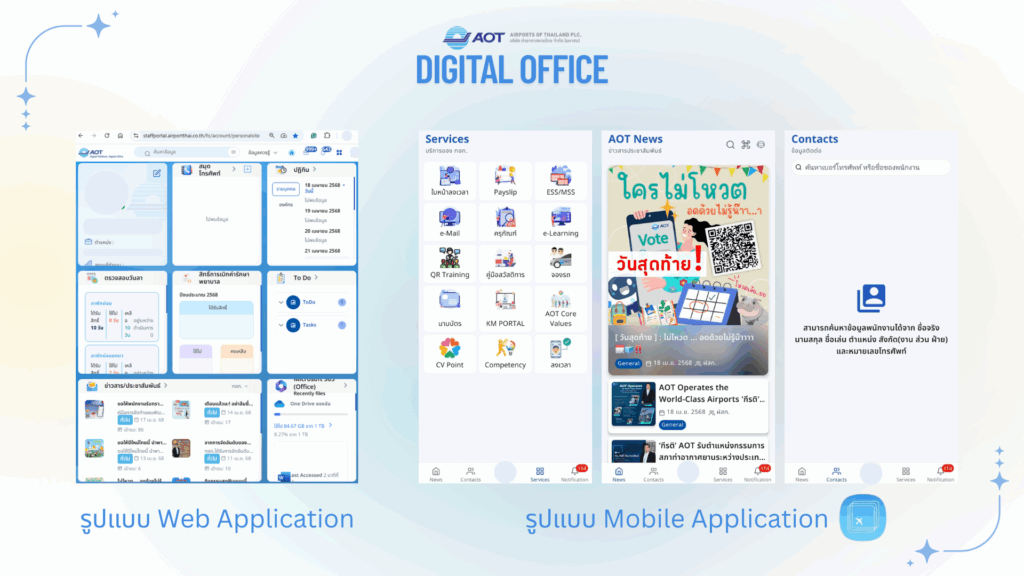
AOT recognizes the importance and benefits of adapting to the digital era. We have adopted digital tools to enhance operational efficiency across our six airports, enabling our employees to perform their daily tasks with greater speed and accuracy. This systematic integration of technology helps streamline our operations and supports our journey toward becoming a fully digital enterprise.
Through this initiative, we have established a robust framework that empowers our employees to work anywhere and anytime. Key digital platforms include personal and departmental websites, a centralized organizational data storage system, digital directories, and specialized operational platforms tailored to specific job functions.
Our notable digital systems include:
Vehicle Request System: This system significantly increases speed and accuracy, reduces paper usage from physical forms, and minimizes the risk of document loss.
Meeting/Training Room Booking System: This platform provides employees with a fast, transparent, and easily verifiable way to book rooms.
These systems collectively enhance operational efficiency, optimize resource utilization, and promote eco-friendly practices, thereby supporting our commitment to sustainable business operations. Furthermore, they contribute to a modern, transparent, and socially responsible corporate image.
Digital Cargo (M4)
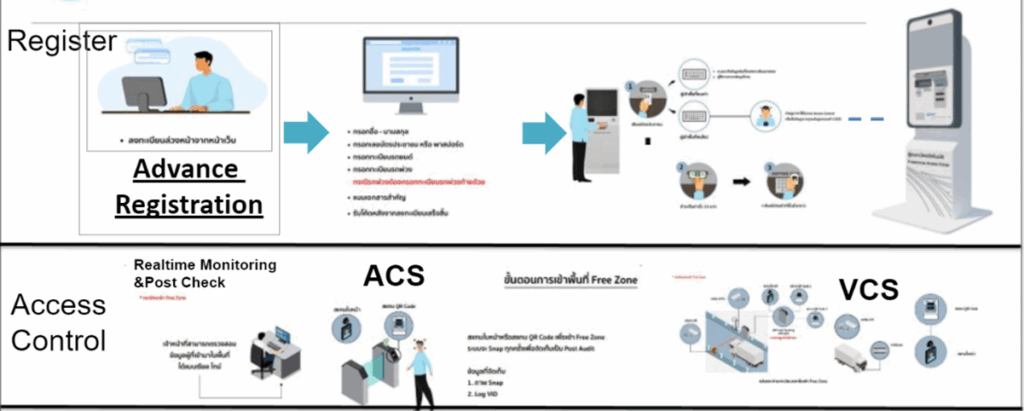
AOT recognizes the importance of developing a fast and efficient cargo transport system while addressing traffic congestion within free zone areas. To this end, the organization has developed the Digital Cargo System (M4), a digital solution for free zone management that aligns with AOT’s Smart Services strategy. The project is implemented in two phases:
Phase 1: Smart Access – Focused on facilitating visitor access through digital systems. Visitors can pre-register via the online platform (Pre-Smart) and obtain access passes independently using Self-Service Kiosks.
Phase 2: Smart Cargo – Involves the integration of information for slot management of cargo pick-up and delivery schedules through two subsystems:
- FEMS (Freezone Entry Management System): A system for managing the entry and exit of vehicles and personnel within the free zone.
- FDMS (Freezone Data Management System): A system for tracking and monitoring the movement of goods within the Suvarnabhumi Airport Free Zone.
These systems collectively contribute to congestion reduction, enhance space and traffic flow management efficiency, and support the future growth of Thailand’s air cargo operations.
Innovation
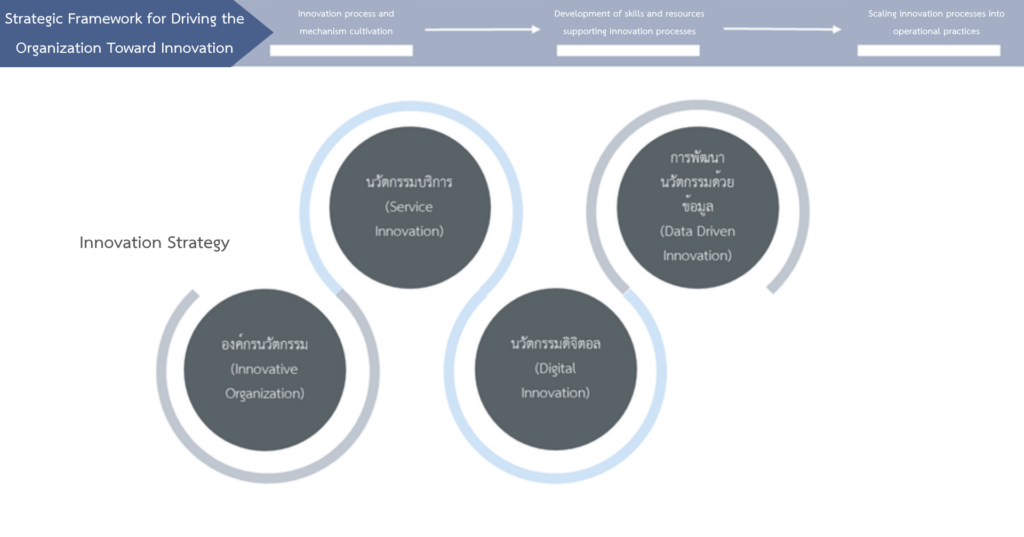
AOT’s innovation-driven transformation, as outlined in the Innovation Master Plan (2023–2027), comprises two key components: the Strategic Innovation Roadmap, which guides the organization toward becoming an innovation-led enterprise, and the Innovation Strategy, which outlines the key approaches for innovation implementation. Successfully driving this transformation requires a strong internal foundation, with organizational readiness as a critical enabler. Therefore, the strategic roadmap emphasizes investing in AOT’s human capital by cultivating innovation processes and mechanisms that build essential skills among employees—recognized as one of the organization’s most valuable resources. This foundation will support the effective execution of AOT’s four strategic innovation areas: Innovation Organization, Service Innovation, Digital Innovation, and Data-Driven Innovation. Through these strategies, AOT aims not only to achieve innovation excellence but also to drive business growth in alignment with long-term sustainability. Ultimately, the outcomes of this transformation will help position AOT as a future-ready, low-carbon organization under the vision of Innovation for Net Zero – AOT Carbon-Free.
Digital Technology and Innovation Risk Management
In integrating digital technology and innovation into airport business operations, AOT recognizes the importance of identifying and managing potential risks that may arise from such integration. This proactive approach ensures operational efficiency and compliance with established standards. AOT conducts risk assessments related to digital technology and innovation, focusing on various key risk areas, including digital data security, regulatory and compliance alignment, network security performance, system reliability, employee readiness and competency in adapting to transformation, shifting user expectations and demands, and the potential for innovation to lead to ambiguity in regulatory interpretation or activities that fall outside existing regulatory frameworks.
To address these concerns, AOT applies a structured risk management process consisting of the following steps: Risk Identification, Risk Analysis and Prioritization, Risk Assessment, and Risk Mitigation and Prevention. This comprehensive approach ensures that risks are not only understood and evaluated but also effectively managed through preventive measures and strategies to reduce their potential impact on the organization.
Responsible Artificial Intelligence
AOT has established an Artificial Intelligence Policy to promote the responsible, secure, and ethical use of AI in alignment with AOT’s missions. The use of AI must comply with AOT’s Personal Data Protection Policy, Information and Communications Technology Security Policy, and related guidelines.
AOT prohibits the use of public or personal AI tools for important internal information, confidential information, financial information, strategic plans, personal data, or information that may affect AOT’s operations. Where AI use is necessary, employees must use AI applications or services approved or provided by AOT.
AOT requires AI-generated content to be reviewed before use or public disclosure to ensure accuracy, reduce or avoid bias and discrimination, and prevent misleading or inappropriate information. Employees must also exercise caution when using AI for activities that may directly affect the rights of individuals or juristic persons. Any violation of the AI Policy is considered a disciplinary offense under AOT’s regulations, and individuals shall be personally liable where their actions violate the law.
AI Usage Guidelines and Internal Manual
In addition to AOT’s Artificial Intelligence Policy, AOT has developed internal AI usage guidelines and frameworks to support the responsible, secure, and appropriate use of AI. These guidelines provide practical instructions for employees and relevant external parties, including clear boundaries on what AI can and cannot be used for.
AOT’s AI guidelines require users to respect data privacy and protect cybersecurity by prohibiting the use of public AI platforms for important internal information, confidential information, personal data, or other sensitive data. Where AI use is necessary, users must use approved enterprise AI tools with appropriate data protection controls.
The guidelines also promote responsible AI use by requiring human oversight, review, and approval before AI-generated content is used or published. Responsible units must clearly define the purpose, scope, type of AI used, and content owner, and must retain supporting evidence for audit and governance purposes. AI-generated content must be reviewed for accuracy, fairness, potential bias, and legal or ethical risks.
To enhance transparency and traceability, AOT requires AI-generated content to be clearly marked with appropriate watermarking or labeling before publication.
For AI data centers and models, AOT currently relies on outsourced or third-party enterprise AI service providers. These providers are selected with consideration of their security, reliability, and environmental policies, including measures to minimize environmental impacts from AI-related infrastructure and operations.
AOT uses approved enterprise AI services from Microsoft, a third-party technology provider with environmental sustainability practices covering AI and cloud infrastructure. Microsoft’s 2026 Environmental Sustainability Report states that, as AI increases demand for energy, water, land, and materials, Microsoft focuses on designing, building, and operating infrastructure that is more efficient and resilient. Its implementation includes improving datacenter energy and water efficiency, using lower-carbon construction materials, minimizing water use and replenishing water in priority regions, increasing reuse and recycling of servers and components, and investing in renewable and carbon-free electricity. These practices support AOT’s use of AI services through providers that manage and reduce the ecological footprint of AI-related infrastructure. (for more information please visit Microsoft 2026 Environmental Sustainability Report — Responsibly building the AI future)
Green ICT and AI Environmental Management
AOT has established a Green ICT Management Guideline to promote the environmentally responsible selection and use of information and communication technology. The guideline supports energy efficiency, reduction of energy consumption, reduction of environmental impacts and e-waste, and reduction of greenhouse gas emissions from ICT systems and equipment.
The guideline covers the ICT equipment lifecycle, including procurement of certified energy-efficient products, reuse and recycling, proper disposal, server virtualization, cloud computing, renewable energy use, and data center efficiency. AOT also monitors energy consumption, carbon footprint, and Power Usage Effectiveness (PUE) related to ICT systems. In relation to AI, the guideline recognizes that AI processing may require high energy consumption; therefore, AI should be applied where it creates net energy or carbon reduction benefits, with consideration of appropriate models, infrastructure, efficient data centers or cloud services, and continuous energy monitoring and operations.
AI Framework for Corporate Communications and Media Production
In addition to AOT’s Artificial Intelligence Policy, AOT has developed an internal framework for the use of Generative AI in corporate communications and media production. The framework provides practical guidance for employees, contractors, and external parties assigned by AOT to ensure AI is used appropriately, lawfully, transparently, and in alignment with AOT’s missions.
The framework emphasizes human oversight by requiring responsible units to review the accuracy of AI-generated content, obtain approval from authorized management before publication, and retain relevant documents or evidence for future audit and governance processes. It also requires clear accountability by identifying the responsible unit, purpose, scope, and type of AI used.
To promote transparency, AOT requires AI-generated content to be clearly and appropriately marked with watermarking or labeling before publication. The framework also defines clear boundaries for AI use, including restrictions on creating misleading AI Voice, AI Avatar, Deepfake, false information, unauthorized use of internal or personal data on public AI platforms, intellectual property infringement, and any use that violates laws, ethics, human rights, or good governance principles.
Employee Training on Responsible AI Use
AOT supports employee capability development on the responsible and effective use of AI through training on Microsoft 365 Copilot and Generative AI. The training aims to enhance employees’ understanding of AI technologies, safe and ethical AI use, and practical application of AI tools to improve work efficiency, document management, communication, data analysis, and decision-making.
The training covers key topics such as Generative AI trends, differences between Copilot and public AI tools, organizational AI usage guidelines, Copilot Chat, Microsoft 365 Copilot applications, Agentic AI, and advanced AI use cases. The program also includes workshops to help employees apply AI appropriately in their work, support digital transformation, and build AI power users and change agents who can share knowledge across the organization.
Quantification of AI Impact on Operational and Social Outcomes
- AI-Based CT Scan
AOT has implemented AI-based Automatic Threat Detection with Computed Tomography (CT) Carry-on Baggage X-Ray systems at Suvarnabhumi Airport to enhance passenger baggage screening. The AI supports security officers by analyzing 3D CT baggage images and identifying potential threats such as firearms, firearm parts, ammunition, knives, sharp objects, and other prohibited items. Final verification and security decisions remain under the responsibility of trained security officers.
AOT monitors the impact of this AI initiative through operational KPIs, including system throughput and the number of baggage trays screened. The system supports passenger screening capacity of approximately 240–290 passengers per hour per lane. For example, screening lanes 17–19 processed approximately 451,062 baggage trays during March–May 2026, demonstrating the use of AI to improve screening efficiency, reduce human error, and strengthen aviation security outcomes.
- AI-Powered License Plate Recognition
AOT applies AI-powered license plate recognition to support vehicle entry and exit management, reducing manual checks and improving convenience for employees and registered users. The system automatically reads vehicle plates to facilitate access control, shorten processing time, and reduce congestion at entry and exit points.
In 2025, the system recorded usage across Building 7, Zone 2, and Zone 3, covering approximately 3.95 million vehicle entries and 3.95 million vehicle exits, or around 7.89 million total vehicle movements. This included approximately 1.12 million movements by registered member vehicles, demonstrating the role of AI in improving operational efficiency, user convenience, and employee access experience.
- Biometric System at Airport
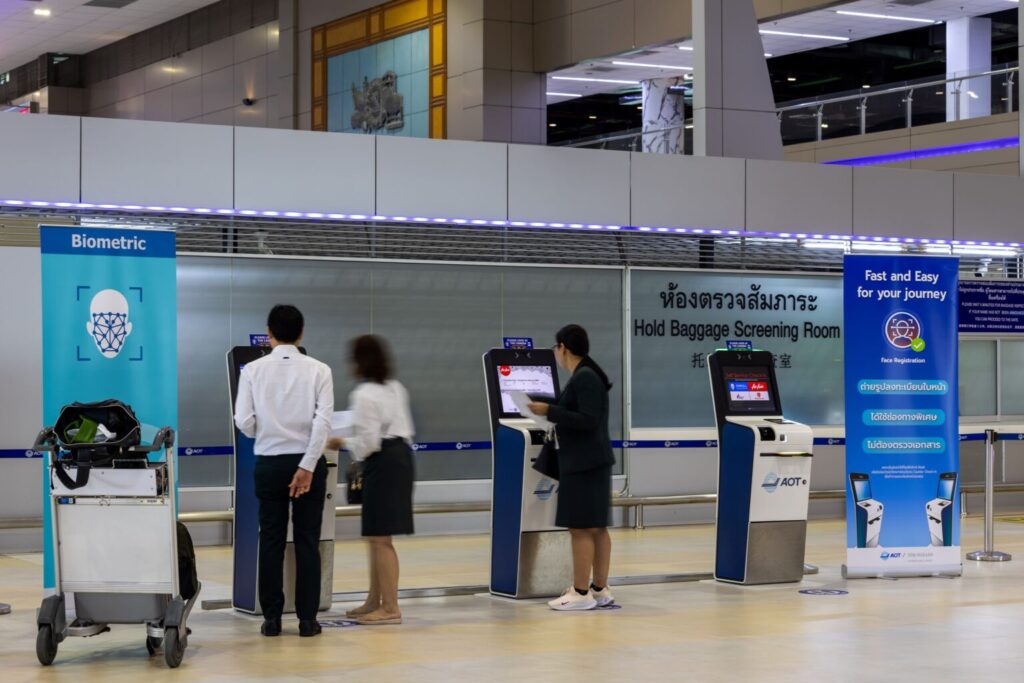
AOT applies biometric facial verification technology to improve passenger processing and reduce waiting time at key airport touchpoints, including check-in, security checkpoints, and boarding gates. The system enables passengers to verify their identity through biometric recognition, reducing repeated manual document checks while maintaining aviation security standards.
Based on AOT’s time comparison, the biometric process can reduce total processing time from approximately 10 minutes 20 seconds to 7 minutes for counter check-in passengers, saving around 3 minutes 20 seconds per passenger. For passengers using self-service kiosks, the process can reduce total processing time from approximately 7 minutes 20 seconds to 3 minutes 50 seconds, saving around 3 minutes 30 seconds per passenger. This demonstrates how AI-enabled biometric technology supports improved passenger convenience, faster service flow, and enhanced airport operational efficiency.
Access Control for Sensitive AI Capabilities
AOT recognizes that certain AI capabilities, including facial recognition, biometric identification, license plate recognition, and video surveillance analytics, are sensitive in nature and require strict governance to protect individual rights and prevent misuse.
- AOT limits access to and deployment of such capabilities to authorized operational units only, under defined purposes aligned with aviation security, passenger facilitation, and employee management. The deployment of sensitive AI capabilities must be approved through AOT’s internal governance process and must comply with AOT’s Personal Data Protection Policy, Cybersecurity Policy, and AOT Artificial Intelligence Policy.
- The Automated Biometric Identification System (facial recognition for passenger processing) is operated exclusively by authorized airport operations personnel, with access rights defined and controlled at the system level.
- The AI-Powered License Plate Recognition system is deployed solely for vehicle entry and access control management within AOT-designated zones, with access restricted to authorized security and operations staff.
- The AI-Based CT Scan system is operated by trained security officers, with final verification and security decisions remaining under human authority at all times.
Human Oversight and Appeals for AI-Assisted Decisions
AOT ensures that AI systems do not make final, irreversible decisions affecting individuals without humanoversight. In all AI-assisted processes, including baggage screening, biometric identification, and access control,final authority and accountability remain with trained AOT personnel, who retain the ability to review, override,or escalate any AI-generated output.
Where passengers, employees, or other affected parties believe that an AI-assisted process has resulted in anincorrect or unfair outcome, AOT provides accessible channels through which concerns may be raised andreviewed:
- Passengers may raise concerns regarding biometric processing, baggage screening outcomes, or other AI-assisted services through AOT’s passenger feedback and complaint channels, including the SAWASDEE by AOTapplication, the AOT Customer Service Center, or directly with airport service staff at the point of service.
- Employees may raise concerns regarding AI-assisted processes affecting employment, such as the AOTFaceVerify attendance system, through AOT’s internal human resources grievance procedures.
- All concerns related to AI-assisted decisions are reviewed by the responsible operational unit, with escalationto relevant management where necessary.
AOT is committed to ensuring that the use of AI does not diminish the right of individuals to seek clarification,reconsideration, or remedy in matters where AI has influenced a decision affecting them.
Implementation
Integration of Digital Technology
Sawasdee by AOT Application
In fiscal year 2025, the number of users on the “SAWASDEE by AOT” application saw significant growth. This success not only reflects AOT’s achievement in developing digital technology for social and user benefit but also highlights enhanced accessibility to AOT services. These improvements directly impacted AOT’s business operations and revenue. In 2025, online revenue (from the SAWASDEE by AOT app and AOT website) reached 6,625,076.09 Baht, significantly exceeding the target of 2,400,000 Baht. This surge in user engagement confirms that AOT’s digital initiatives effectively meet the needs of both users and stakeholders.
Digital Technology: Integrated Digital Warehouse Platform
Under the Digital Warehouse Project plan aimed at enhancing logistics efficiency, AOT has developed a central platform to link and integrate operations between AOT’s internal systems and those of its stakeholders. AOT developed specific modules to reduce operational redundancy within the air cargo system at Suvarnabhumi Airport. This platform addresses congestion, reduces processing times, and increases the capacity for managing cargo and transport vehicles. Furthermore, it expands the cargo handling capabilities within the Free Zone. AOT monitors the effectiveness of this operation in two phases: Phase 1: Smart Access and Phase 2: Smart Cargo.
Digital Technology: Integrated Platform for Digital Cargo Warehouse
Phase 1: Smart Access
AOT has successfully implemented Smart Access by installing Self-Service Kiosks for issuing personal entry passes. This system enhances operational efficiency for daily visitors, allowing them to obtain entry permits instantly. By simply using a National ID card and necessary digital copies of documents, users—including those arriving for cargo pick-up or delivery—can process their access passes through the kiosk on the spot.
Phase 2: Smart Cargo
The Smart Cargo system upgrades the efficiency of cargo collection within the Free Zone by transitioning from analog to digital processes.
Pre-Booking: Users can now pre-book via the “AOT EZ Cargo” application. This allows warehouse operators (TG/BFS) to prepare shipments in advance, ensuring goods are ready before trucks arrive.
Congestion Management: The system effectively reduces terminal congestion through an automated Truck Queuing feature.
Operational Impact: By optimizing logistics costs and streamlining the workflow, the system has proven highly effective. Following its implementation, the average turnaround time for cargo pick-up and delivery has been reduced by 47.95%.
Common Use Passenger Processing System: CUPPS
AOT has integrated advanced digital technologies to support the Self-Service Departure process, streamlining every step from check-in to boarding. These initiatives aim to accelerate passenger handling and maximize satisfaction at Suvarnabhumi Airport. The ecosystem consists of the following six core systems:
Common Use Terminal Equipment (CUTE): Standardized passenger processing at check-in counters.
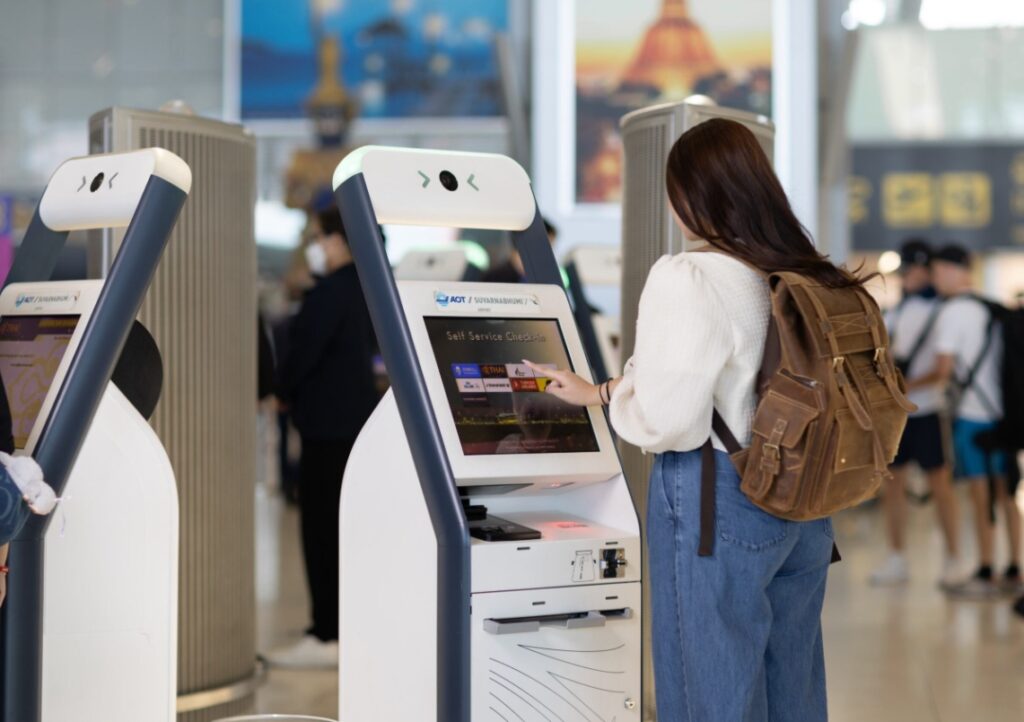
Common Use Self Service (CUSS): Automated kiosks for self-check-in.
Common Use Bag Drop (CUBD): Automated systems for self-service luggage dispatch.
Passenger Validation System (PVS): An automated system to verify travel documents and passenger identity.
Self-Boarding Gate (SBG): Automated gates for a seamless boarding process.
Automated Biometric Identification System (Biometric): Identity verification using unique biological traits.
Current trends show an increasing shift toward automated departure services. According to the 2024 Digital Action Plan (Strategy 1, Sub-strategy 1.1: Enhance Passenger Experience), the usage ratio of traditional check-in counters versus self-service options reached 75.19%, successfully meeting and exceeding the set target of 75%.
Automated Border Control (ABC) System
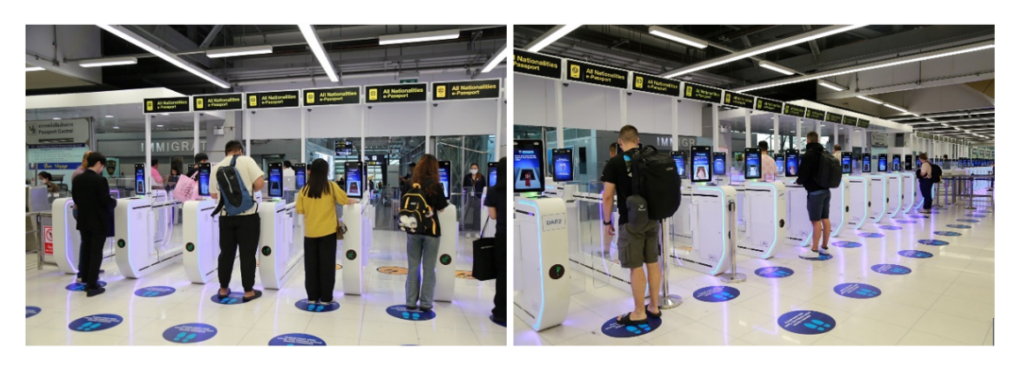
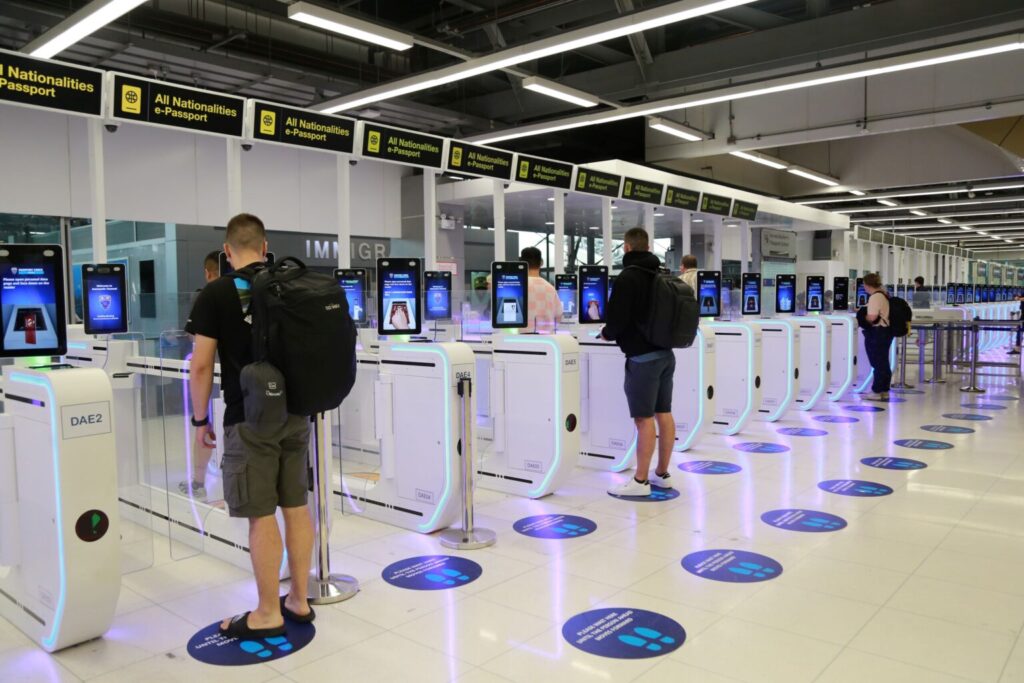
AOT has implemented the Automated Border Control (ABC) system at Suvarnabhumi Airport to enhance immigration management efficiency. By integrating biometric technology and e-Passport readers, the system automates passenger identity verification. This initiative significantly reduces queuing times, alleviates terminal congestion, and upgrades security measures to meet ICAO international standards. Furthermore, the system prioritizes data protection to ensure passenger confidence in both safety and privacy.
Following its full-scale activation in 2024, the Automated Border Control (ABC) system has become a cornerstone of AOT’s digital infrastructure. Looking ahead to 2026, AOT plans to expand the installation to Don Mueang International Airport and Phuket International Airports. This expansion includes upgrading passport verification capabilities to support both e-Passports and non-e-Passports, ensuring a broader range of travelers can benefit from the automated process.
Integration of Innovation
Baggage Tracking System
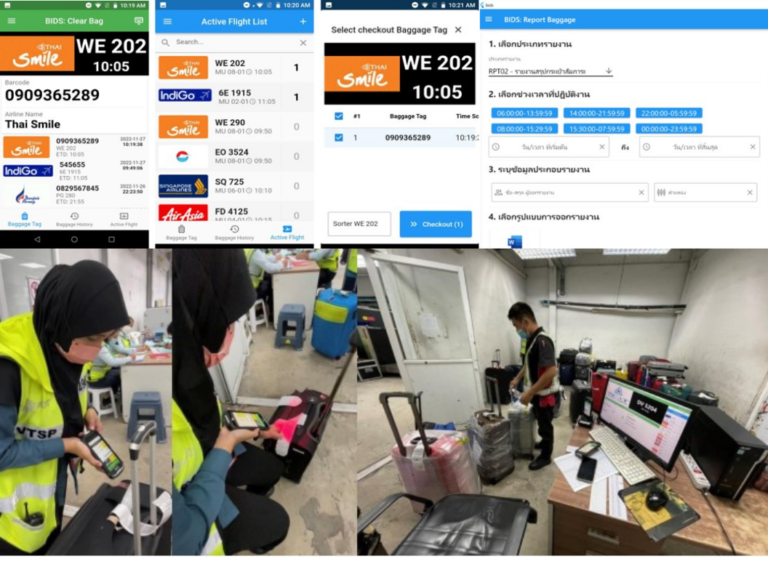
The Baggage Tracking System is an innovative solution developed to enhance the efficiency and accuracy of the passenger baggage screening process. The system was officially implemented on April 25, 2023, at Phuket International Airport, with the primary objective of improving operational efficiency, reducing errors in baggage verification, and digitizing the process for greater accuracy and reliability.
This system significantly improves the screening process for baggage that fails the initial X-ray scan. It allows staff to transfer such baggage to the Baggage Inspection Room (BIR) and digitally record inspection details via an electronic platform. This approach reduces processing time and improves overall convenience for both airlines and passengers.
The system consists of three main operational steps, as follows:
| Inspection Record | Information Transfer | Automatic Notification System |
|---|---|---|
|
|
The system provides real-time baggage status alerts, enabling staff to monitor and evaluate the situation promptly. |
In addition to enhancing the speed and efficiency of airport services, the Baggage Tracking System also generates positive impacts on society and the environment. It helps reduce resource consumption, lower greenhouse gas emissions, and improve passenger satisfaction. This system represents a significant step forward for AOT in promoting sustainable operations while supporting continued business growth.
| Social and/or Environmental Benefits | Business Benefits |
|---|---|
|
|
NOTIFLOW
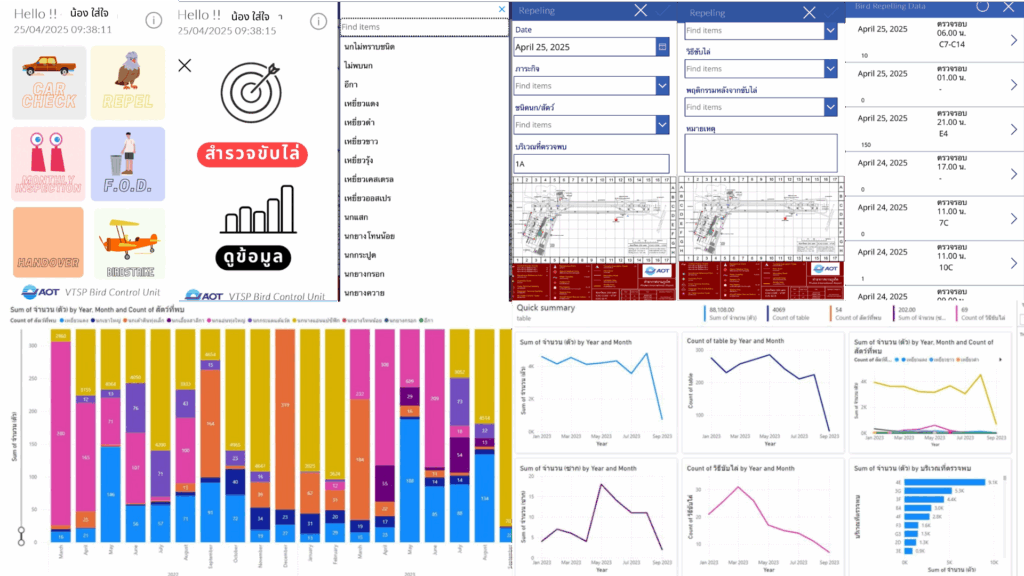
NOTIFLOW is an innovative solution developed from the Development Crew – AOT Innovation Community Project, aimed at streamlining operations and reducing procedural steps. The system was officially approved for implementation on August 27, 2024, with the primary objective of transitioning work processes into a fully electronic format and achieving a paperless environment.
NOTIFLOW leverages applications currently available within AOT’s digital infrastructure—Power Apps, Power Automate, and Power BI—to support the recording, storage, processing, and visualization of data through advanced data analytics. It also integrates real-time notifications via the MS Team chat, replacing traditional paper-based reporting, which has long been limited by extensive paper usage and manual handling.
In fiscal year 2025, the system was further expanded and applied to other operational areas, such as office supplies and equipment requisition management. The enhancement was designed to address issues related to unrecorded withdrawals, improve transparency and traceability, enable efficient historical data verification, and support more accurate procurement planning for future usage, as well as improve storage space management to ensure equipment is organized more systematically and efficiently.
| Social and/or Environmental Benefits | Business Benefits |
|---|---|
|
|
Note: This summary presents the operational results of the Airside Operations Department at Phuket International Airport, which serves as the pilot unit for this initiative. In the future, the project is expected to be expanded and further developed into a broader initiative that applies digital technology systems to enhance airside operations.
Automated Biometric Identification System: Biometric
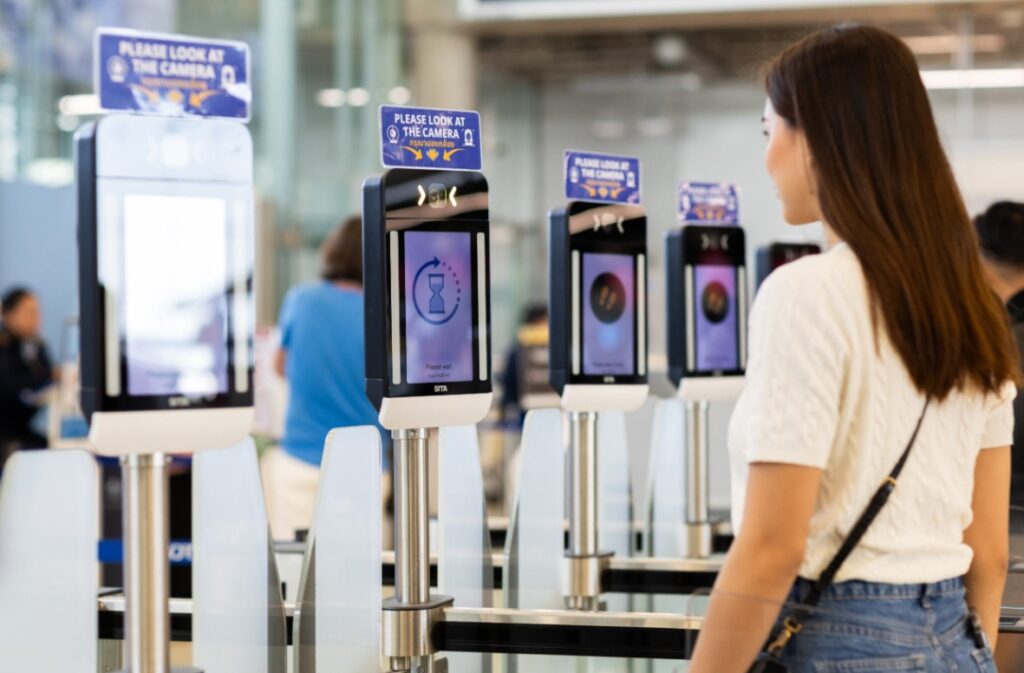
In 2025, Airports of Thailand Public Company Limited (AOT) continued to develop and expand its innovation initiatives to support environmental sustainability and reduce resource consumption by eliminating paper-based processes and transitioning to fully electronic operations. One of its key initiatives is the Automated Biometric Identification System (Biometric).
AOT has implemented the Automated Biometric Identification System using Facial Recognition technology to verify passenger identities, enhancing convenience and reducing waiting times at service checkpoints. In addition to improving the passenger experience by making travel more seamless, efficient, and secure, the system helps reduce queue times across various service points at all six AOT airports. The system was launched for domestic passengers on 1 November 2024 and for international passengers on 1 December 2024.
Beyond improving operational efficiency and passenger services, the Automated Biometric Identification System also contributes significantly to reducing paper consumption during the passenger check-in process for both passengers and airlines. In 2025, the system is projected to reduce paper usage by more than 70 million sheets across AOT’s six airports. This estimate is based on the average number of passengers between 2020 and 2024, assuming that each passenger would otherwise use one sheet of paper per journey.
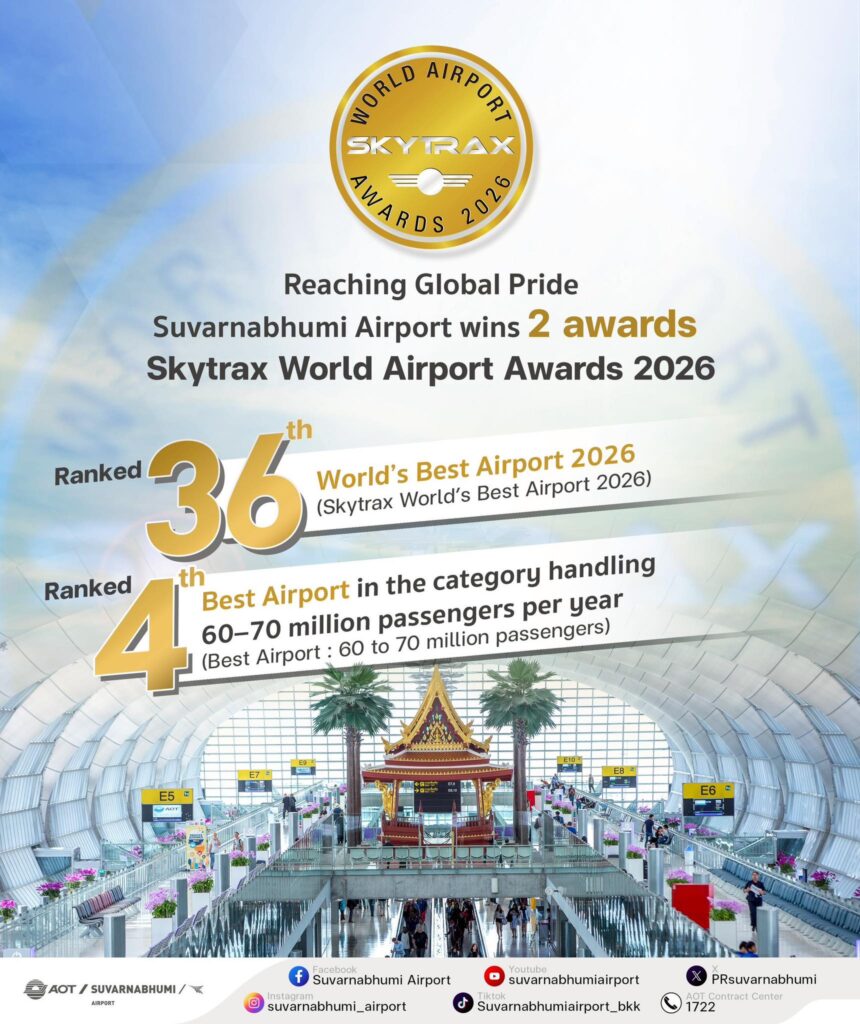
In addition, AOT’s adoption of advanced digital technologies to enhance passenger services has significantly improved the quality of its airport operations and customer experience. As a result, Suvarnabhumi Airport achieved notable recognition in the 2026 Skytrax World Airport Awards. The airport was ranked 36th among the World’s Best Airports. It was also ranked 6th among Best Airports handling 60–70 million passengers annually.
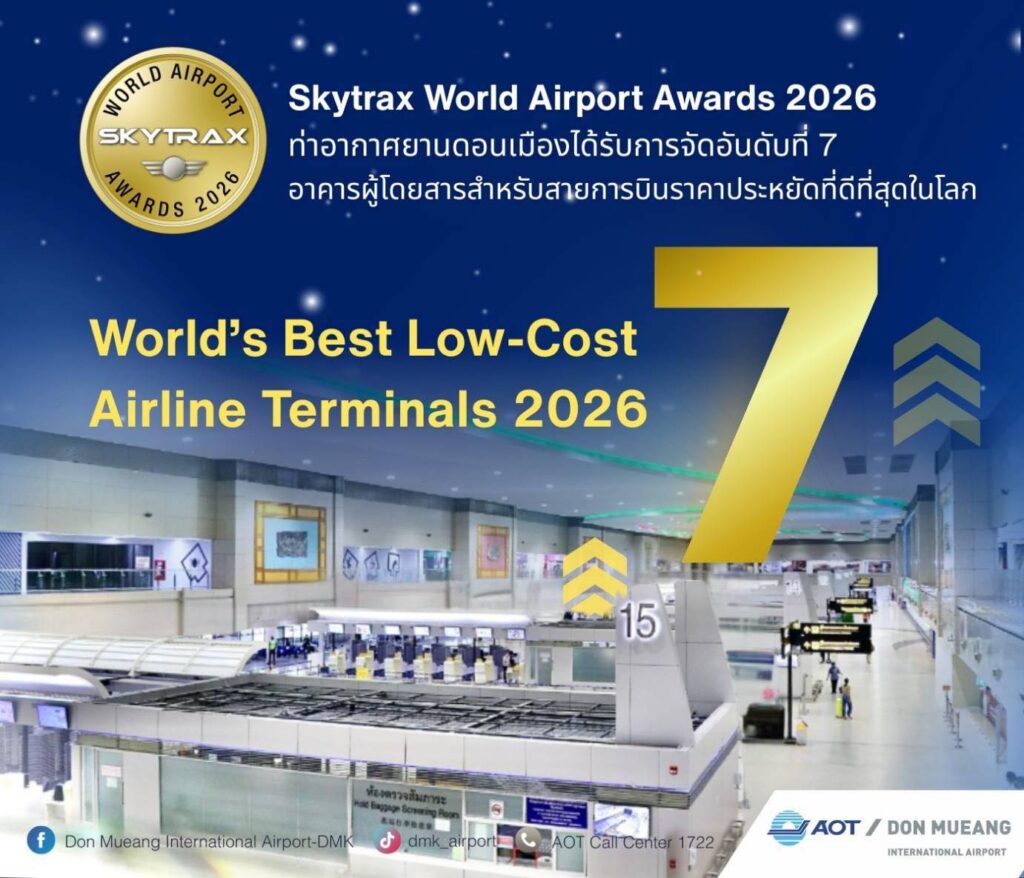
Don Mueang International Airport also improved its standing, ranking 7th in the World’s Best Low-Cost Airline Terminals category 2026.
These rankings are based on the World Airport Survey, an independent global passenger satisfaction survey conducted by Skytrax, a leading UK-based aviation research and consultancy firm specializing in the assessment of airline and airport service quality worldwide.
The recognition reflects AOT’s continued commitment to leveraging innovation and digital transformation to enhance operational efficiency, strengthen service quality, and deliver a seamless travel experience for passengers across its airports.
Source: www.airportthai.co.th/
AOT Face Scan on Mobile
AOT has adopted digital technologies to enhance its organizational management systems through the M3 Digital Office, which forms part of its Enterprise Resource Planning (ERP-SAP) platform. The system is utilized to support the management of organizational resources, with a focus on ensuring efficient resource allocation and maximizing operational effectiveness. It also enables the integration and connectivity of data from various systems, both within AOT and from external sources, thereby improving information accessibility, operational efficiency, and decision-making across the organization.
In fiscal year 2024, Airports of Thailand Public Company Limited (AOT) enhanced its workforce time and attendance management system to improve operational efficiency and modernize human resource management through the implementation of AOT FaceVerify, a facial recognition-based attendance system. The system enables employees to record their check-in and check-out times independently via their personal mobile devices, providing greater convenience, faster processing, and reducing administrative procedures associated with time attendance recording.
The system leverages Artificial Intelligence (AI) technology to verify and authenticate employee identities through facial recognition. It is also integrated with Bluetooth Low Energy (BLE) Beacon technology to determine the user’s location at the time of attendance recording. This combination enhances the accuracy, transparency, and reliability of attendance data.
AOT FaceVerify was officially launched at AOT Headquarters on 12 July 2024. In fiscal year 2025, the system was further expanded to Suvarnabhumi Airport and Don Mueang International Airport, with plans to extend implementation across all six AOT-operated airports by fiscal year 2026. This initiative supports AOT’s transition toward becoming a fully digital organization.
| Social and/or Environmental Benefits | Quantitative Business Benefits |
|---|---|
|
|
Fostering Organizational Culture Toward the Digital Era
Development Crew Project
The Development Crew Project focuses on transforming creative ideas into prototype innovations by providing financial and technological support from relevant departments. The initiative selects ideas that align with the organization’s strategies and deliver value to AOT. In 2024, the committee approved the development of three innovation projects following the innovation development process—from the development stage to actual implementation—as follows:
- Pick and Pack (AOT iCheck): A mobile application that allows passengers to verify whether their belongings can be carried onboard. It also serves as a database for inspection and public relations staff to assist passengers with the baggage screening process.
- NOTIFLOW: A digital reporting system for operations in airside areas, including report creation and performance visualization, aimed at transitioning work processes to a fully electronic format.
- AOTDP (AOT Digital Platform): A system designed to support the process of requesting permission for the registration and use of state property land.
The "Innolution" project
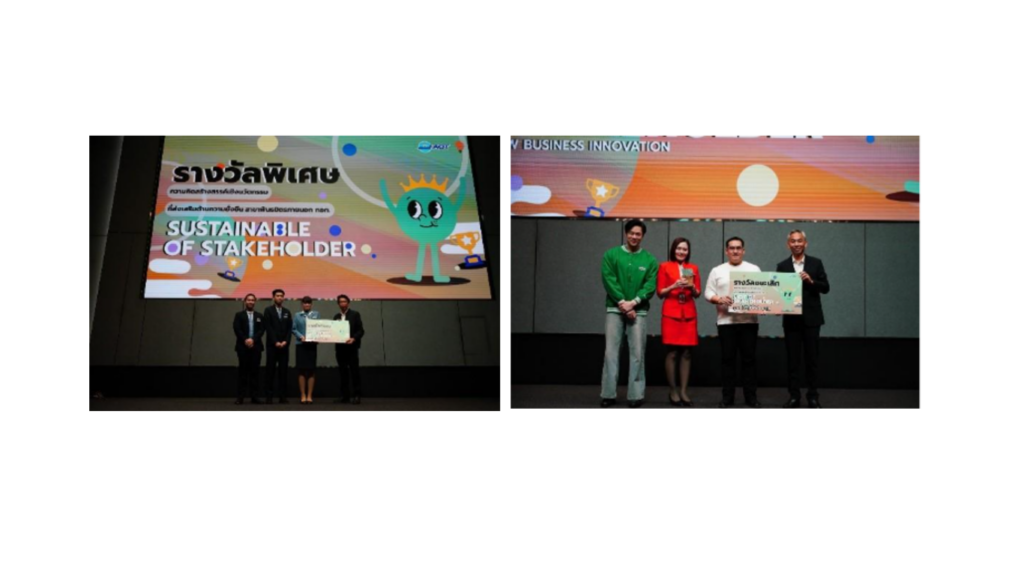
Airports of Thailand Public Company Limited (AOT) has launched the “Innolution” creative innovation contest. The project aims to raise awareness and incentivize innovative development, while building upon creative ideas from both internal personnel and external stakeholders. Furthermore, it seeks to establish collaborative networks to develop tangible innovations that address airport service challenges. This initiative reflects AOT’s commitment to driving the organization forward through creativity and technology, enhancing service quality, and creating value for all stakeholders.
In the 2025 fiscal year, the Innovation Strategy Department organized the Innolution contest, with the application period beginning in June 2025. A total of 86 entries were submitted, comprising 76 projects from AOT employees and 10 from external stakeholders.The Final Round took place on August 27, 2025, at the Auditorium, Asia Aviation Academy. Out of 18 finalists, there were 9 projects from AOT employees, 8 from external stakeholders, and 1 special entry. These finalists reflect broad participation and the creation of concepts that can be further developed into innovations to elevate future airport services.
The winning projects in each category are as follows:
Winner in Product/Service Category: The implementation of a baggage collision prevention system at X-ray consolidation points.
Winner in Process Improvement Category: The “Docuforge” project (Automated Drafting System).
Winner in New Business/Mission Category: The “ArtPort” project, presenting a new business model that integrates “Art Exhibition Space” with “Commercial Space.”
Winner in Sustainability Category: The “B-JPTS Wellness Airport” project.
AOT Innovation Day
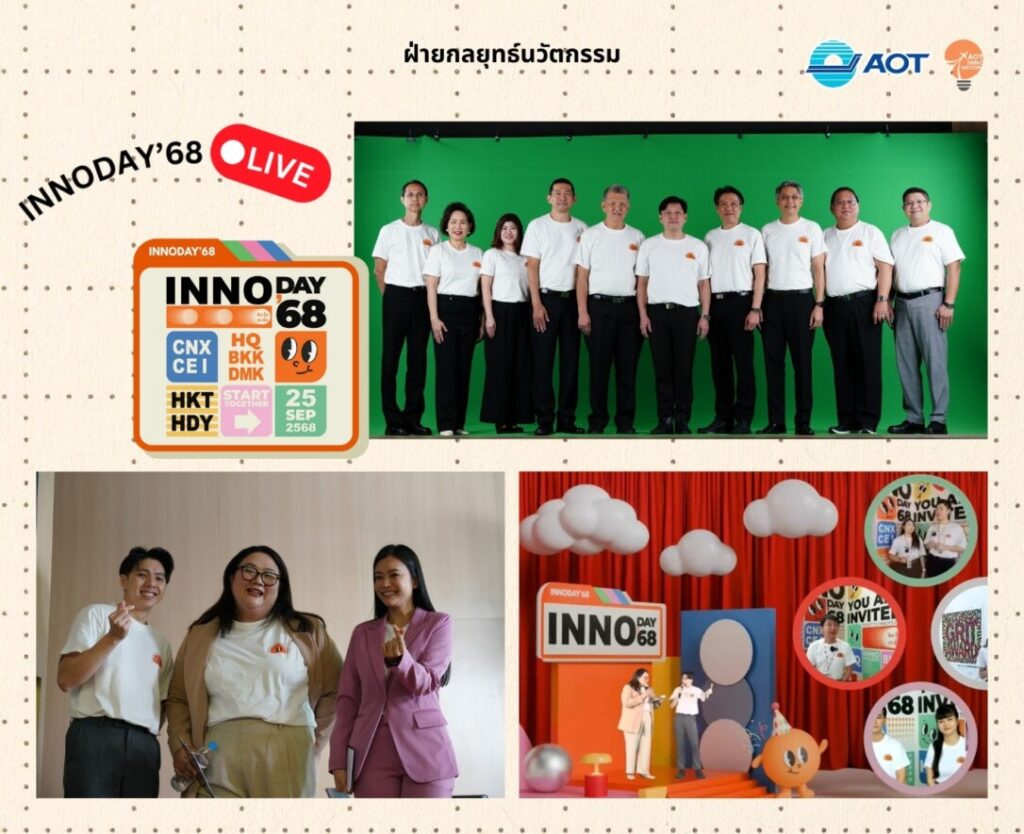
This annual AOT event showcases operational outcomes and innovation projects developed by both internal and external personnel. It also serves to promote innovation awareness and foster a culture of innovation across the organization by creating an environment that encourages creativity, recognition, and the exchange of ideas with innovators and external experts.
Think Out Loud: Sustainable Innovation Project
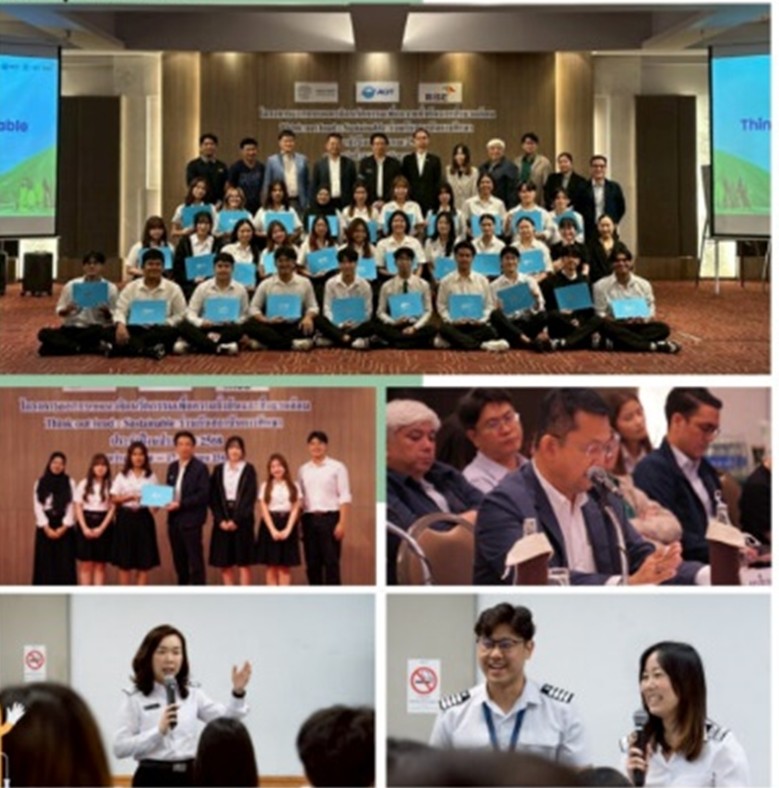
The “Think Out Loud: Sustainable” project is designed to support AOT’s corporate strategic objective (SO4: Lead Changes toward Sustainability) under Strategy 2: Sustainable Environmental Management. This initiative focuses on driving development toward becoming a sustainable and eco-friendly airport.The project aims to design creative concepts for sustainability and the environment by enhancing knowledge and fostering brainstorming through Hackathon activities. AOT’s Innovation Strategy Department and Corporate Strategy Department collaborated with 30 engineering students from Kasetsart University to analyze and develop innovative concepts that contribute to AOT’s sustainability goals.
In 2025, the project yielded 5 key innovative concepts as follows:
1. Waste to Watt Bio-charge Station : A concept to convert airport waste and food scraps into biomass energy. This energy is then used to generate electricity for electronic device charging stations, reducing reliance on external power sources, cutting greenhouse gas emissions, and promoting a circular energy economy from waste.
2. AOT Wear the Change : A concept focused on upcycling Polyethylene Terephthalate (PET) plastic bottles collected within Suvarnabhumi Airport into polyester yarn. This yarn is used to manufacture fabrics or uniforms, effectively reducing the production costs of AOT staff uniforms.
3. From Waste to Value : A concept to transform sludge and grease traps from Suvarnabhumi Airport’s wastewater treatment process into Sustainable Aviation Fuel (SAF). This is achieved through partnerships with external companies to generate revenue for AOT while fulfilling the mission of becoming a “Sustainable Airport.”
4. Eco Power Path : A concept utilizing Piezoelectric technology to convert mechanical energy into electricity. By installing “Pavegen Slabs” in high-traffic passenger walkways, the pressure from footsteps is converted into electrical power, providing a carbon-neutral energy source and reducing dependence on traditional power grids.
5. One Card for Everyone : A concept encouraging passengers to use public transportation via the “AOT CARD.” This carbon-offset rewards card supports E-Payment systems and integrates with the SAWASDEE by AOT application. Passengers can accumulate points from using public transport to redeem various privileges, further enhancing AOT’s image as a “Green Airport.”
Lessons Learned
From the implementation of projects under AOT’s Innovation Master Plan, it was found that the main challenges lie in cross-departmental coordination and the adoption of new tools or technologies, where there is often a lack of sufficient expertise and support. Additionally, fostering a shared understanding of the concept of sustainable innovation still requires clear and continuous communication.
Application of Lessons Learned in Policy and Operational Processes
AOT has integrated lessons learned from previous operations into its policy-making and operational processes. For the 2025 Fiscal Year, AOT established the “Think Out Loud: Sustainable” project with the following core objectives:
Capacity Building: To provide specialized training for relevant personnel, enhancing their proficiency in innovative tools and technologies dedicated to sustainability.
Integrated Collaboration: To develop cross-functional working mechanisms by creating an efficient communication platform that facilitates seamless information exchange and synergy between departments.
Process Standardization: To define clear Standard Operating Procedures (SOPs) for sustainability-driven innovation projects, ensuring greater clarity and consistency across the organization.
Expected Outcomes
These improvements aim to enhance the effectiveness of innovation projects, particularly in fostering cross-functional collaboration, and achieving the goals under Strategic Objective 4 (SO4): Lead Changes Toward Sustainability, which focuses on developing environmentally friendly and sustainable airports.
AI Security for AI Innovation 2025 Project
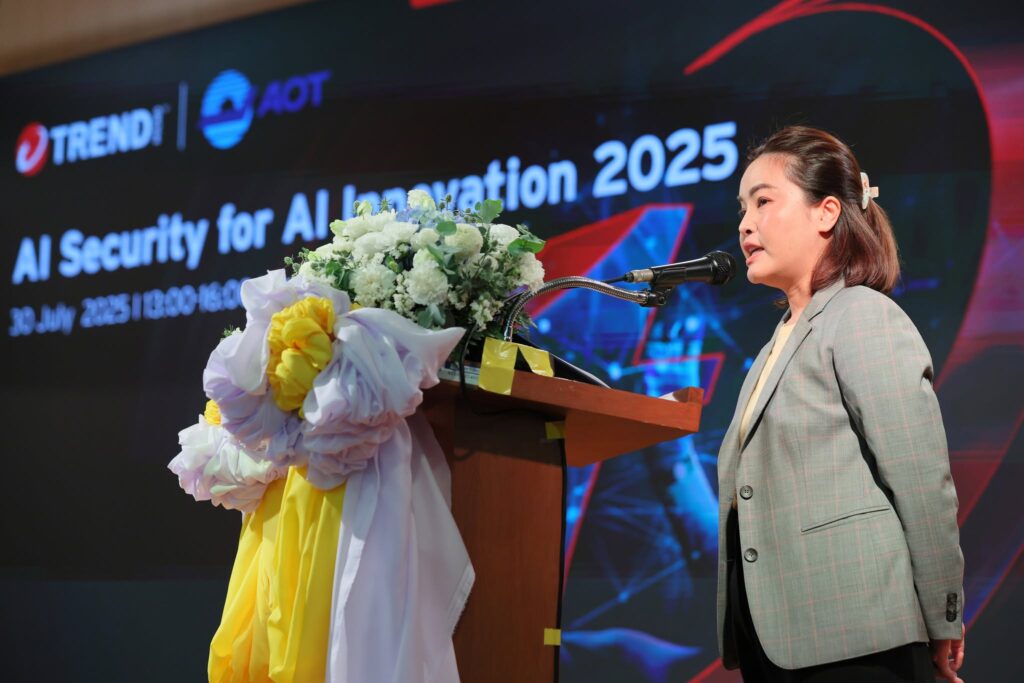
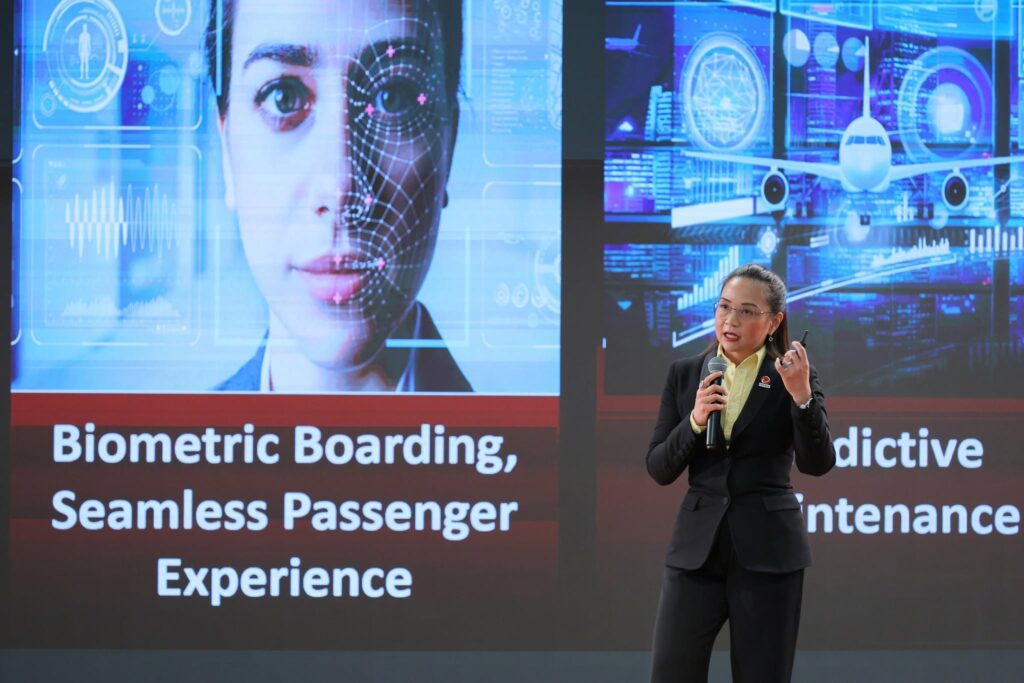
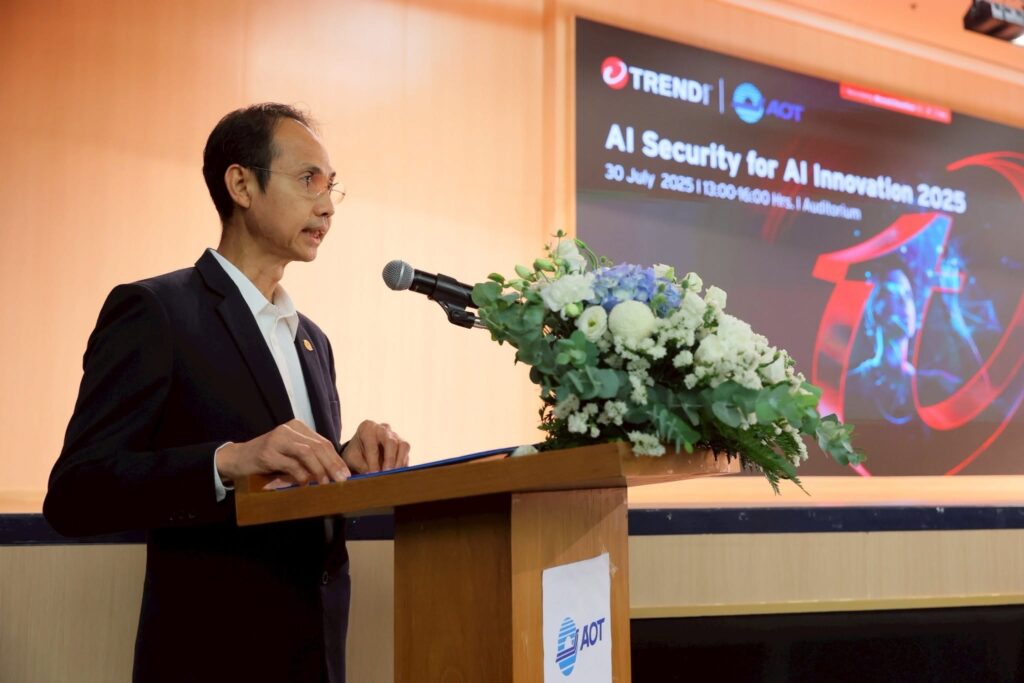
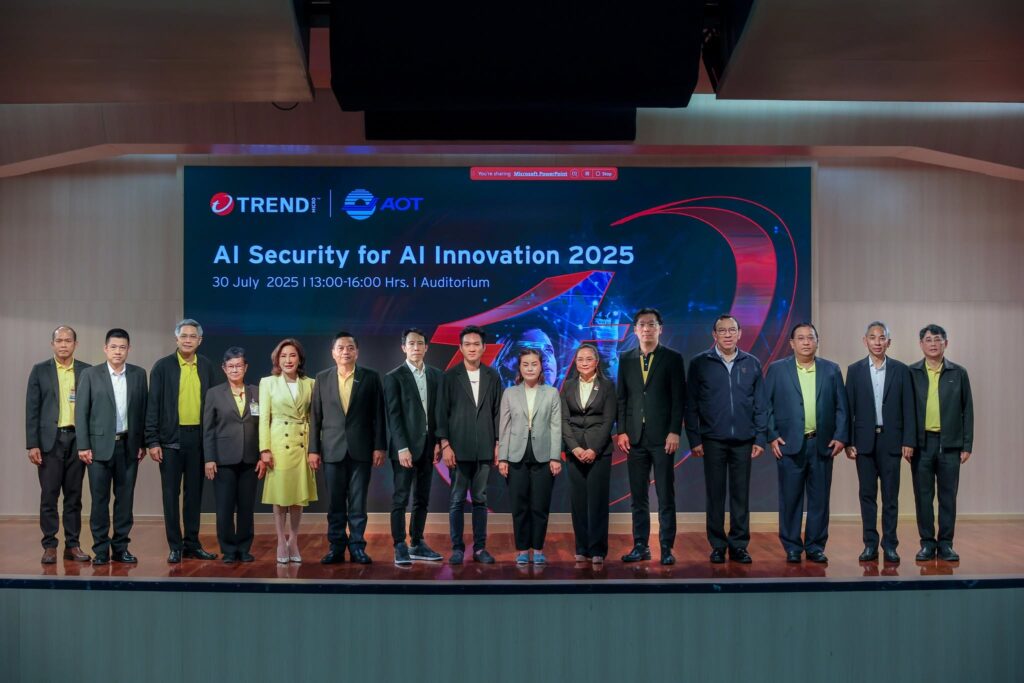
Ms. Paweena Jariyathitipong, Acting President of Airports of Thailand Public Company Limited (AOT), presided over the opening ceremony of the “AI Security for AI Innovation 2025” training program (Executive Level) for the fiscal year 2025.The event featured a distinguished panel of guest speakers, including:
Dr. Trin Twitharanon, Chief Digital Service Business Officer of Thailand Post Co., Ltd.
Dr. Thanakorn Wangpipatwong, Executive Vice President of Information Technology and Digital Line at Bangkok Commercial Asset Management Public Company Limited (BAM).
Ms. Piyatida Tantrakul, Country Manager of Trend Micro (Thailand) Co., Ltd.
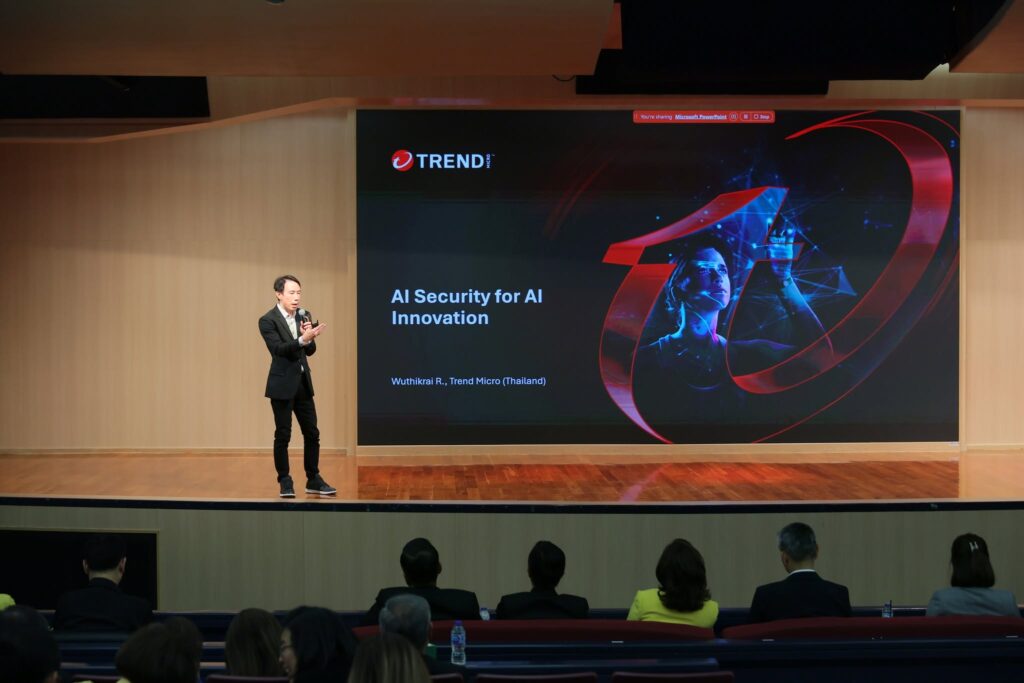
Mr. Wuthikrai Rattanamaitreekiat, Cybersecurity Consultant at Trend Micro (Thailand) Co., Ltd.
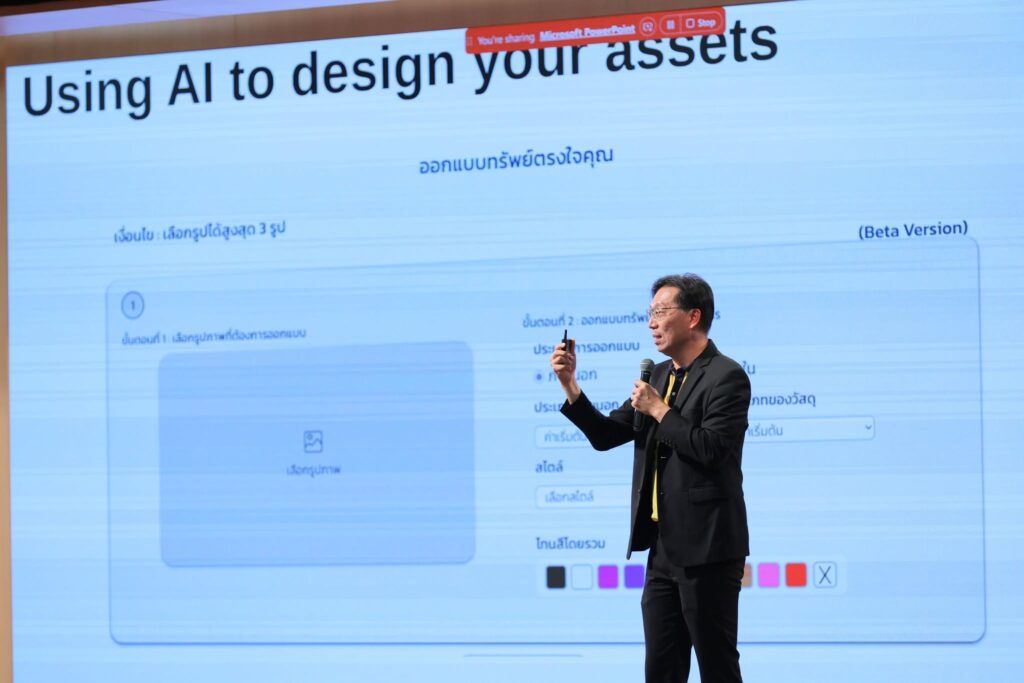
The panel discussion aimed to enhance knowledge and understanding of various forms of cyber threats, including emerging threat trends arising from the integration of Artificial Intelligence (AI) into organizational processes. Key topics covered included adversarial machine learning attacks, data poisoning, Deepfakes, and the deployment of AI as an automated hacking tool. The program was attended by senior executives from AOT Headquarters, Suvarnabhumi Airport, Don Mueang International Airport, Chiang Mai International Airport, Mae Fah Luang – Chiang Rai International Airport, Phuket International Airport, and Hat Yai International Airport.
This training initiative focused on equipping senior executives with the readiness to prevent and mitigate both traditional cyber threats and new AI-related risks, enabling them to manage multi-dimensional cyber risks effectively. Furthermore, it serves to reinforce confidence among stakeholders and business partners that AOT continuously prioritizes the security of data and information systems, particularly as AI is integrated into the infrastructure level. Fostering a comprehensive understanding of AI Security and Cybersecurity Governance is a critical component that directly impacts trust and business continuity across AOT’s overall airport operations.The event took place on July 30, 2025, at the Auditorium, AOT Headquarters.
News by: Information and Communication Technology Strategy Department