Background and Rationale
Impacts from Business Operations
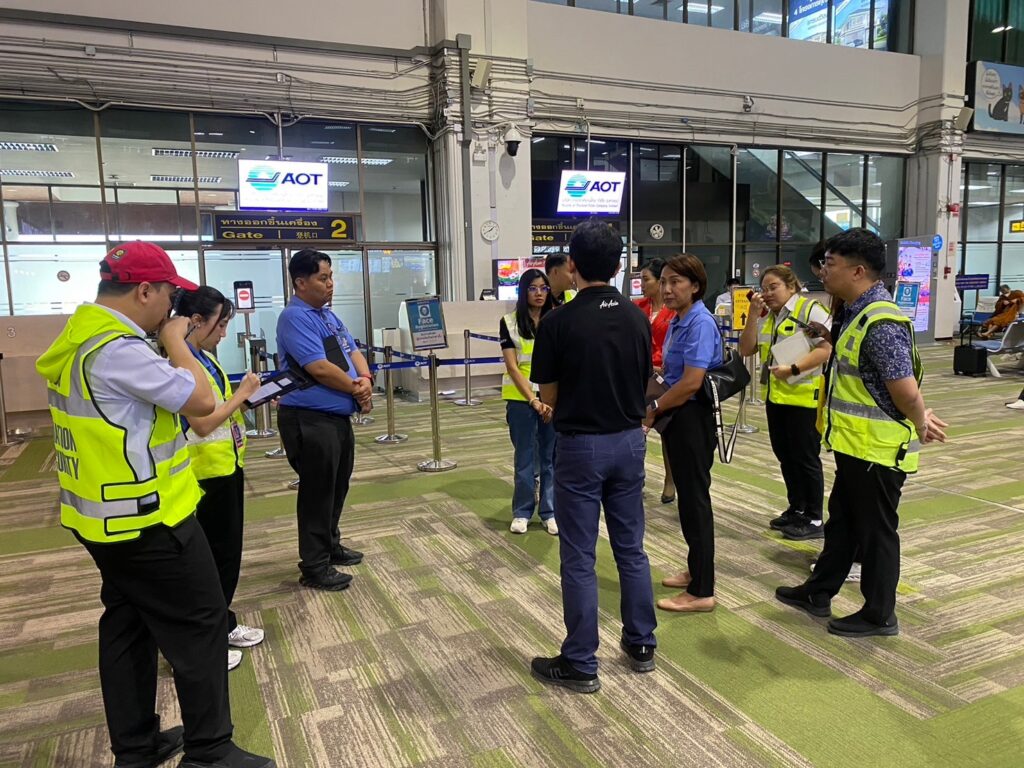
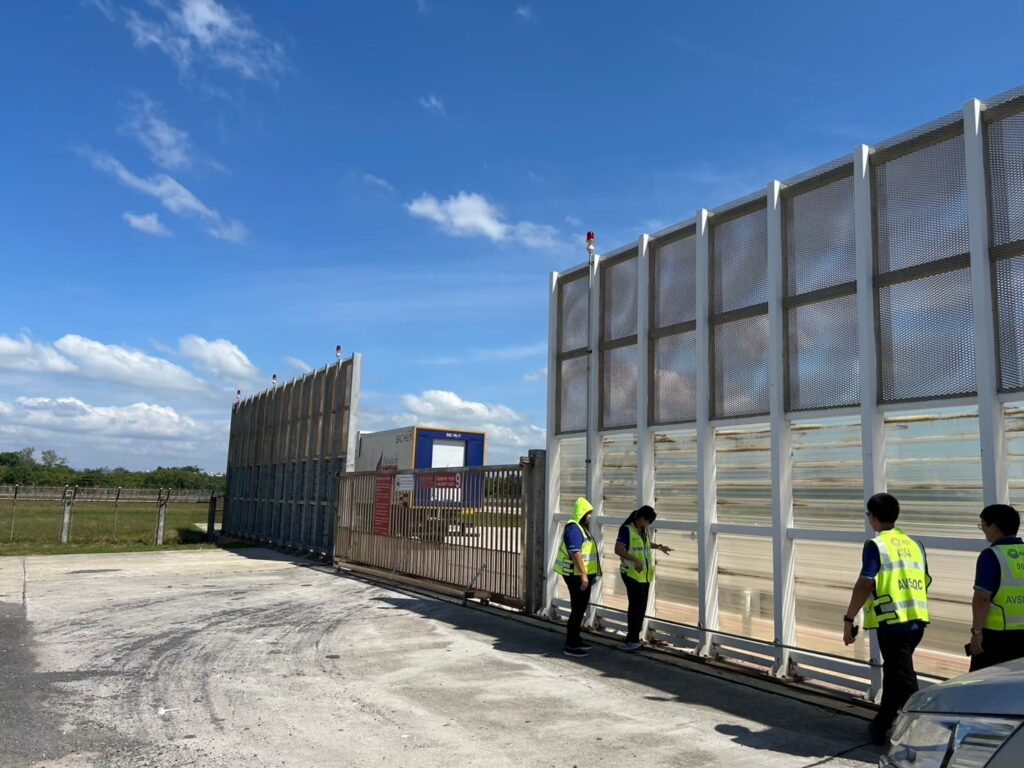
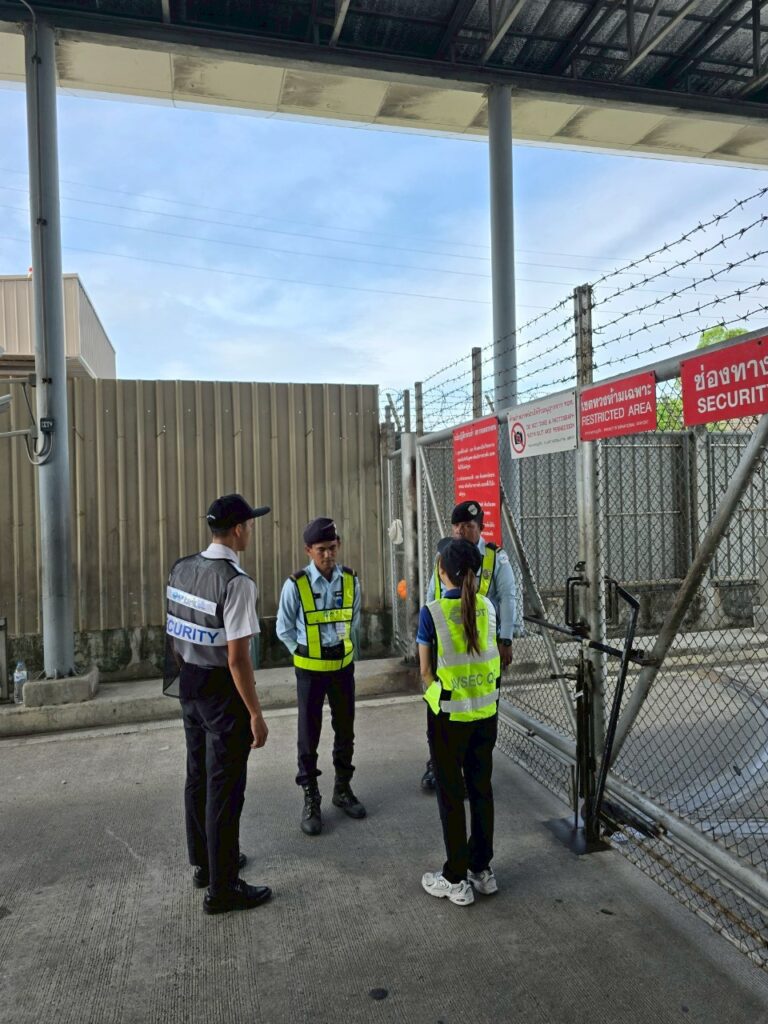
Airport safety and security are fundamental priorities that AOT continuously emphasizes, with operations aligned with international standards. These include monthly inspections, compliance with updated regulations, the provision of medical and firefighting systems, emergency response drills, and coordination with security agencies to prevent and respond to potential incidents.The implementation of stringent safety standards not only protects the lives and assets of passengers, personnel, and business partners, but also strengthens confidence among investors and airlines utilizing AOT’s airports. However, any gaps in safety management or incidents affecting security could negatively impact the Company’s reputation and stakeholder trust.
Maintaining international safety standards and complying with airport safety regulations are therefore essential in preparing for risks and minimizing the likelihood of incidents that may disrupt business continuity. Furthermore, the continuous development of effective management systems enhances operational stability, builds stakeholder confidence, and strengthens AOT’s competitiveness at both national and international levels.
Challenges and Opportunities
Enhancing safety operations in alignment with continuously evolving standards presents ongoing challenges, including the allocation of budgets for personnel training and the establishment of effective monitoring systems to mitigate potential hidden threats. Addressing these challenges requires strong collaboration among organizations at both regional and national levels. Failure to effectively manage safety and security may result in severe impacts on lives, assets, and the organization’s reputation.
Nevertheless, AOT’s stringent safety and security measures represent a key strength in maintaining its positive corporate image and building trust among stakeholders. Furthermore, the adoption of advanced technologies and modern management systems enhances safety performance and supports the development of innovative services, creating added value and long-term competitive advantage.
Commitment and Related Policies, Regulations, and Standards
AOT is committed to enhancing service quality, strengthening airport security, and minimizing operational deficiencies through continuous security inspections and testing. These are conducted both internally by designated supervisory personnel and externally through assessments by the International Civil Aviation Organization (ICAO) under the Universal Security Audit Programme – Continuous Monitoring Approach (USAP-CMA).
These efforts encompass proactive measures and various airport security activities to ensure compliance with international standards. Operations are aligned with relevant laws and recommendations at both national and international levels to safeguard the lives and property of customers, personnel, operational partners, as well as communities and society.
In addition, AOT implements measures to prevent and mitigate threats posed by individuals or groups with behaviors that may compromise security. These efforts also support the protection of fundamental human rights, particularly the rights to life and safety.
| National Level | International Level |
|---|---|
|
|
AOT Safety Policy
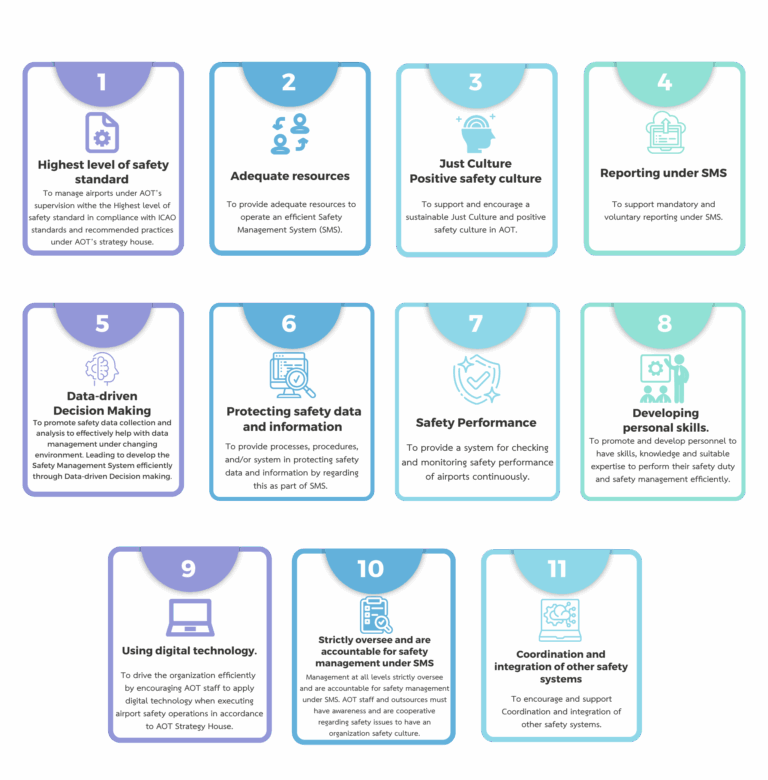
AOT has established a Safety Policy to continuously develop and enhance safety standards, with the objective of ensuring that aviation operations achieve safety performance in line with the organization’s strategies and core values, and comply with the standards of the International Civil Aviation Organization (ICAO).
In addition, AOT continuously improves its service quality management system. The AOT Safety Policy comprises 11 key principles, covering the following major aspects:
AOT Safety Objectives
To ensure that safety operations under AOT’s Safety Management System (SMS) achieve desired airport safety outcomes, AOT aims to reduce the risk of accidents and serious incidents arising from airport operations under its responsibility. These efforts are aligned with the Thailand Aviation Safety Action Plan (TASAP) B.E. 2567–2569 (2024–2026) as announced by the government.
Accordingly, AOT has established AOT Safety Objectives to enhance safety processes and focus on both safety outcomes and impacts, as follows:
- Ensure airport operations comply with national laws and are aligned with the standards and recommended practices of the International Civil Aviation Organization (ICAO), while maintaining certification standards for public airport operations
- Effectively implement a unified airport Safety Management System (SMS) to achieve the highest level of safety performance across all AOT airports
- Promote knowledge, awareness, and collaboration in safety management to foster continuous development toward a strong safety culture
- Establish an effective safety reporting system and promote a Just Culture within the organization
- Continuously measure and monitor safety performance
- Enhance safety management effectiveness through the adoption of innovation and/or technology
In addition, AOT has defined specific safety objectives as follows:
- Reduce the rate of safety occurrences related to Controlled Flight into Terrain (CFIT) associated with AOT airport operations
- Reduce the rate and severity of runway excursions at AOT airports
- Reduce the rate and severity of runway incursions at AOT airports
- Reduce the rate of bird strike incidents at AOT airports that result in damage to aircraft
Establishment of airport safety and security targets
AOT’s Airport Safety Targets
AOT’s primary safety target is to achieve Zero Accidents for airport users and all stakeholders across its six airports during the fiscal years 2023–2027. This target will be pursued through a multi-faceted approach, encompassing policy development, governance structures, operational guidelines, and continuous monitoring.
The AOT Corporate Plan for the Fiscal Years 2023–2027 (Revised Edition for FY 2024) outlines Strategy 1: Expanding Passenger Handling Capacity while Maintaining Airport Safety and Security Standards. Under Tactic 1.2, AOT aims to ensure the effective utilization of airport infrastructure and facilities by enhancing operational efficiency, ultimately achieving the goal of Zero Runway Accidents.
Airport Audit and Inspection Targets
AOT has established long-term targets for airport safety audits and inspections, as well as compliance with international regulations and the requirements of the Civil Aviation Authority of Thailand (CAAT), as follows:
| Indicator | Result 2025 | Result 2026 | Long-term Target (3–5 Years) |
|---|---|---|---|
| Airports receiving annual security assessment on a continuous basis (%) | 100% | 100% |
100% continuously every year (at least until 2027) |
| Security operations conducted in compliance with government regulations and international standards on a continuous basis (% of operations) | 100% | 100% |
100% continuously every year (at least until 2027) |
| Screening officers and security personnel fully qualified in accordance with Civil Aviation Authority of Thailand (CAAT) requirements (%) | 100% | 100% |
100% continuously every year (at least until 2027) |
Remarks
*The Regulation of the Civil Aviation Authority of Thailand on the Certification of Screening Personnel B.E. 2561 (2018) has been effective since 1 February 2019.
** Screening personnel must meet the required qualifications, including successful completion of designated training programs such as the Regulation of the Civil Aviation Authority of Thailand on the Certification of Screening Personnel B.E. 2561 (2018), and must not possess any prohibited characteristics as specified in the National Civil Aviation Security Training Programme 2019.
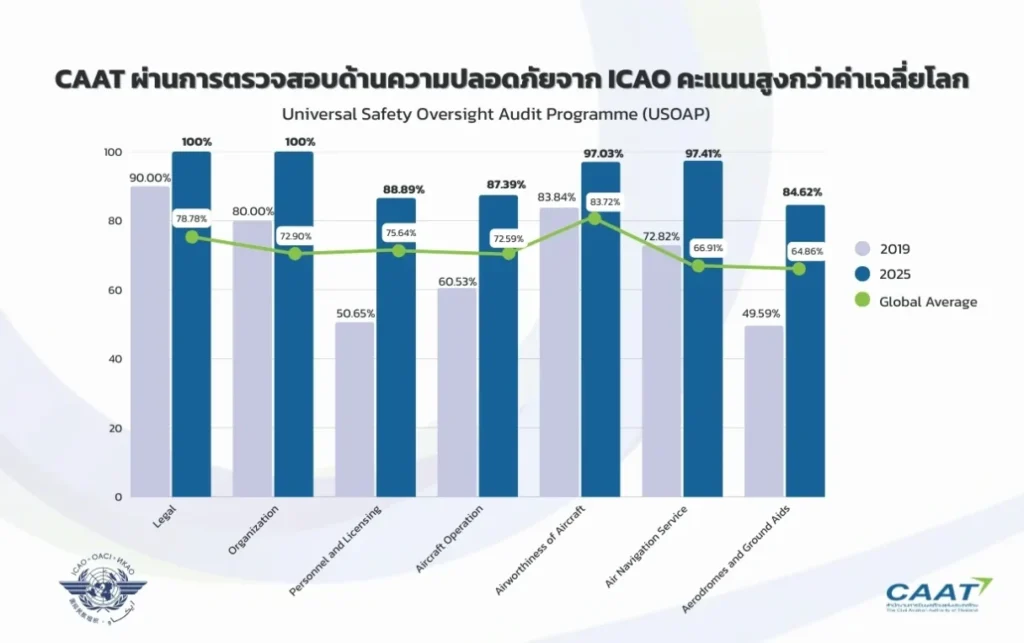
The results of the audit of the civil aviation safety oversight system under the Universal Safety Oversight Audit Programme – Continuous Monitoring Approach (USOAP CMA) conducted by the International Civil Aviation Organization (ICAO) in 2025 reflect AOT’s strong commitment to operating in accordance with international standards.
The preliminary audit results in areas directly overseen by the Civil Aviation Authority of Thailand (CAAT)—including legislation, regulatory organization, flight operations, airworthiness, personnel licensing, air navigation services, and aerodromes—achieved a score of 91.35%, which is 20% higher than the global average of 70.50%. This represents a significant achievement of Thailand’s civil aviation safety oversight system and further strengthens international stakeholder confidence.
Integration of Safety with External Agencies
AOT, in collaboration with the Civil Aviation Authority of Thailand (CAAT) and other relevant agencies, has incorporated Specific Operation Objectives (OPR) related to airport operations into its operational framework, safety targets, and objectives to drive the Aviation Safety Plan and the Thailand Aviation Safety Action Plan (TASAP).
For the six state-specific objectives, AOT has adopted four objectives related to airport operations as its specific safety targets, which are:
- Reduce the occurrence rate of safety incidents related to Controlled Flight into Terrain (CFIT) resulting from AOT’s Airport Operations.
- Reduce the occurrence rate and severity of Runway Excursions (RE) resulting from AOT’s airport operations.
- Reduce the occurrence rate and severity of Runway Incursions (RI) resulting from AOT’s airport operations.
- Reduce the occurrence rate of bird strikes at AOT airports that cause damage to aircraft through enhanced airport safety operations.
In addition, AOT has established the AOT Aviation Safety Plan Committee with the authority to develop the AOT Safety Action Plan in alignment with TASAP and to set guidelines for the AOT Runway Safety Programme.
In line with the goal of achieving zero accidents for passengers and all stakeholders across all six airports, AOT’s performance in 2024 has resulted in below table.
| Key Performance Indicators (KPIs) | Performance in 2024 | Performance in 2025 | Target for 2025 |
|---|---|---|---|
| Rate and severity of Runway Excursion (RE) incidents | 3 | n.d. | 0 |
| Rate and severity of Runway Incursion (RI) incidents | 7 | n.d. | 0 |
| Rate of Bird Strike incidents causing aircraft damage | 24 | n.d. | 0 |
| Number of runway accidents (Zero Accident target) (cases) | 0 | n.d. | 0 |
Management Approaches
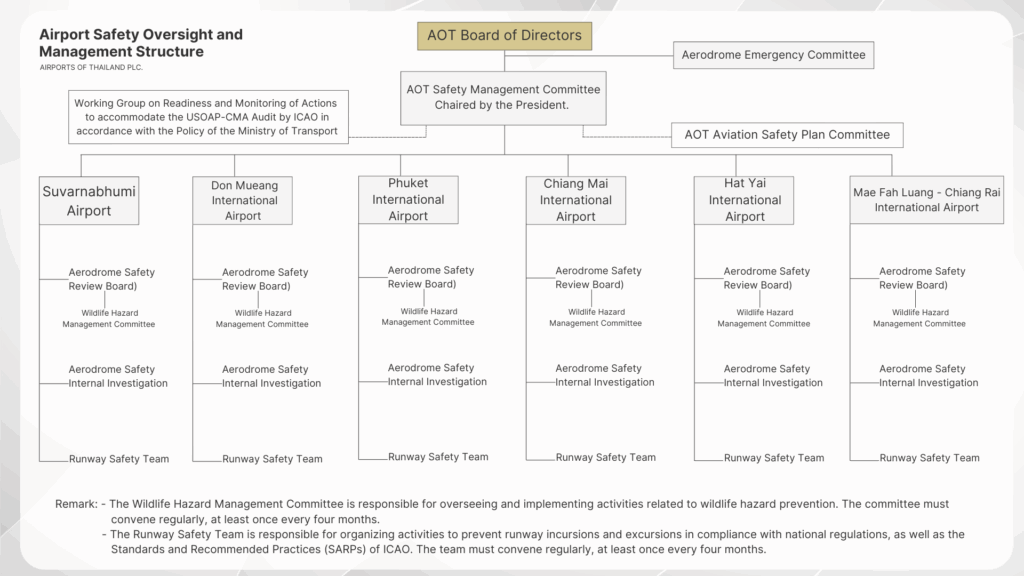
Aerodrome Safety Governance and Management Structure
AOT Safety Management Committee
Appointed by the AOT Board of Directors, the President serves as the Chairperson and holds the highest level of responsibility for safety under the organization’s Safety Management System (SMS). The Director of Airport Standards and Safety assumes the role of AOT Safety Manager at the corporate level and concurrently serves as the committee secretary.
Roles and Responsibilities:
- Develop action plans, operational procedures, and define the Acceptable Level of Safety Performance (ALoSPs) in alignment with the National Aviation Safety Plan. Furthermore, the committee is responsible for overseeing, regulating, and evaluating safety performance to ensure compliance with AOT’s established policies, action plans, and ALoSPs. This includes ensuring adherence to AOT regulations, national laws, and international standards.
- Provide recommendations and resolve operational issues that impact airport safety.
- Monitor and expedite corrective actions for airport deficiencies to obtain and maintain the Public Aerodrome Operating Certificate.
- Conduct regular meetings at least every three months or as deemed necessary by the President.
- Support and promote the continuous development of the airport safety management system.
- Report significant AOT safety performance outcomes or safety-related issues affecting AOT airport operations to the AOT Board of Directors.
- Appoint committees, subcommittees, and working groups as appropriate to support operations.
Aerodrome Safety Review Board
The Aerodrome Safety Review Board is appointed by the General Manager of Airport. The Vice President, Airport Standards and Occupational Health Department serves as the Aerodrome Safety Manager and acts as the secretary for the respective airport.
Roles and Responsibilities:
- Develop airport safety policies, plans, and programs to align with AOT’s safety policy.
- Continuously implement safety activities and undertake additional initiatives to enhance airport safety levels in accordance with the recommendations of the Aerodrome Safety Review Board
- Resolve safety-related issues affecting airport operations. If the issue falls beyond the authority of the Aerodrome Safety Review Board, refer it to the AOT Safety Management Committee for consideration.
- Conduct regular meetings at least every three months.
- Monitor and evaluate performance by conducting monthly aviation safety inspections and present the findings to the Aerodrome Safety Review Board and the AOT Safety Management Committee, respectively.
- Appoint subcommittees and working groups as appropriate to support operations.
AOT Aviation Safety Plan Committee
Roles and Responsibilities:
- Develop the AOT Safety Action Plan to support the Thailand Aviation Safety Action Plan (TASAP), ensuring compliance with AOT regulations, legal requirements, and ICAO standards. Additionally, improve and review the AOT Runway Safety Programme to align with government policies and ensure that the Runway Safety Programme at each airport remains consistent with AOT’s Runway Safety Programme.
- Support the operations of the Local Runway Safety Team (LRST) and ensure its integration with the Airport Safety Management System.
- Recommend guidelines and best practices to the Local Runway Safety Team (LRST) and other relevant agencies to promote and enhance the effectiveness of runway safety operations.
- Promote safety awareness campaigns and facilitate the exchange of information and good practices within AOT to prevent runway safety incidents.
- Promote the recording, storage, and collection of operational data in the database system in accordance with the Safety Action Plan. Establish guidelines to enhance the overall safety performance of AOT airports using safety data and information.
- Establish guidelines and promote the utilization of safety data from AOT’s safety database to evaluate, analyze, and monitor precursor events and contributing factors that fall short of the Safety Performance Targets (SPTs) specified in the AOT Safety Action Plan.
- Monitor the implementation of the AOT Safety Action Plan and report progress to the AOT Safety Management Committee at regular intervals or as deemed appropriate during its meetings.
- The Aerodrome Standards and Safety Department serves as the working group and secretary, responsible for organizing meetings in accordance with the operational plan. Additionally, it monitors the implementation of the Runway Safety Programme at AOT-managed airports and reports progress to the AOT Safety Management Committee on a periodic basis.
For the AOT Corporate Plan for the Fiscal Years 2023–2027 (Revised Edition for Fiscal Year 2024), performance indicators have been established under Strategy 1: Expanding passenger handling capacity while maintaining airport safety and security standards. Under Tactic 1.2: Enhancing the effective utilization of airport infrastructure, the plan sets a target of achieving zero runway accidents between 2023 and 2027.
Safety Management System
Safety and Security Management System
AOT’s core operational framework is applied comprehensively across all six airports, with a strong emphasis on establishing a robust Safety and Security Management System in accordance with International Civil Aviation Organization (ICAO) standards. This includes the allocation of adequate personnel, materials, and equipment to ensure safe operations while mitigating potential risks associated with airport activities.
By integrating safety and security measures, AOT aims to deliver a seamless and valuable airport experience for all stakeholders. The Airport Safety and Security Management System consists of the following key components:
- Establish guidelines for the Safety Management System (SMS) and conduct Safety Risk Management (SRM) assessments.
- Establish stringent safety and security measures with strict enforcement.
- Conduct a Safety Management Review.
- Mandate security audits under the Universal Security Audit Program (USAP).
Promote a safety and security culture and enhance the safety skills of AOT employees.
Safety Management System – SMS
AOT operates in compliance with state laws under the supervision of the Civil Aviation Authority of Thailand (CAAT). The establishment of AOT regulations on the Airport Safety Management System (SMS) ensures alignment with national laws and the State Safety Programme (SSP). This system serves as a key mechanism for enhancing aviation safety and consists of four main components:
- Safety Policy and Safety Objectives
- Safety Risk Management (SRM)
- Safety Assurance
- Safety Promotion
As an airport operator, AOT’s safety management efforts extend beyond its internal operations to ensure that all airport services adhere to safety standards. Achieving this requires cooperation from key airport stakeholders, including customers, airlines, ground service providers, aviation support agencies, and government authorities, to effectively implement Safety Risk Management (SRM).
The Safety and Security Risk Identification and Assessment process enables AOT to identify, evaluate, and mitigate risks through incident response plans and preventive measures, thereby minimizing the likelihood and severity of safety-related risks.
Security risk assessment manual and guidelines according to the level of threats to civil aviation of AOT.
AOT has prepared a Security Risk Assessment Manual and Guidelines for Civil Aviation Threat Levels, which aligns with the Civil Aviation Security Risk Assessment Manual of Thailand prepared by the Civil Aviation Authority of Thailand. The objective is to provide airports under AOT’s responsibility with guidelines for identifying threats and assessing security risks at the airport level. It also serves as a guideline for determining measures to mitigate risks and reduce impacts in accordance with the threat levels of each airport, as recommended by the Civil Aviation Authority of Thailand. AOT continuously reviews and updates the manual to ensure it is current and relevant to the situation and threats to civil aviation.
Safety and Security Measures
Security risk assessment manual and guidelines according to the level of threats to civil aviation of AOT.
AOT has prepared a Security Risk Assessment Manual and Guidelines for Civil Aviation Threat Levels, which aligns with the Civil Aviation Security Risk Assessment Manual of Thailand prepared by the Civil Aviation Authority of Thailand. The objective is to provide airports under AOT’s responsibility with guidelines for identifying threats and assessing security risks at the airport level. It also serves as a guideline for determining measures to mitigate risks and reduce impacts in accordance with the threat levels of each airport, as recommended by the Civil Aviation Authority of Thailand. AOT continuously reviews and updates the manual to ensure it is current and relevant to the situation and threats to civil aviation.
Airport Security Plan: ASP
All of AOT 6 airports have prepared their airport security programme (ASP) in compliance with the National Civil Aviation Security Programme (NCASP), issued by the Civil Aviation Authority of Thailand, and the standards of the International Civil Aviation Organization (ICAO) as guidelines and framework for security operation at each airport. Security measures stipulated in the Airport Security Programme of each airport are preventive and proactive plans, which would be reviewed and adjusted continuously to stay up to date.
Airport Security Plan: ASP
All of AOT 6 airports have prepared their Airport Contingency Plans (ACP) to determine relevant units, scope of responsibilities and procedures, as well as coordination methods among airport operators, air navigators, air traffic controllers, local law enforcers, the Civil Aviation Authority of Thailand and other relevant parties that are responsible to respond to acts of unlawful interference to civil aviation. This is to adhere to requirements in the National Civil Aviation Security Programme (NCASP), relevant standards, rules and regulations in order to ensure an effective response to unlawful interference actions.
Information Systems Development on Airport Security (e-Security)
AOT has developed an airport security information system (e-Security) to collect personal history, preventive security operations, issuance of personal security pass, collection of security statistics, quality control of security audits, and security training course. It is conducted with strict and secure operation procedures that help optimize work efficiency of AOT employees and maintain highest security for service users, workers, and other related individuals at the airport.
The system has been further developed and solved the work process problem of the existing system, as well as improved to be up to date. Users can easily save data via Web Application or Native Mobile Application. Also, the system will update the personal data and offenders’ records, as well as the background of persons and vehicles entering the airport areas.
E-Security system supports both centralized use with accessing to all airports’ data and separate use for each airport, and have authentication system where an individual user has his/her own User name and password to access the system according to his/her rights. These would be able to thoroughly monitor the operation procedures of those involved in the system and external incidents. It makes AOT’s airports safer and builds more confidence in passengers or airlines
Currently, AOT has adopted advanced and efficient information and communication technologies to enhance passenger convenience. The Automated Biometric Identification System (Biometric) utilizes facial recognition technology to verify passengers’ identities from check-in to boarding, streamlining services across AOT’s six airports and significantly reducing queuing times.
The system will be launched for domestic passengers on 1 November 2024 and for international passengers on 1 December 2024.
Additionally, the Access Control System (ACS) has been implemented to efficiently screen and monitor individuals, ensuring the highest level of security for passengers and airport operators.
Runway Safety Programme
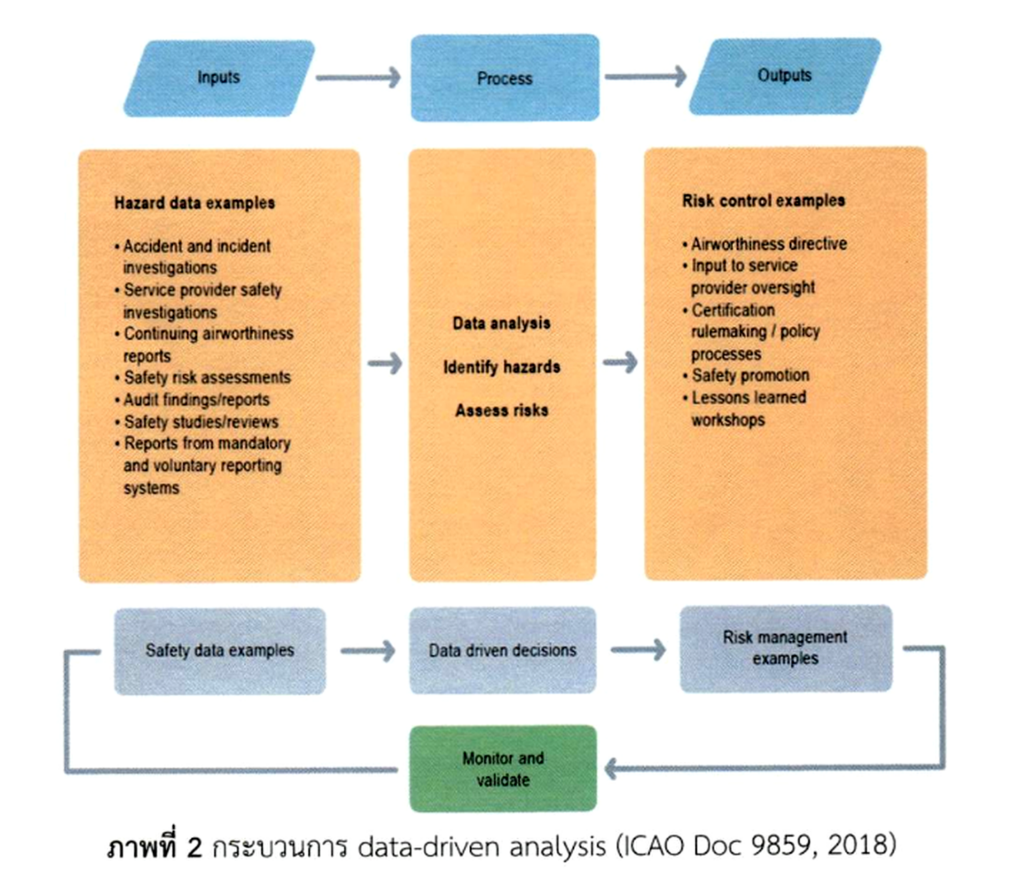
The Runway Safety Programme for AOT and its airports is designed to compile rules, regulations, standards, and related activities with the goal of enhancing runway safety and improving operational efficiency. This is achieved through data-driven analysis, enabling informed decision-making on safety measures.
By utilizing occurrence analysis, AOT identifies contributing factors to safety incidents. Additionally, gap analysis and other safety data are applied to assess risks, establish preventive measures, and implement systematic monitoring to ensure continuous runway safety improvements.
Occurrence Analysis
Occurrence analysis is a process based on hazard identification and risk assessment principles, utilizing data from various sources, such as AOT’s mandatory safety incident reporting, to investigate unsafe incidents and contributing factors related to runway safety. This analysis aligns with the Specific Operational Objectives (OPR) outlined in the Thailand Aviation Safety Action Plan (TASAP) and AOT’s specific safety objectives, which focus on four key incidents:
- Controlled Flight into Terrain (CFIT)
- Runway Excursion (RE)
- Runway Incursion (RI)
- Bird Strikes
Additionally, this process incorporates stakeholder input, including perspectives from government agencies, air traffic service providers, air operators, and airport authorities to ensure a comprehensive approach to runway safety.
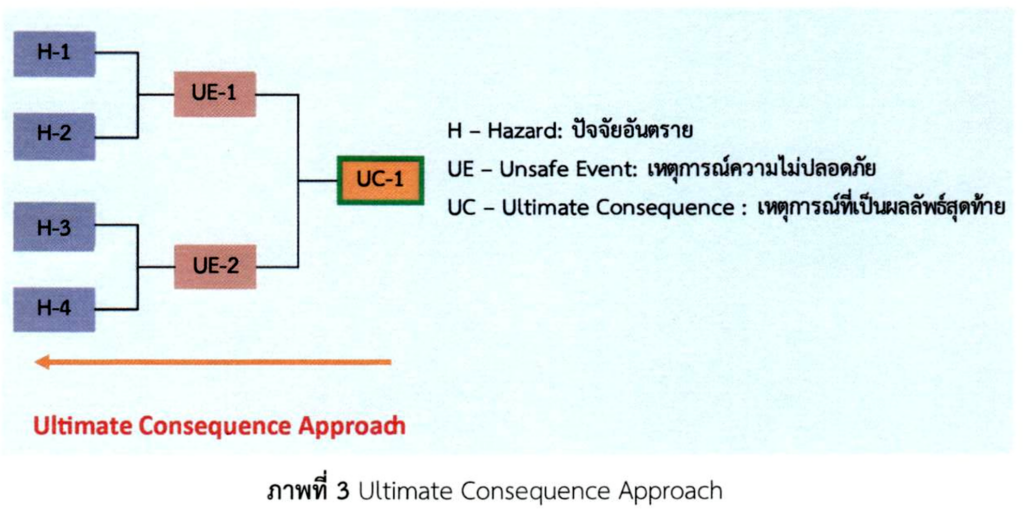
Hazard Identification Method in the Runway Safety Programme
The Runway Safety Programme adopts the Ultimate Consequence Approach as a method for identifying hazard factors and unsafe incidents. This approach begins by analyzing the final outcome, followed by an assessment of unsafe incidents and hazard factors that may contribute to such occurrences. These are then categorized as contributing factors for each incident.
To facilitate the identification of appropriate preventive and mitigation measures, contributing factors are classified based on the ICAO CICTT Aviation Occurrence Categories, ensuring a structured and effective approach to runway safety management.
Management Review
AOT conducts a quarterly review of safety management and security measures, evaluating and updating policies, procedures, and security management processes within airports every three months. These reviews serve as a platform for discussing key management issues and are included as agenda items in safety and security meetings.
Additionally, AOT and the Government implement safety standard audits across both physical and operational aspects as a mechanism to ensure aerodrome safety standards comply with national regulations and international standards, guaranteeing the safety of airport users.
The auditing process is divided into three levels, as follows:
- At the Airport Level (Self-Audit)
The Aerodrome Standards and Occupational Health Division at each airport is responsible for conducting self-audits to assess compliance with airport safety standards.
- At Corporate Level (Internal Audit)
AOT Aerodrome Standards and Safety Department is responsible for internal auditing on safety standards of every airport at least once a year, supervising safety of all airports in general, monitoring risk statistics report, defining level of risk, and searching for reducing/controlling methods to be as Low as Reasonably Practicable (ALARP) level. These implementations will be proceeded through AOT’s Aerodrome Safety Management Committee to ensure that safety deficiencies shall be rectified and safety performance shall be measured according to safety indicators and safety targets as defined by AOT.
- At State Level (State Audit)
The Civil Aviation Authority of Thailand (CAAT), Ministry of Transport, is responsible for auditing and supervising safety standards of airports under AOT’s supervision on an annual basis, as well as providing opinions and suggestions to AOT on safety matters. However, CAAT is also audited and monitored by the International Civil Aviation Organization (ICAO) under the Universal Safety Oversight Audit Program (USOAP).
Aviation Security Quality Control Programme
AOT has prepared the Aviation Security Quality Control Programme to be used as a standard for security quality control at the airports under the responsibility of AOT. The programme involves quality control activities consisting of Security Audit, Security Inspection, Security Test, and Security Survey based on inspection principles and guidelines of the National Civil Aviation Security Quality Control Programme (NCASQCP). In addition, AOT’s Internal Auditors were trained in courses according to international standards.
Safety and Security Culture
AOT recognizes the importance of developing and enhancing the knowledge and skills of its personnel to strengthen a modern management system. This is achieved by offering both theoretical and practical safety training courses, conducting airport emergency drills, and consistently fostering a safety and security culture within the organization. The details are as follows:
- Creating awareness and understanding of safety and security procedures, including operational frameworks and manuals, for continuous development and improvement.
- Raising awareness among personnel to prevent and mitigate potential risks related to airport safety, including reporting any risks or incidents that may arise and cause various impacts.
- Developing e-Safety and e-Security information systems for airports to integrate with safety and security operations and management.
- Utilizing data collected through digital technology for analysis and management to enhance AOT’s safety and security management efficiently.
- Gathering feedback through various AOT channels and applying lessons learned from incidents to develop and improve operational practices.
Promoting a Culture of Safety and Security
AOT has a safety operations structure in collaboration with external agencies, such as organizational and airport level safety committees consisting of representatives from various departments both inside and outside the airport. By holding a meeting to discuss according to the specified circle. to exchange information, identify risks Evaluate and create measures to reduce risks that cause mutual insecurity. Including promoting shared safety by conveying and communicating to create a safety culture. In the fiscal year 2024, AOT organized a Safety Campaign in the airside area of Don Mueang International Airport (DMK). The campaign was attended by airport executives, relevant departments of DMK, representatives from the Medical Department, airline representatives, and airside operators.
Held from January to April 2024, the campaign featured several key activities, including:
- Big Cleaning Day
- Airside Unsafe Conditions Reporting
- Safety Awareness Training for Airside Personnel
- Foreign Object Debris (FOD) Collection Campaign
- Safe Driving in the Airside Area Campaign
The campaign aimed to enhance safety knowledge, awareness, and understanding among airside personnel, ensuring that safety performance indicators remain within acceptable limits. Additionally, it sought to minimize risks to life and property, thereby preserving the reputation of both the organization and the country.
Implementation of Emergency Security Measures and Emergency and Contingency Plan Drills
AOT has developed the “AOT Aviation Security Risk Assessment and Threat Level Response Manual,” which is aligned with the National Civil Aviation Security Risk Assessment Manual established by the Civil Aviation Authority of Thailand (CAAT). Each level of preparedness defines progressively stringent security measures, allowing each airport to elevate its readiness level based on the specific risk assessment of prevailing situations.
All airports under AOT’s responsibility have established Airport Contingency Plans in accordance with government requirements and in alignment with the standards of the International Civil Aviation Organization (ICAO). Regular drills are conducted within specified timeframes to ensure preparedness. Each exercise incorporates prevailing threat information to design realistic scenarios, focusing on high-risk threats to ensure effective response, control, command, and rapid recovery of operations, thereby maintaining business continuity.
In fiscal year 2025, AOT conducted civil aviation security exercises as follows:
Outstanding Activities and Lessons Learned
Emergency response and contingency plan exercises
| Airport | Exercise Type | Scenario | Exercise Date |
|---|---|---|---|
| Suvarnabhumi Airport | Table-top Exercise | Aircraft bomb threat | 8 Aug 2025 |
| Aircraft fire at parking stand | 17 Jul 2025 | ||
| Don Mueang Airport | Full-scale Exercise | Aircraft bomb threat | 22 Aug 2025 |
| Detection of suspicious or prohibited items | - | ||
| Phuket Airport | Full-scale Exercise | Detection of suspicious or prohibited items under the scenario: “Suspicious object found within Phuket Airport area and response to actual incident” | 5 Sep 2025 |
| Chiang Mai Airport | Full-scale Exercise | Aircraft in-flight emergency incident | 27 Jun 2025 |
| Hat Yai Airport | Full-scale Exercise | Emergency Plan Chapter 1: Aircraft accident | 5 Jun 2025 |
| Aircraft in-flight emergency incident | - | ||
| Chiang Rai Airport | Table-top Exercise | Detection of suspicious or prohibited items under the scenario: “Detection of suspicious or prohibited items within airport premises” | 19 Sep 2025 |
| Aircraft in-flight emergency incident | - |

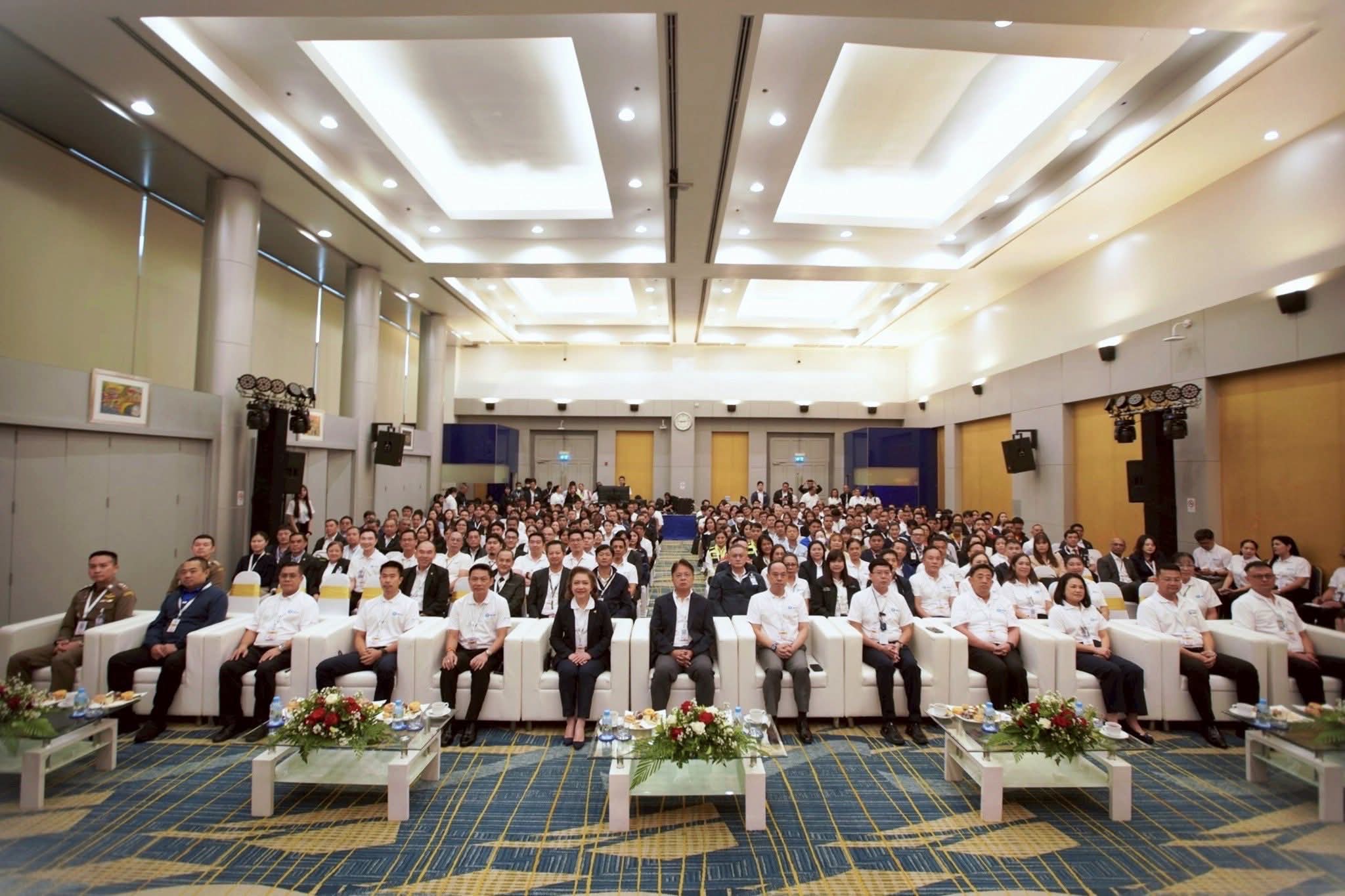


Security Personnel Development Activities
AOT has implemented security personnel development in accordance with its Civil Aviation Security Training Plan, ensuring alignment with the requirements of the Civil Aviation Authority of Thailand (CAAT). The program covers both initial and recurrent training courses for screening personnel and security staff, as well as advanced training programs to enhance the competencies of managers, supervisors, and relevant operational personnel.
In addition, AOT organizes practical workshops to prepare for the Universal Security Audit Programme – Continuous Monitoring Approach (USAP-CMA) conducted by the International Civil Aviation Organization (ICAO). These efforts support improvements in the Effective Implementation (EI) score, which reflects the level of effective implementation of aviation security standards and requirements at the national level.
Security personnel development activities can be categorized into two main types:
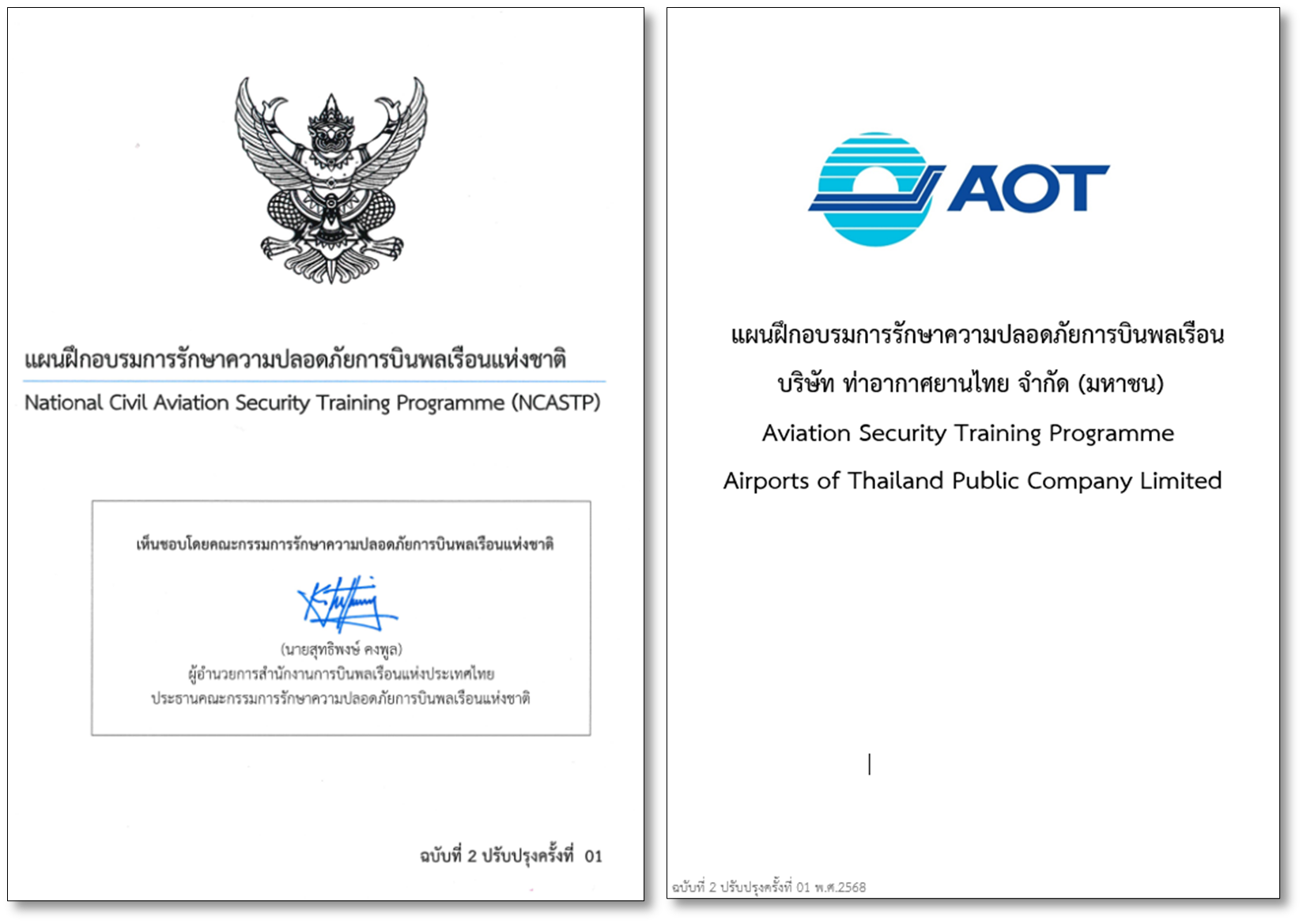
1. Training and Capacity Development
(in accordance with relevant standards and AOT standards)
1.1 Training Program under AOT Aviation Safety and Security Training Plan
Objective:
To enhance aviation safety and security preparedness among AOT screening personnel and security staff.
Alignment with AOT Enterprise Plan:
SO1: Strengthen Airport Capacity and Competitiveness
Strategy 1: Expanding passenger handling capacity under airport safety and security standards.
Details are as follows:
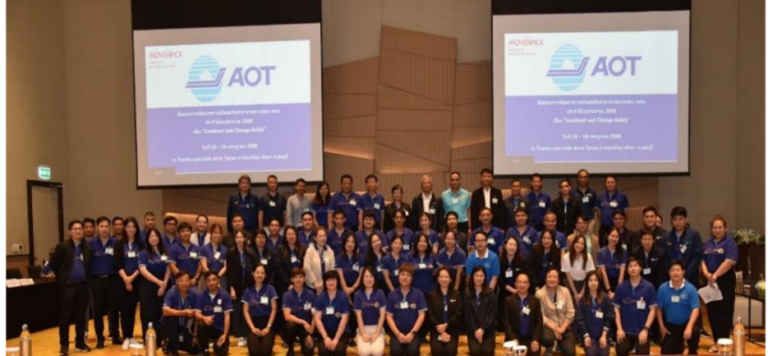
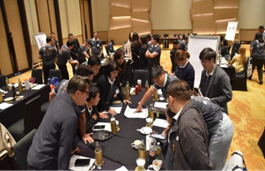
- AOT Airport Safety Development Seminar for Fiscal Year 2025
“Construct and Change Safely”
| Objective | To promote understanding of safety standards related to construction and structural modifications within airport areas and areas under AOT’s responsibility, ensuring compliance with applicable requirements and safety management systems, while fostering integrated collaboration between internal and external organizations. |
|---|---|
| Alignment with AOT Enterprise Plan |
SO1: Strengthen Airport Capacity and Competitiveness Strategy 1: Expanding passenger handling capacity under airport safety and security standards |
| Project/Activity Details |
The Airport Standards and Safety Department organized the AOT Airport Safety Development Seminar for fiscal year 2025 under the theme “Construct and Change Safely” during 16–18 July 2025 at Mövenpick Siam Pattaya Hotel, Chonburi Province. The program included lectures on construction operations and structural modifications, preparation of operational safety plans, and reporting procedures for construction activities within airport areas. In addition, panel discussions were held on construction permit applications, as well as the management of changes occurring both within and outside airport premises and areas under AOT’s responsibility, ensuring compliance with government regulations and standards. The seminar also featured a workshop on “Management of Change Process Development” in accordance with the airport Safety Management System (SMS), as well as a study visit on airport and runway safety management at U-Tapao Rayong–Pattaya International Airport. |
| Lessons Learned |
The project highlighted the importance of integrated collaboration among multiple organizations, accurate understanding of construction requirements within airport areas, and the application of Management of Change processes to control risks arising from changes that may impact safety. Practical training and study visits enhanced safety competencies and enabled participants to apply knowledge in real-world operations. The program also emphasized the importance of transparent reporting systems and the development of a shared safety culture across the organization, which are essential for elevating airport safety standards. |
| Number of Participants | 82 participants, comprising 70 AOT executives and employees and 12 representatives from external organizations, including the Civil Aviation Authority of Thailand (CAAT), Aeronautical Radio of Thailand Ltd. (AEROTHAI), the Thai Meteorological Department, and the Royal Thai Air Force. |
| Benefits to AOT from the Project/Activity |
1. Enhanced safety standards for construction and structural modifications within airport areas 2. Developed guidelines and processes for Management of Change aligned with Safety Management Systems (SMS) and ICAO standards 3. Strengthened collaboration and integration between internal and external organizations, and enhanced knowledge and experience from study visits 4. Supported future improvements in airport safety and operational safety management systems |
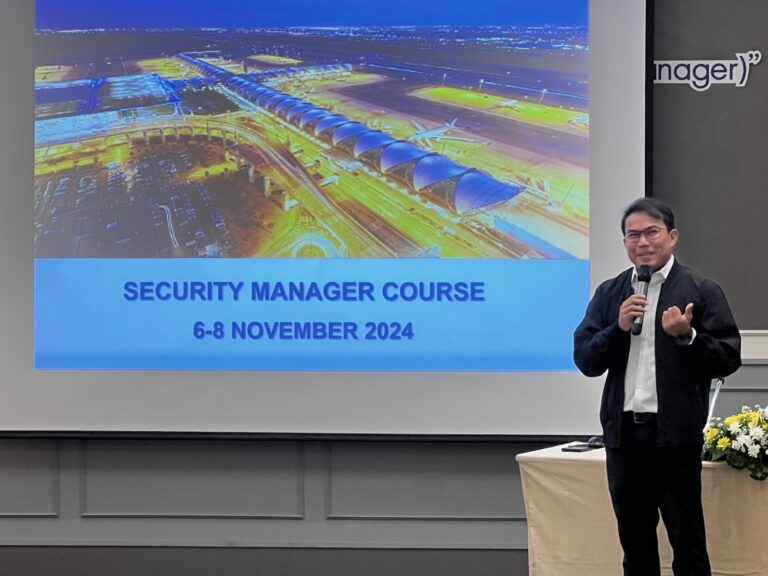
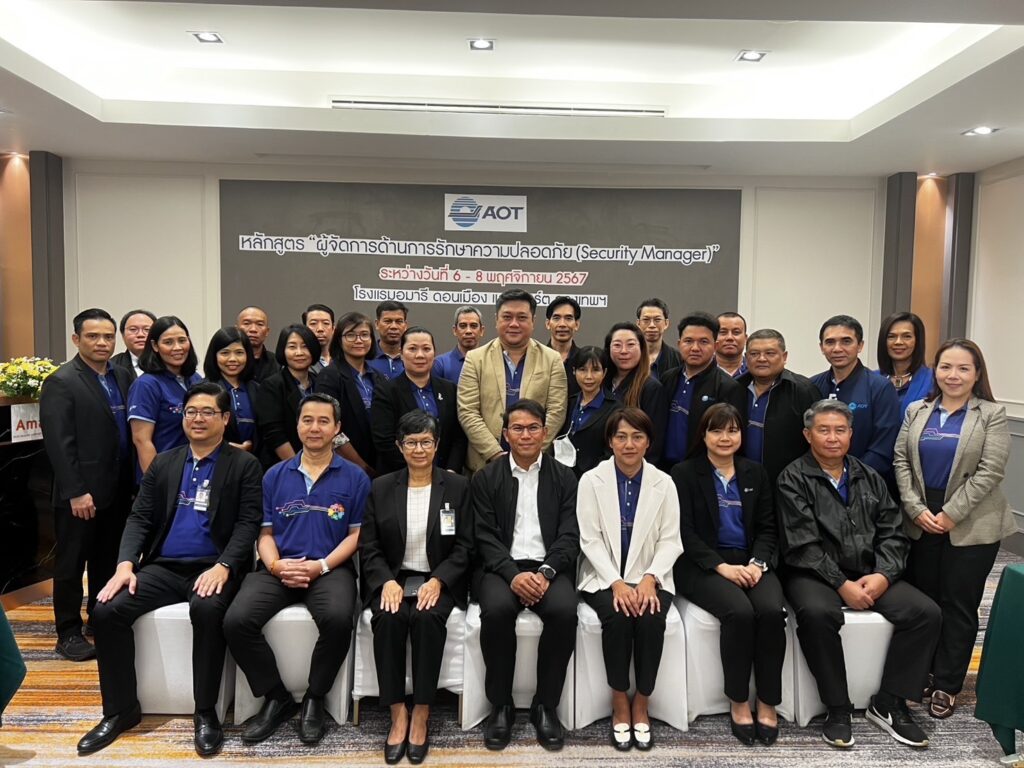
- Security Manager Training Program
| Objective |
1. To ensure that personnel assigned to perform duties as Aviation Security Managers, or those with potential for promotion to executive, department director, or division director positions within AOT, meet the qualifications specified in the Aviation Security Training Programme (ASTP). 2. To develop knowledge, competencies, and skills in aviation security management, as well as specialized operational skills required for the role of a “Security Manager”. 3. To ensure that trainees understand the importance and objectives of aviation security. |
|---|---|
| Alignment with AOT Enterprise Plan |
SO1: Strengthen Airport Capacity and Competitiveness Strategy 1: Expanding passenger handling capacity under airport safety and security standards |
| Project/Activity Details | The Aviation Security Standards and Quality Control Department organized this training program for personnel assigned to serve as Aviation Security Managers, or those with potential for promotion to executive, department director, or division director positions within AOT, in accordance with specified qualifications. The training was conducted during 6–8 November 2024 (3 working days), from 09:00 to 16:00 hrs., at Amari Don Muang Airport Bangkok Hotel. The course was delivered by CAAT-certified instructors from Bangkok Airways Public Company Limited. |
| Lessons Learned | The program emphasized the importance of continuous personnel development to ensure that AOT’s aviation security personnel possess knowledge, understanding, and skills aligned with the standards of the Civil Aviation Authority of Thailand (CAAT) and the International Civil Aviation Organization (ICAO). |
| Number of Participants | 24 participants |
| Benefits to AOT from the Project/Activity | Enhanced personnel capabilities at all levels, enabling Aviation Security Managers to develop skills in planning and resource management in alignment with the National Civil Aviation Security Programme (NCASP) and Airport Security Programme (ASP), as well as strengthening knowledge, competencies, and specialized operational skills required for aviation security management roles. |
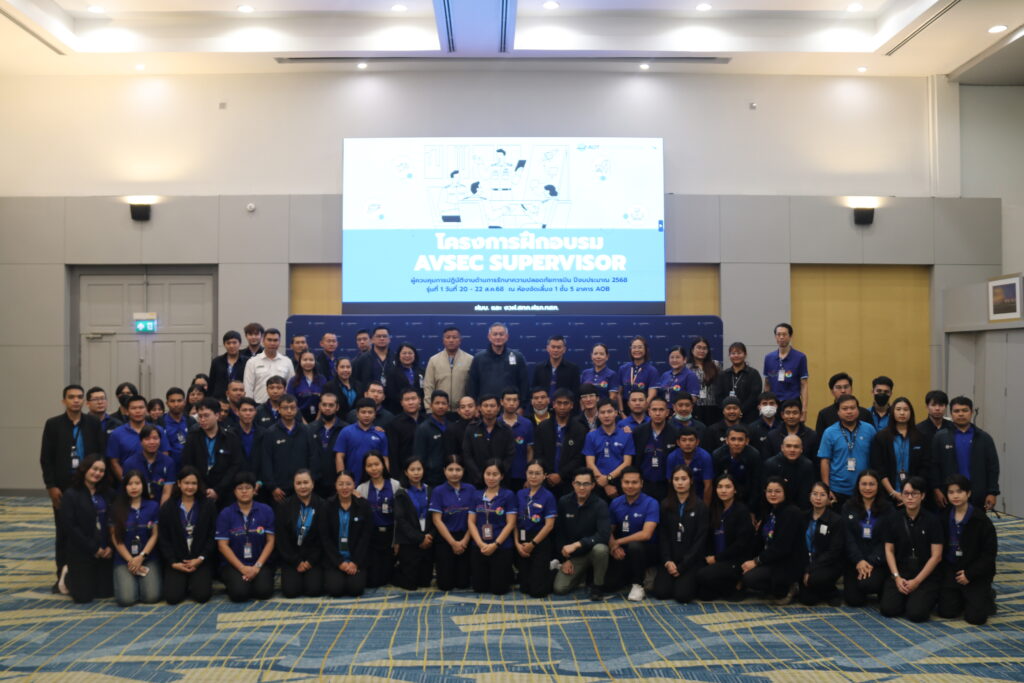
- AVSEC Supervisors Training Program
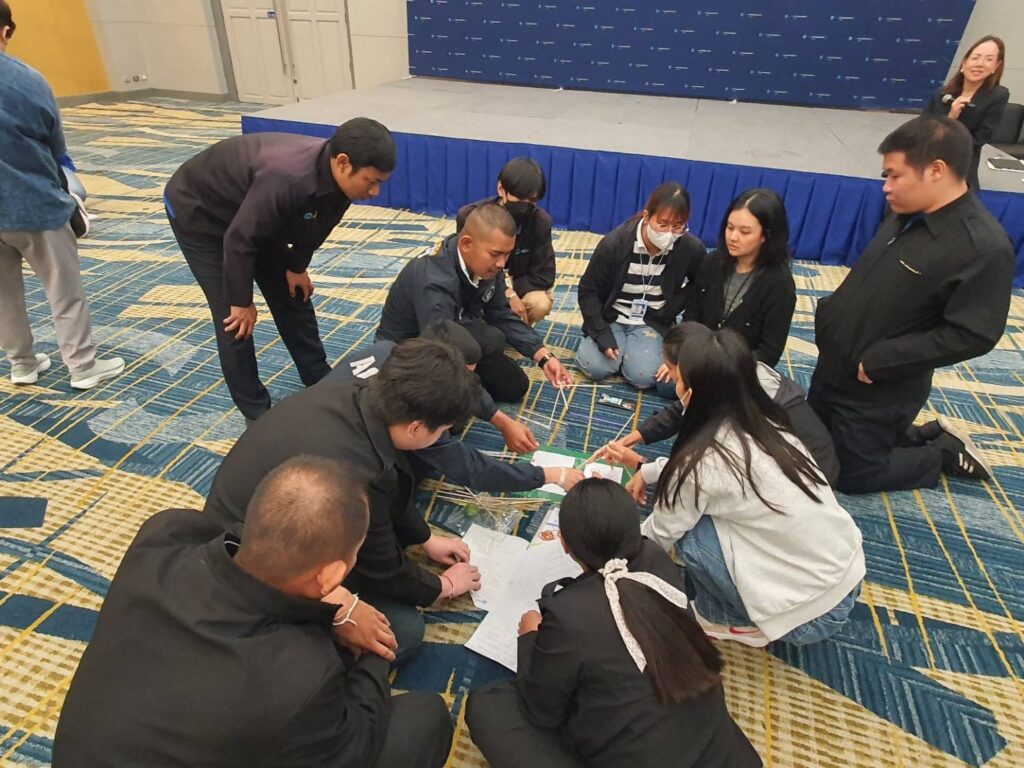
| Objective | To enhance the capabilities of screening and aviation security supervisors to become professional supervisors through the “Professional Supervisor” program, aiming to reduce deficiencies identified in inspections and tests by the Civil Aviation Authority of Thailand (CAAT), improve supervisory effectiveness, and support USAP-CMA assessment results and Effective Implementation (EI) scores. |
|---|---|
| Alignment with AOT Enterprise Plan |
SO1: Strengthen Airport Capacity and Competitiveness Strategy 1: Expanding passenger handling capacity under airport safety and security standards |
| Project/Activity Details | The Aviation Security Standards and Quality Control Department, with AOT aviation security instructors certified by the Civil Aviation Authority of Thailand (CAAT), organized training for AOT screening and aviation security supervisors to enable them to effectively supervise operations under their responsibility in accordance with established standards. |
| Lessons Learned | The program highlighted the importance of continuous personnel development to ensure that AOT’s aviation security personnel possess knowledge, understanding, and skills aligned with the standards of the Civil Aviation Authority of Thailand (CAAT) and the International Civil Aviation Organization (ICAO). |
| Number of Participants | Approximately 250 participants, comprising 2 batches at Suvarnabhumi Airport (BKK) and 2 batches at Don Mueang International Airport (DMK). |
| Benefits to AOT from the Project/Activity | Enhanced aviation security standards, with screening and security personnel trained in accordance with CAAT and ICAO requirements, resulting in operations aligned with international standards. Strengthened workforce capabilities at all levels, with supervisors developed into professional practitioners, reducing audit findings and improving operational effectiveness. |
- Security Awareness Training Program
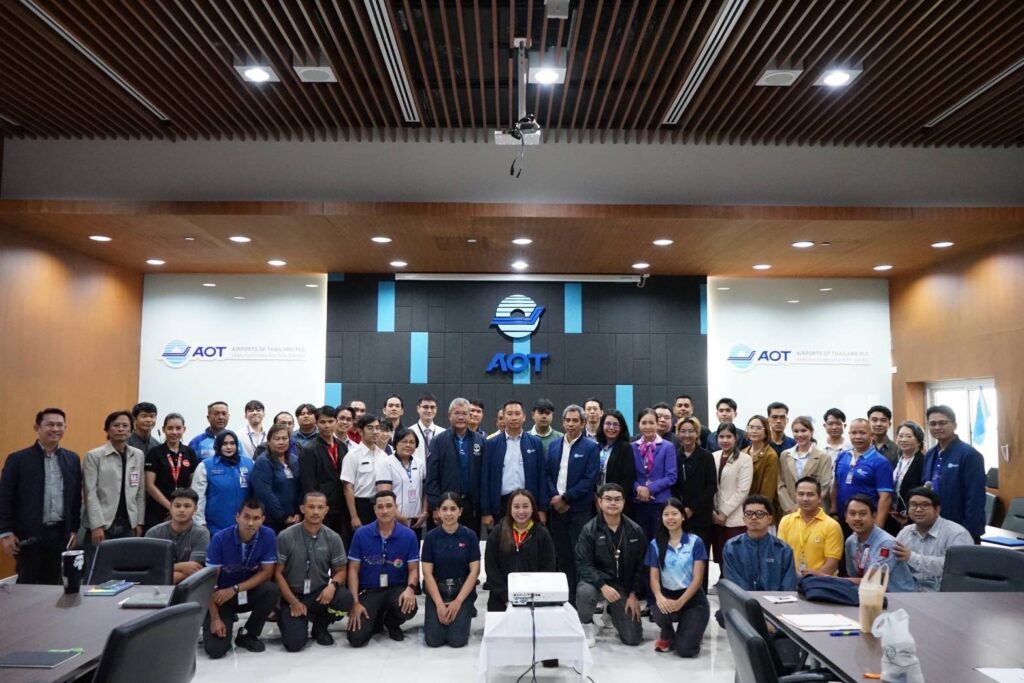
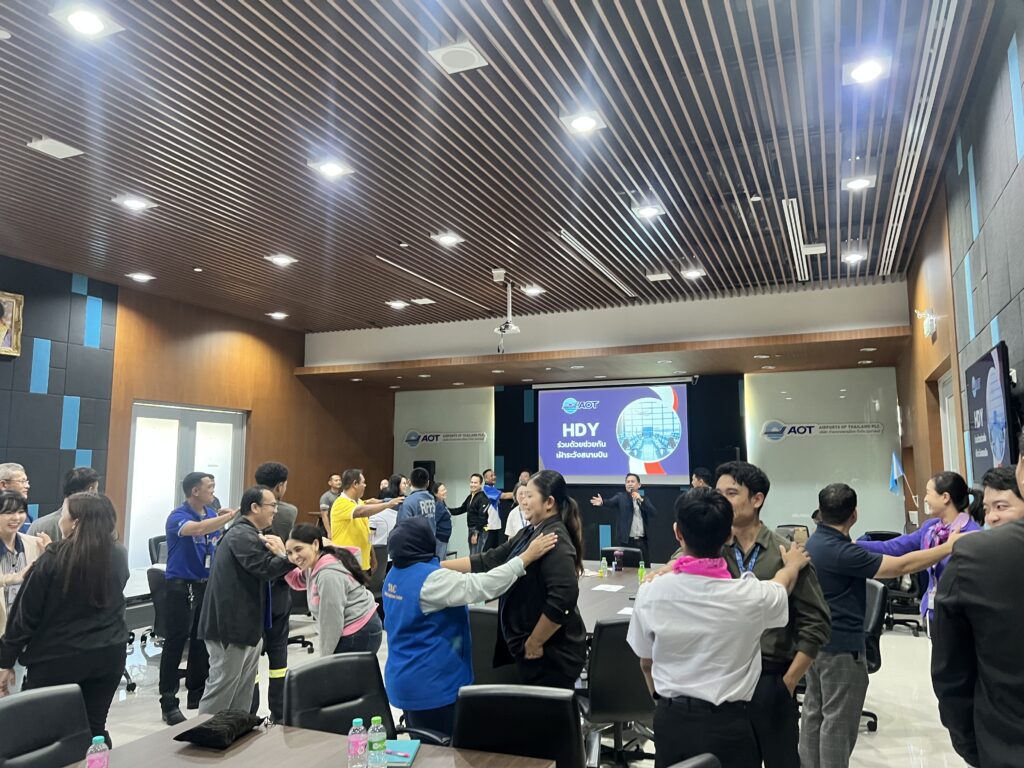
| Objective | To promote aviation security awareness through Security Awareness Campaigns for authorized personnel or those performing duties under airport security measures, including airport tenants and airport users. Prioritization is determined based on aviation security risk assessment results. |
|---|---|
| Alignment with AOT Enterprise Plan |
SO1: Strengthen Airport Capacity and Competitiveness Strategy 1: Expanding passenger handling capacity under airport safety and security standards |
| Project/Activity Details | The Aviation Security Standards and Quality Control Department, with AOT aviation security instructors certified by the Civil Aviation Authority of Thailand (CAAT), organized training for authorized personnel or those performing duties under airport security measures, including airport tenants and users, across all six airports under AOT’s responsibility, based on requests. |
| Lessons Learned | The program highlighted the importance of continuous personnel development to ensure that AOT’s aviation security personnel possess knowledge, understanding, and skills aligned with the standards of the Civil Aviation Authority of Thailand (CAAT) and the International Civil Aviation Organization (ICAO). |
| Number of Participants |
85 participants at BKK 42 participants at HDY |
| Benefits to AOT from the Project/Activity | Strengthened organizational security culture through security awareness training, fostering safety consciousness, reducing risks, and enhancing cooperation among employees and relevant stakeholders. |
Workshop on “Aviation Security Quality Control and Training for Preparation for ICAO Universal Security Audit Programme – Continuous Monitoring Approach (USAP-CMA)”
This workshop aims to prepare for the USAP-CMA audit for quality control officers, instructors, and key personnel (Keyman) involved in screening and aviation security operations under the Aviation Security Standards and Quality Control Department at Suvarnabhumi Airport, Don Mueang International Airport, Phuket International Airport, and Chiang Mai International Airport.
The program also provides a platform for knowledge sharing, experience exchange, and integrated coordination among relevant stakeholders.
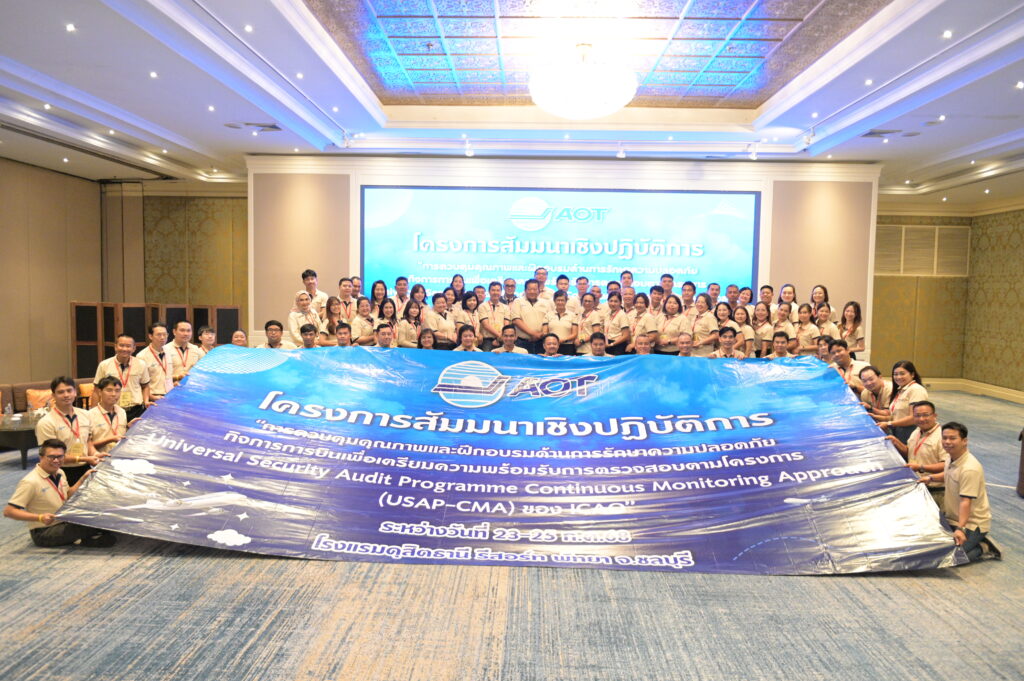
| Objective | To prepare aviation security quality control officers, aviation security instructors, and key personnel (Keyman) responsible for screening and security operations under the Aviation Security Standards and Quality Control Department (AVSEC), including Suvarnabhumi Airport (BKK), Don Mueang International Airport (DMK), Phuket International Airport (HKT), and Chiang Mai International Airport (CNX), for the ICAO Universal Security Audit Programme – Continuous Monitoring Approach (USAP-CMA). |
|---|---|
| Alignment with AOT Enterprise Plan |
SO1: Strengthen Airport Capacity and Competitiveness Strategy 1: Expanding passenger handling capacity under airport safety and security standards |
| Project/Activity Details | The Aviation Security Standards and Quality Control Department organized a workshop titled “Aviation Security Quality Control and Training for Preparation for ICAO Universal Security Audit Programme – Continuous Monitoring Approach (USAP-CMA)” during 23–25 July 2025 at Dusit Thani Resort Pattaya, Chonburi Province. The program included lectures on techniques for becoming high-quality audit-ready personnel, as well as group-based practical exercises to prepare for ICAO audits in accordance with Protocol Questions (PQ) guidelines. |
| Lessons Learned | Aviation security quality control officers, instructors, and key personnel (Keyman) from AVSEC units across BKK, DMK, HKT, CNX, and regional airports shared experiences, challenges, and operational issues related to quality control and aviation security training. Participants collaboratively identified approaches to enhance integrated coordination and operational efficiency. The program enabled personnel to perform their duties more effectively, clearly understand their roles and responsibilities, and be well-prepared for USAP-CMA audits. These outcomes contribute significantly to strengthening AOT’s aviation security system in alignment with international standards. |
| Number of Participants | 76 AOT executives and employees |
| Benefits to AOT from the Project/Activity |
Enhanced aviation security standards Strengthened personnel capabilities at all levels Fostered a strong organizational security culture |
1.2 Integrated Bird Management in Airport and Surrounding Areas in Collaboration with Relevant Agencies and Communities
| Objective |
1. To foster collaboration and integrate wildlife hazard management operations among AOT, relevant government agencies, and surrounding airport communities 2. To develop guidelines for bird and wildlife management to reduce risks of bird strikes and wildlife hazards (Wildlife Hazard Management) in accordance with international aviation safety standards 3. To promote knowledge sharing and best practices among relevant organizations |
|---|---|
| Alignment with AOT Enterprise Plan |
SO1: Strengthen Airport Capacity and Competitiveness
Strategy 1: Expanding passenger handling capacity under airport safety and security standards |
| Project/Activity Details |
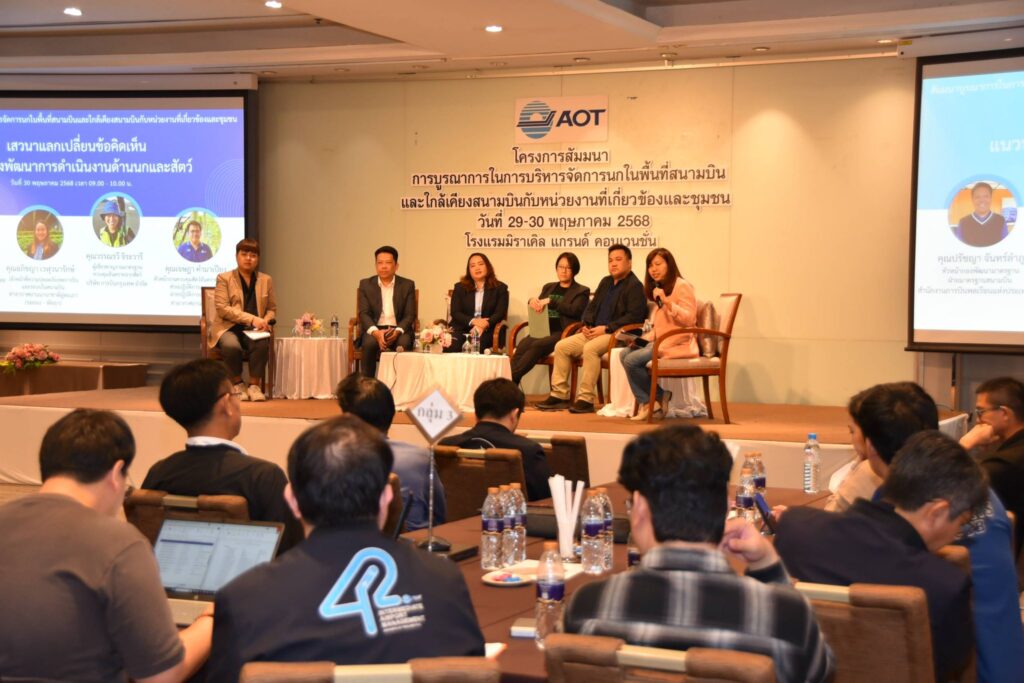
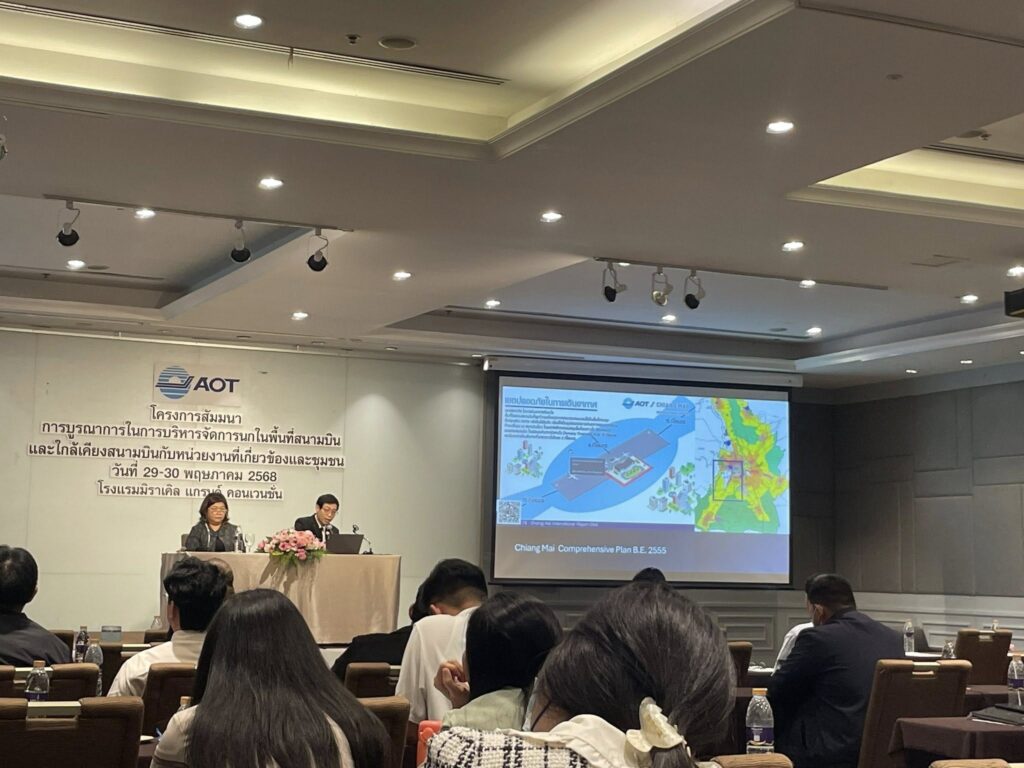
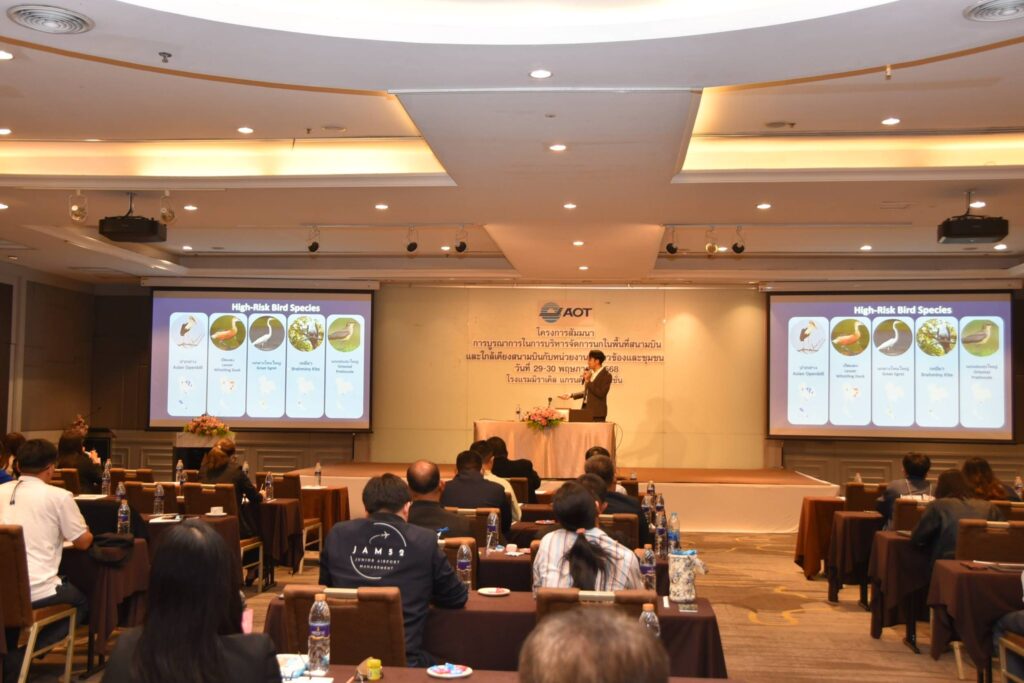
The Airport Standards and Safety Department organized a seminar titled “Integrated Bird and Wildlife Management in Airport and Surrounding Areas in Collaboration with Relevant Agencies and Communities” during 29–30 May 2025 at Miracle Grand Convention Hotel, Bangkok. The program included: 1. Lectures to provide knowledge and exchange information on wildlife hazard management, mitigation of bird strike risks, and the development of AOT airport safety management plans 2. Panel Discussion under the topic “Exchange of Perspectives on Enhancing Bird and Wildlife Management Operations,” featuring speakers from the Civil Aviation Authority of Thailand (CAAT) and airport representatives, to raise awareness of risks and impacts from bird strikes, as well as clarify roles and responsibilities of each stakeholder in prevention and mitigation 3. Workshop to conduct gap analysis and develop improvement plans for wildlife hazard management in alignment with AOT’s airport safety development plans |
| Lessons Learned | The project highlighted the importance of integrated collaboration among AOT, relevant government agencies, and surrounding communities in systematically managing bird and wildlife hazards. Lectures and panel discussions helped establish a shared understanding of risks, impacts, and responsibilities among stakeholders. Meanwhile, workshops enabled participants to identify operational gaps (gap analysis) and jointly develop improvement approaches aligned with AOT’s airport safety development plans. These lessons emphasize that effective wildlife hazard management requires shared data, effective communication, and structured preventive systems in accordance with international standards to ensure sustainable aviation safety. |
| Number of Participants | 69 participants, comprising 44 AOT executives and employees and 25 representatives from relevant external organizations |
| Benefits to AOT from the Project/Activity |
1. Established integrated wildlife hazard management approaches applicable across all airports under AOT’s responsibility 2. Strengthened collaboration among AOT, government agencies, and surrounding communities to effectively manage wildlife-related risks, reduce impacts, and achieve sustainable outcomes 3. Supported compliance with aviation safety standards of ICAO and CAAT 4. Enhanced knowledge, awareness, and preparedness of AOT personnel in assessing and managing wildlife risks, including planning and implementing appropriate mitigation measures 5. Contributed to improving aviation safety performance (EI Score) in alignment with AOT’s enterprise plan and demonstrated the organization’s commitment as an “airport operator with internationally recognized safety management systems” |
2) Personnel Development and International Collaboration Activities
(specialized knowledge enhancement)
Cyber Security Exercise Design Workshop (in collaboration with the Cyber and Infrastructure Security Group (CISG), Commonwealth of Australia)
Aims to enhance knowledge and skills in coordination and response to cyber incidents, in alignment with national requirements, regulations, and international best practices. The program also strengthens capabilities in designing, planning, and conducting cybersecurity exercises to test the effectiveness of organizational incident response plans.
Non-Binding Aviation Security Working Group Meeting
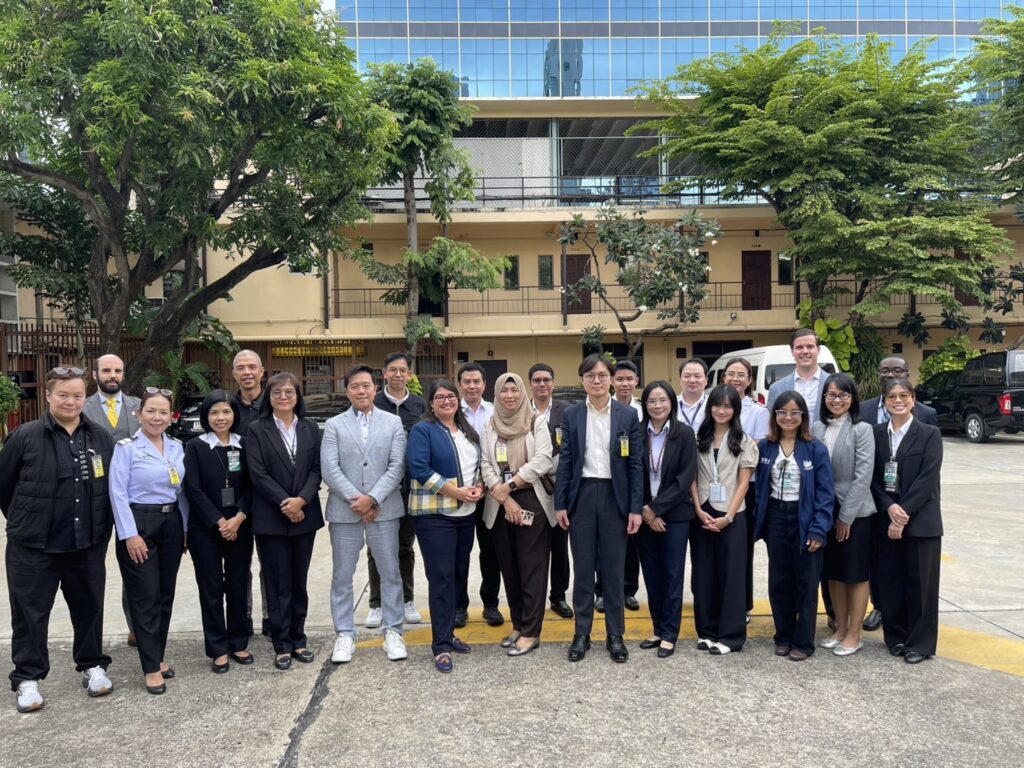
Conducted in collaboration with the Transportation Security Administration (TSA), United States; the Civil Aviation Authority of Thailand (CAAT); the Department of Airports (DOA); and AOT. The meeting aims to discuss best practices in aviation security and coordination related to policy development, laws, regulations, and guidelines, thereby enhancing aviation security and facilitating passenger travel.
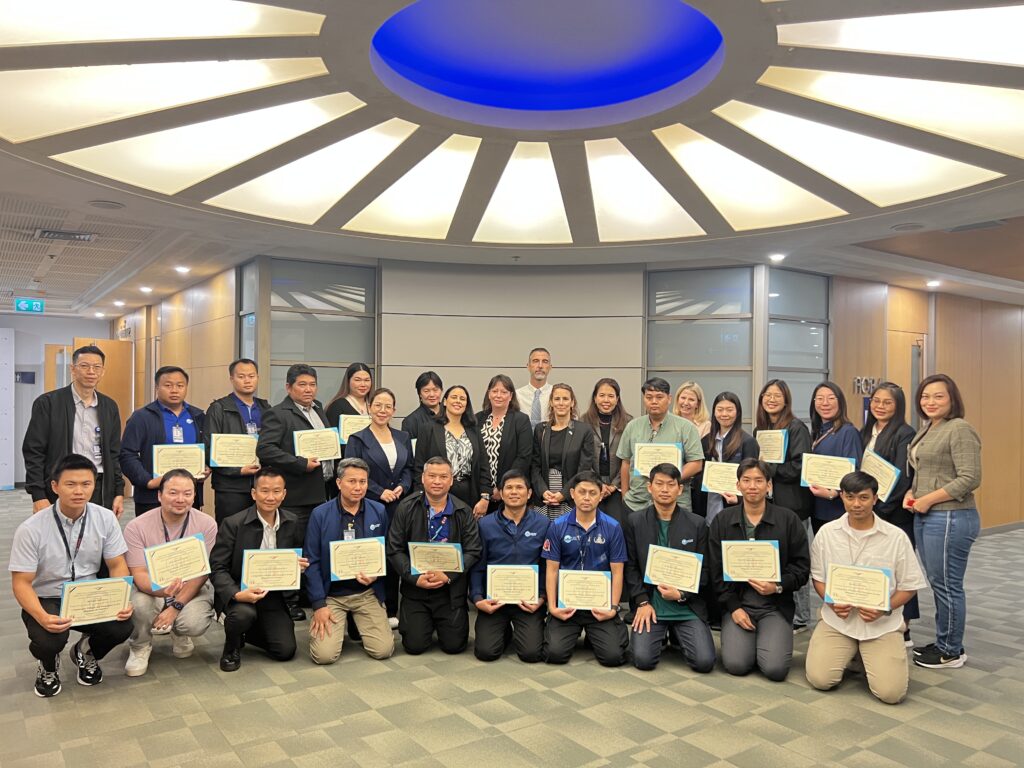
Behaviour Detection and Security Control Training Program
Conducted in collaboration with the French Police Attaché Office, Embassy of France in Thailand. The program aims to enhance AOT personnel’s capabilities in aviation security risk assessment and improve techniques for detecting suspicious behavior (behavior detection).
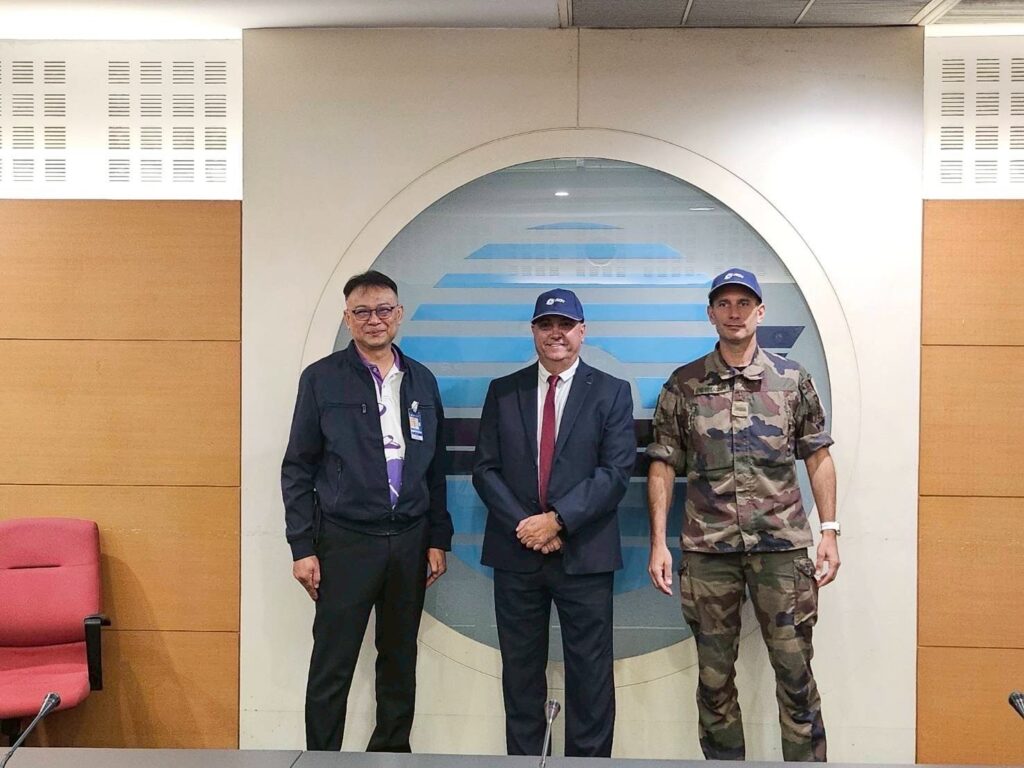
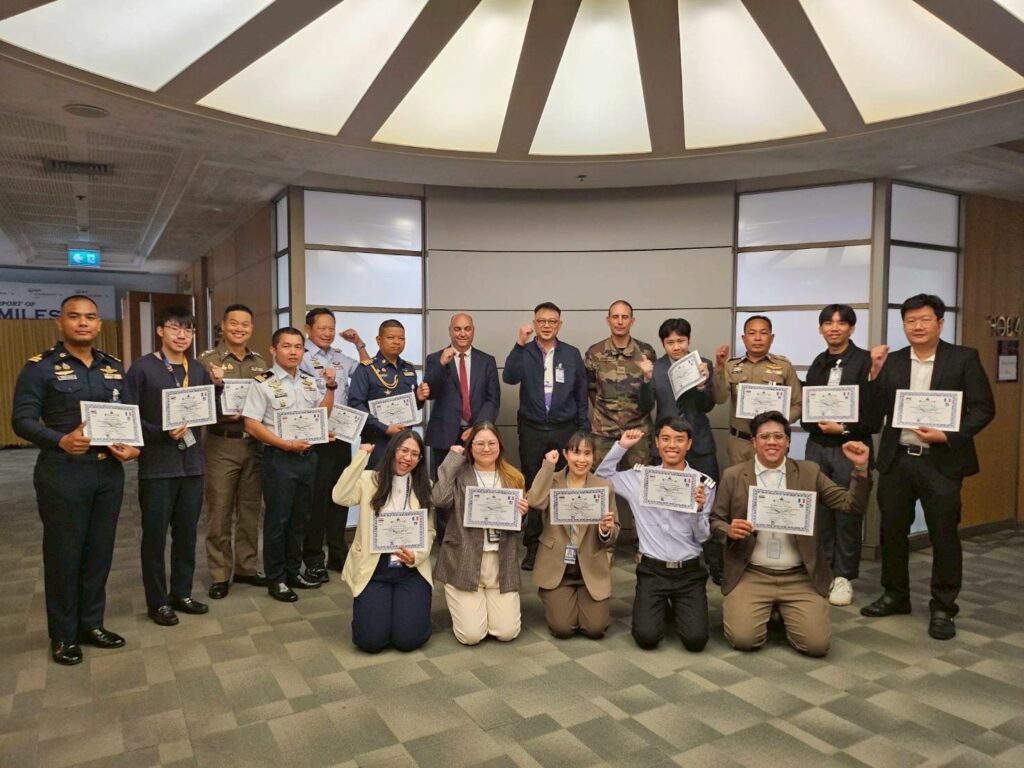
ManPADS and Infantry Weapons Training Workshop
Conducted in collaboration with the Civil Aviation Authority of France (DGAC). The program covers airport vulnerability assessments related to Man-Portable Air Defense Systems (ManPADS) and stand-off/infantry weapons, for relevant agencies responsible for civil aviation security in Thailand.
Security Quality Control Activities
AOT is regularly audited by the Civil Aviation Authority of Thailand (CAAT) to ensure that aviation security personnel, security equipment, security measures, and operational procedures are maintained at the highest level of effectiveness.
In addition, AOT undergoes assessments by international authorities, such as the Transportation Security Administration (TSA), at Suvarnabhumi Airport and Phuket International Airport.
AOT also conducts aviation security quality control activities at both the corporate and airport levels through its internal security auditors to identify deficiencies and implement corrective measures, ensuring that operational standards are consistently maintained across all airports under its responsibility. These activities include:
- Security Audit
- Security Inspection
- Security Test
- Security Survey