Important
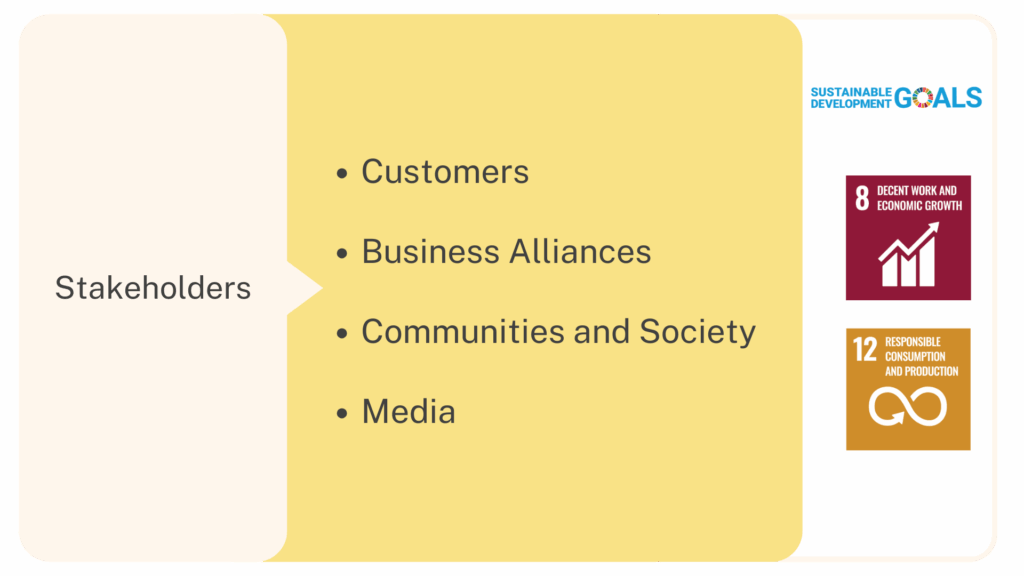
Supply chain management is vital to multiple stakeholder groups. Customers benefit from access to quality products and services that meet established standards and are delivered consistently at reasonable prices. Operational partners gain opportunities to enhance their capacity and competitiveness through training programs and various forms of support, which in turn contribute to job creation and income distribution within local communities.
Moreover, communities and society at large benefit from responsible supply chain practices that consider environmental impacts, occupational safety, and fair labor treatment. Media stakeholders are also able to access transparent information regarding AOT’s supply chain operations.
For AOT, supply chain management plays a critical role across several dimensions. Operationally, it helps optimize cost management and minimize the risk of business disruptions. From a reputation standpoint, it reinforces stakeholder trust through ethical and transparent practices. In terms of sustainable development, it enables the organization to pursue business growth while supporting the advancement of business partners and local communities through environmentally responsible operations, safety standard enhancement, and the promotion of fair labor practices—ultimately driving sustainability throughout the entire supply chain.
Policy
Policies and Governance Framework.
AOT implements sustainable supply chain management in accordance with the Public Procurement and Supplies Administration Act B.E. 2560 (2017), the Ministerial Regulations on Public Procurement and Supplies Administration B.E. 2560 (2017), and the AOT’s Sustainable Procurement Guidelines, the Supplier Code of Conduct, and the AOT Procurement Operations Manual, which applies organization-wide.
Additionally, AOT places importance on its Green ICT Management Policy, which governs the environmentally responsible selection and use of information technology. This policy reinforces sustainability in procurement and materials management processes across the organization.
These policies and guidelines have been formally approved by the AOT Board of Directors under the framework of Board Oversight of ESG Programs Implementation. They are subject to regular review to ensure alignment with AOT’s Supplier Code of Conduct and applicable sustainability requirements. For suppliers unable to meet minimum requirements within a specified timeframe, AOT supports capacity-building through training and information-sharing and, where necessary, may consider discontinuing the partnership.
Moreover, AOT actively provides training and relevant information to suppliers and both internal and external stakeholders to enhance understanding of their roles in supporting AOT’s sustainability initiatives.
PUBLIC PROCUREMENT AND SUPPLIES ADMINISTRATION ACT, B.E.2560 (2017)
Guidelines under the Ministerial Regulation on Designated Goods and Procurement Methods for State-Promoted or Supported Products (No. 2), B.E. 2563 (2020)
AOT has approved the implementation of the guidelines under the Ministerial Regulation on Designated Goods and Procurement Methods for State-Promoted or Supported Products (No. 2), B.E. 2563 (2020). These guidelines emphasize the promotion of procurement for domestically manufactured products, environmentally friendly goods, and goods and services from small and medium-sized enterprises (SMEs). This initiative supports the growth of the grassroots economy and stimulates demand for environmentally responsible products.
AOT Code of Conduct on Supplier Relations and Procurement
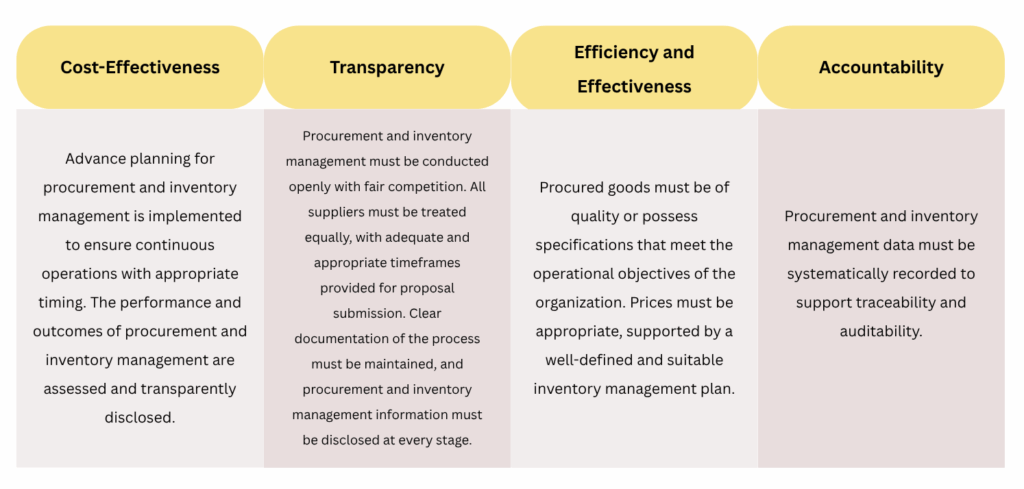
AOT is committed to fairness and integrity in business operations, aiming for mutual benefit in relationships with its suppliers. All AOT suppliers are expected to strictly comply with applicable laws, regulations, and ethical business practices. Procurement is a critical process that determines cost efficiency and the quality of goods and services used in AOT’s operations. Therefore, it must be executed transparently, be auditable, and ensure the greatest benefit to the organization.
AOT regards suppliers as important partners in fostering mutual support and success—from the selection process through to operational collaboration. Suppliers must be treated equally under fair competition and mutual respect. The following principles apply:
- Consideration of Needs, Value for Money, Price, and Quality: Procurement decisions must take these factors into account to ensure the acquisition of the most suitable goods or services.
- Transparency and Impartiality: Information must be provided to all suppliers equally, accurately, and without discrimination to promote fair competition.
- Academic and professional basis: Procurement processes must be supported by sound professional principles and appropriate information to ensure that decisions are made with due diligence, prudence, transparency, and auditability. Where feasible, products and services shall be subject to testing and evaluation.
- Documentation and Record Keeping: All communications and transactions—such as negotiations, contract drafting, contract execution, and performance—must be documented for accountability.
- Support for Equal Treatment: AOT supports equitable treatment of all suppliers, both among suppliers themselves and in their dealings with AOT.
- Reasonable Timeframes: Adequate time must be provided for suppliers to prepare proposals; urgent deadlines should be avoided.
- Fair Contract Terms: Contract terms must be reasonable and not overly burdensome. Legal advisors should be consulted during contract preparation to ensure fairness.
AOT Green ICT Management Policy

AOT has established the Green ICT Management Policy to provide a comprehensive and systematic operational framework for selecting and managing environmentally friendly information and communication technologies (ICT). The policy aims to reduce energy consumption, optimize resource efficiency in ICT usage, and ensure that service quality remains unaffected.
This policy emphasizes four key components:
- Equipment Lifecycle
- End-User Computing
- Enterprise Computing
- ICT as a Low-Carbon Enabler
Implementation Guidelines
ESG Supplier Code of Conduct
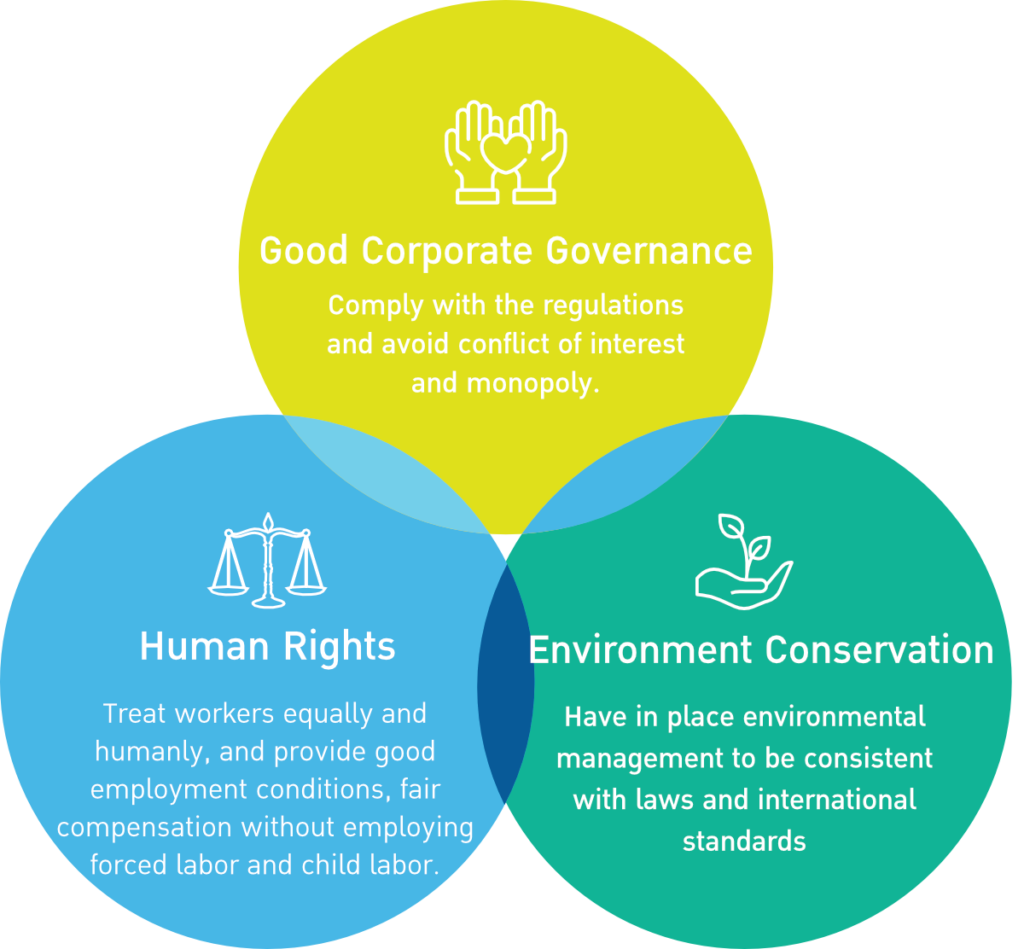
AOT has established mandatory requirements for its suppliers to support sustainable development across three key dimensions: economic, social, and environmental. Suppliers are required to formally acknowledge their responsibilities by signing a declaration of commitment and ensuring compliance with these requirements. This ensures that all business operations are aligned with AOT’s sustainable development goals.
| Governance / Economic Dimension | Social Dimension | Environmental Dimension |
|---|---|---|
|
|
|

Management Approach
Sustainable Supply Chain Management Process
AOT integrates sustainability requirements—covering social, environmental, governance, and business relevance aspects—into the processes for selecting new suppliers and evaluating existing ones. The selection of new suppliers considers specific sustainability issues relevant to each contract type and business activity, such as compliance with occupational health and labor laws, the existence of occupational health and safety or environmental management standards, integrity and reliability in operations, product and service quality, and resource readiness for delivery.
The sustainable supply chain management process is implemented in three key stages, as follows:
1. Supplier Screening / Code of Conduct)
AOT screens its key suppliers by assessing sustainability (ESG) risks of direct suppliers with significant impact on AOT (Tier-1 Significant Suppliers) as well as indirect suppliers with significant impact on AOT (Non–Tier-1 Significant Suppliers). The risk assessment is conducted based on three primary factors: country-specific risk, sector-specific risk, and commodity-specific risk. In this regard, AOT communicates its Supplier Code of Conduct to all suppliers for their review prior to contract execution. Suppliers are required to formally acknowledge and confirm their compliance with the Code before entering into contractual agreements.
Suppliers categorized as Tier-1 Significant Suppliers and Non-Tier 1 Significant Suppliers are those whose goods or services have a material impact—either directly or indirectly—on AOT’s competitiveness, business success, or operational continuity. These suppliers are identified based on two main criteria:
- High-value contracts (Business Relevance)
- For construction works: contract value exceeding THB 1 billion
- For other categories: contract value exceeding THB 30 million
- Specialized suppliers critical to airport operations
These are suppliers directly involved in airport management operations and provide goods or services essential to the business. Examples include:
- Ground handling service providers
- Runway, taxiway, and apron construction contractors
- Infrastructure construction contractors
- Project consultants
- Security service providers
- Security equipment suppliers
Suppliers identified as critical are prioritized for close monitoring to mitigate potential impacts on the company.
Additionally, the screening process incorporates targeted sustainability risk assessments based on the following risk categories:
- Country-specific risk: Risks arising from uncertainties in the economic, social, or political conditions of the country where the supplier operates, or from external factors such as natural disasters.
- Sector-specific risk: Risks related to industry-specific requirements or standards applicable to the supplier’s sector of operation.
- Commodity-specific risk: Risks associated with the nature of the goods produced or distributed by the supplier.
2. Supplier Risk Assessment
AOT regularly assesses sustainability risks throughout its supply chain, covering governance/economic, environmental, and social dimensions. These assessments are conducted through various methods, including Desktop Assessments (review of relevant documents), 2nd Party Assessments (on-site inspections by commissioning departments), and 3rd Party Assessments (by independent organizations). The aim is to raise awareness among suppliers critical to AOT’s business operations and to analyze the risk type and severity level for each supplier group.
The evaluation considers the significance and urgency of each supplier group, and appropriate risk management and mitigation measures are established to ensure risks remain within acceptable levels in accordance with applicable standards and regulations. For example, contractors in the construction category are assessed using the ISO 45001:2018 system, based on the Sellers Risk Matrix. The level of assessment is determined by the results of the preceding assessment—for instance, if a high level of risk is identified during a desktop assessment, AOT will proceed with a 2nd Party Assessment.
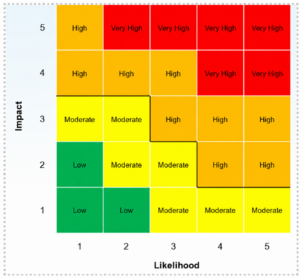
AOT has established clear minimum ESG requirements for suppliers and conducts assessments through both document reviews and on-site evaluations. If a supplier fails to meet the assessment criteria or is found to be non-compliant with the specified requirements, AOT requires the supplier to develop and implement a Corrective Action Plan (CAP), while closely monitoring progress on the corrective measures.
Should the supplier fail to achieve compliance within the specified timeframe, it may be disqualified from contract awards or excluded from participation in AOT’s procurement processes. This approach forms an integral part of AOT’s effective ESG risk management framework.
3. Supplier Development for Sustainability
AOT places great importance on enhancing the capabilities of its suppliers in parallel with managing a sustainable supply chain, with the aim of elevating airport operations to the highest level of efficiency. AOT has initiated supplier development programs and provides training sessions for contractors and suppliers associated with its operational units to ensure alignment with AOT’s airport business standards. These initiatives are implemented in two main formats:
- Capacity Building and Training: AOT provides regular training programs for procurement personnel, operational staff, and relevant internal stakeholders to enhance their knowledge and understanding of roles and responsibilities in sustainable supplier management. The training content includes:
Training on supplier selection processes, performance evaluation and monitoring, supplier development, as well as relevant legal requirements and organizational policies; and
General ESG Trainings
In-depth technical support, such as training programs on safety for suppliers, based on standardized curricula, certified trainers, and approved evaluation methods
- Consultation and Development Guidance, which includes:
- ESG benchmarking: performance comparison with industry peers
- Corrective and improvement actions: recommendations for enhancement and development
Payment Process
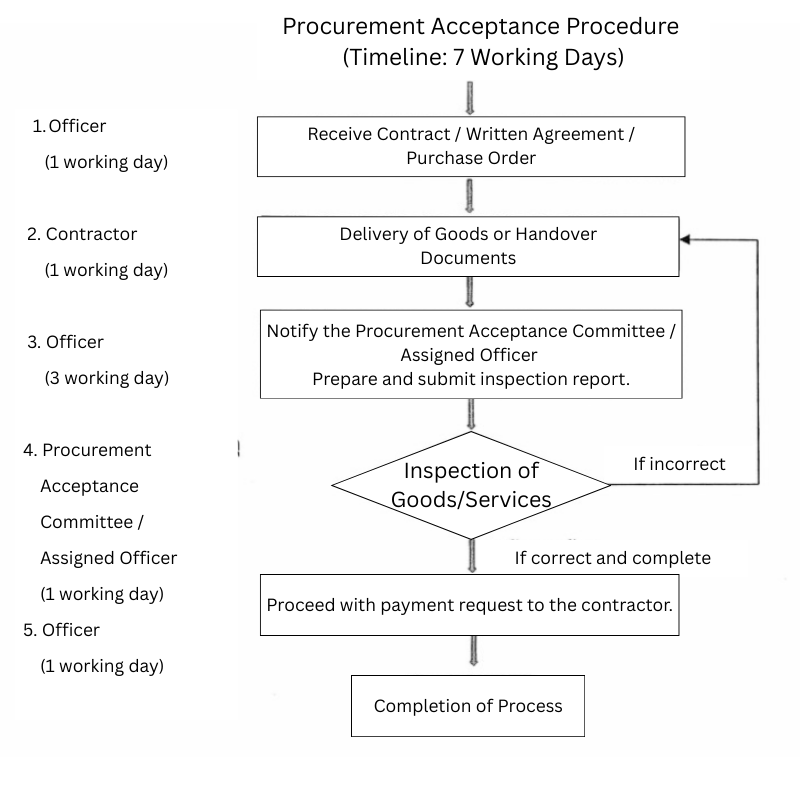
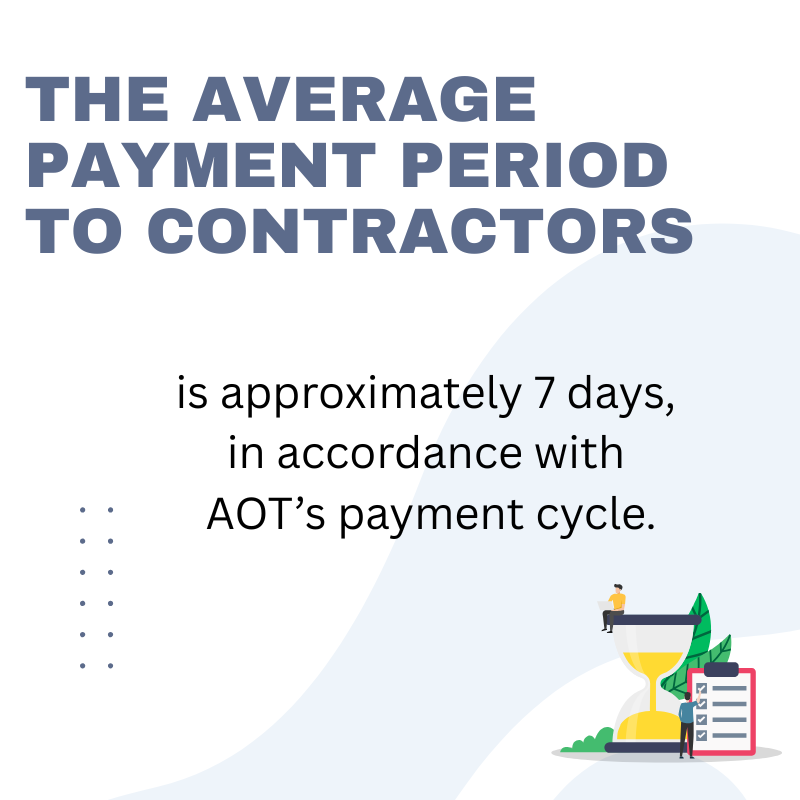
AOT is committed to enhancing the efficiency, transparency, and accountability of its financial management and payment processes in order to strengthen confidence among operators and business partners conducting operations across all six airports under AOT’s responsibility. To support this objective, AOT has developed the e-Tracking System (ETS) for payment disbursement monitoring, designed to facilitate electronic tracking of document status and payment disbursement processes. The system helps reduce inquiry procedures, improves the speed of information access, and supports standardized operations across the organization.
The ETS has been designed to enable operators, business partners, and airlines to independently monitor payment disbursement status in real time through notifications sent to registered email addresses. The system provides updates on progress at each key stage, including work acceptance, financial processing, cheque issuance or fund transfer preparation, and final payment completion. This enables users to continuously track information in a more convenient and transparent manner.
The development of the system also enhances AOT’s internal operational efficiency by reducing coordination time and resource utilization, while supporting effective cash flow management and financial planning for both the organization and its business partners. Furthermore, the system reflects AOT’s commitment to conducting business in accordance with good corporate governance principles by emphasizing accuracy, transparency, and strict compliance with applicable laws and regulations, thereby fostering trust and sustainable relationships with all stakeholder groups.
To further enhance convenience, business partners are also able to schedule appointments for cheque collection through an online queue reservation system.
Performance
Supplier Risk Assessment
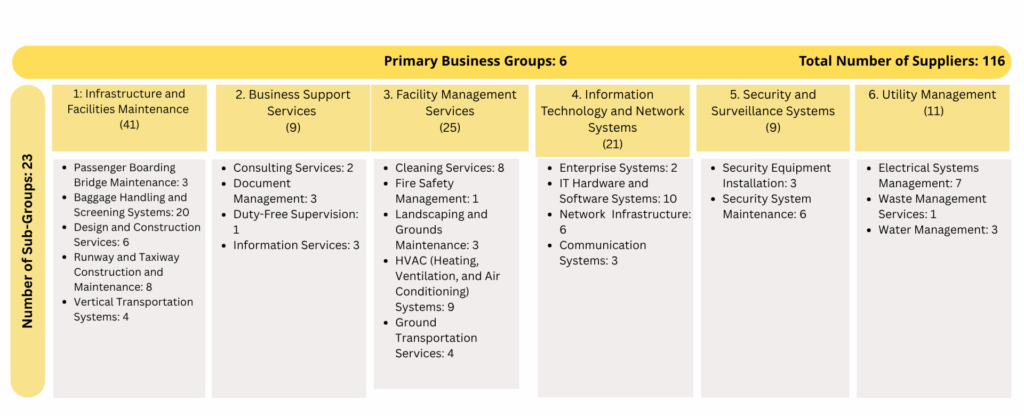
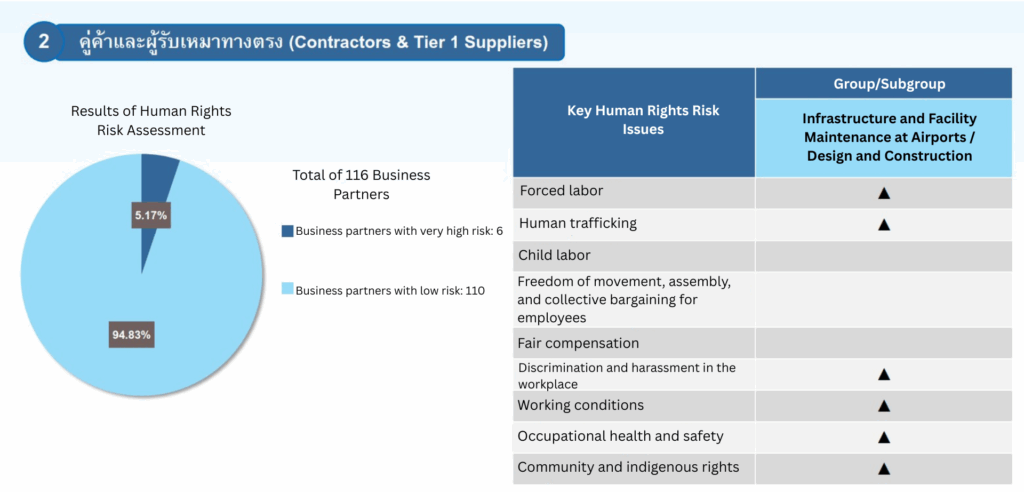
In 2024, AOT conducted a review and assessment of ESG risks among its existing suppliers using the Talk walker tool, covering a total of 116 suppliers (equivalent to 14.11% of total suppliers). The assessment covered six supplier categories as follows:
- Airport infrastructure and facility maintenance
- Business support services
- Facility management services
- Information technology and network systems
- Security and surveillance systems
- Utility management
The assessment results identified six significant direct suppliers within the airport infrastructure and facility maintenance category as having high social risk exposure, while the remaining 110 suppliers were classified as low risk. The identified risk issues included forced labor, human trafficking, discrimination and harassment, working conditions, occupational health and safety, as well as community and indigenous rights.
In 2025, AOT reviewed the assessment results together with updated supplier information and determined that there were no additional significant new suppliers under AOT’s supplier risk assessment criteria. Nevertheless, AOT continues to monitor and manage supplier ESG risks on an ongoing basis through its supply chain management and enterprise risk management processes.
Supplier Training
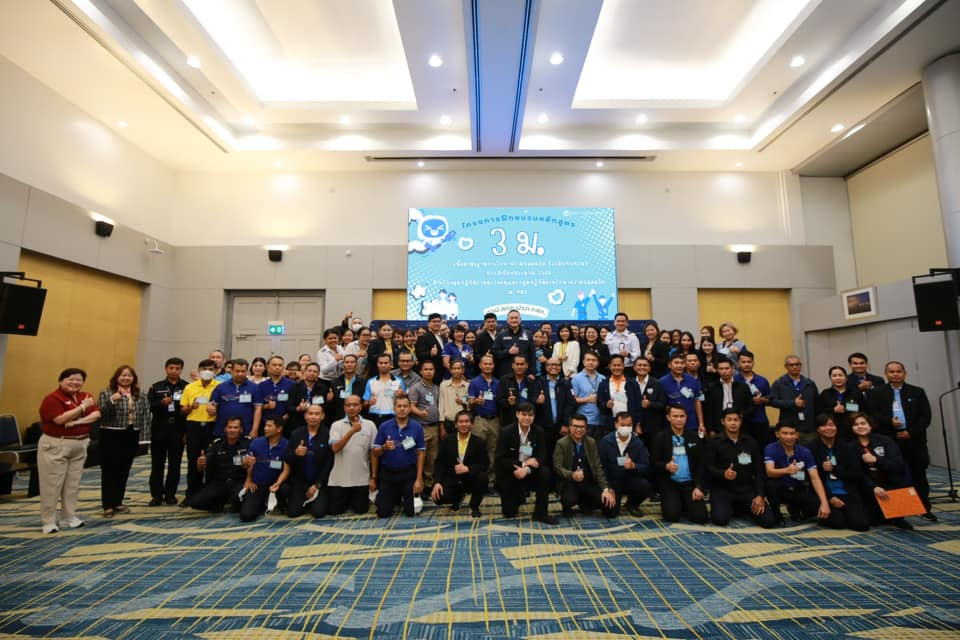
AOT organized training programs to enhance suppliers’ operational capabilities in areas related to occupational health and safety, airport safety, and airport security operations, ensuring effective performance and alignment with AOT’s standards and operational guidelines. The training programs were conducted in both online and on-site formats.
In fiscal year 2025, a total of 14,196 suppliers participated in the training programs.