
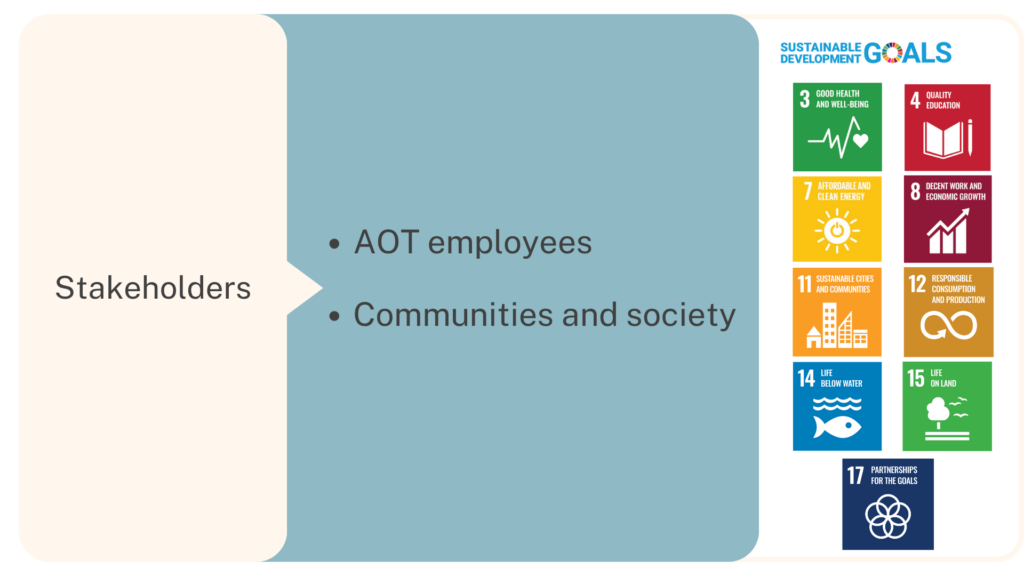
Background and Rationale
AOT operations and expansions significantly impact the evolving lifestyles of local communities, bringing about both positive and negative consequences. These include the expansion of public utilities, land expropriation in neighboring areas, noise pollution from air traffic, and increased road congestion. Conversely, airports serve as catalysts for local and national development by generating tourism revenue, improving access to transportation systems, and enhancing community safety.
Addressing these impacts requires a robust stakeholder engagement process at the community level, alongside Corporate Social Responsibility (CSR) initiatives designed to create shared value for the airport, local residents, and national society. Furthermore, engaging with communities and society reflects a commitment to human rights, specifically the right to life, safety, and fair legal treatment. By prioritizing collaboration and the creation of shared value, AOT (Airports of Thailand) can achieve sustainable growth in harmony with the community and society.
Impacts from Business Operations
Airport business operations may impact surrounding communities both directly and indirectly, such as impacts from aircraft noise,increased traffic, air pollution, and changes to the local way of life. Additionally, airport expansion and development projects may affect land use and community public utilities.
AOT realizes the importance of conducting business while coexisting sustainably with communities and society. Therefore, it is committed to operations that consider creating Shared Value, ensuring AOT’s growth is balanced with community development. AOT prioritizes elevating
the quality of life for communities surrounding airports through employment, supporting local entrepreneurs, and career skill development to ensure stable income and long-term well-being for community members. Simultaneously,
comprehensive environmental impact management measures are implemented, such as noise reduction, appropriate wastewater and waste management, and promoting environmental conservation activities with the community.
Furthermore, AOT attaches importance to listening to stakeholder opinions to ensure development is transparent, respects human rights, and aligns with community needs.This reflects AOT’s commitment to growing alongside communities and society securely and sustainably.
Challenges and Opportunities
As the operator of Thailand’s six primary international airports, Airports of Thailand (AOT) plays a pivotal role in driving the nation’s economy and tourism. We navigate diverse expectations from various stakeholders: the government seeks economic expansion, local communities demand a high quality of life, and travelers expect world-class service standards. Without careful, inclusive management of our operational impacts, we risk conflict and misunderstanding, which could ultimately erode public trust in the long term.
However, airport operations also serve as a vital engine of opportunity and value for surrounding communities and society at large, specifically through:
Economic Opportunity and Employment: Creating direct and indirect jobs for local communities, ranging from airport positions to related service sectors such as hotels, restaurants, and tourism.
Local Entrepreneurship Development: Providing opportunities for SMEs and local entrepreneurs to integrate into the supply chain, retail products and services, and promote local goods to international tourists.
Infrastructure Development: Improving roads, public utilities, and facilities in surrounding areas, which enhances the overall quality of life for residents.
Sustainable Partnerships: Encouraging community participation in decision-making processes, active listening, transparent impact monitoring, and two-way communication to foster trust, mutual understanding, and strong cooperation.
AOT recognizes that the sustainable growth of our airports must go hand-in-hand with the sustainable development of the community and society. Balancing economic progress with environmental and social impact management is the foundation of our collective long-term growth.
To achieve this, we have implemented the “AOT Selected” project—an initiative to promote sustainable tourist attractions and community products. This project aligns with our core business to elevate local offerings that provide meaningful experiences for travelers while ensuring community involvement. By stimulating tourism-driven economies, we ensure that growth benefits not only our business but also drives stable and lasting prosperity for the community.
Commitment and performance
AOT’s Commitment
AOT is committed to conducting business alongside balanced economic, social, and environmental development under the concept of “Corporate Citizenship Airport.” Priority is given to building understanding and cooperation with the community to ensure sustainable mutual growth. AOT aims to strengthen good relationships community environmental and community participation in every area through listening to opinions, transparent communication,and conducting activities that respond to community needs in economic, social, and environmental aspects.
Additionally, it supports employee participation in volunteer activities, supports local entrepreneurs, and develops youth potential to elevate the quality of life for people in areas surrounding the airports. With this commitment, AOT will move forward to create Shared Value through responsible, transparent operations with participation from all sectors. This ensures Thai airports are not just regional transport hubs, but centers for sustainable business growth, ready to operate with responsibility toward society and the environment in the long term.
Relevant Policies, Regulations, and Standards
AOT has established a Stakeholder Management Policy to demonstrate its commitment to being a responsible corporate citizen and a good neighbor to the community. This policy specifically encompasses community-level stakeholders through comprehensive stakeholder analysis.
The framework includes communication, information disclosure, participation, implementation, and monitoring and reporting. Furthermore, AOT has defined Stakeholder Management Guidelines to provide a standardized approach for all relevant departments. This ensures that engagement with stakeholders remains consistent and professional across the entire organization.
The Community Stakeholder Engagement Process Manual aligns with the following standards:
- Accountability 1000 Stakeholder Engagement Standard 2015 (AA1000SES 2015)
- International Organization for Standardization 26000: Guidance on Social Responsibility, 2010 Edition (ISO 26000:2010)
- Global Reporting Initiative 2021 (GRI) Standards for Sustainability Reporting
- Corporate Sustainability Assessment (CSA) framework for the Dow Jones Best-in-Class World Indices to align sustainability operations with international guidelines.
- State Enterprise Assessment Model (SE-AM): Criteria for evaluating Core Business Enablers for state enterprises.
Operating Manuals
- AOT Sustainable Development Operational Manual Fiscal Year 2025
- AOT Community Stakeholder Engagement Process Manual 2025
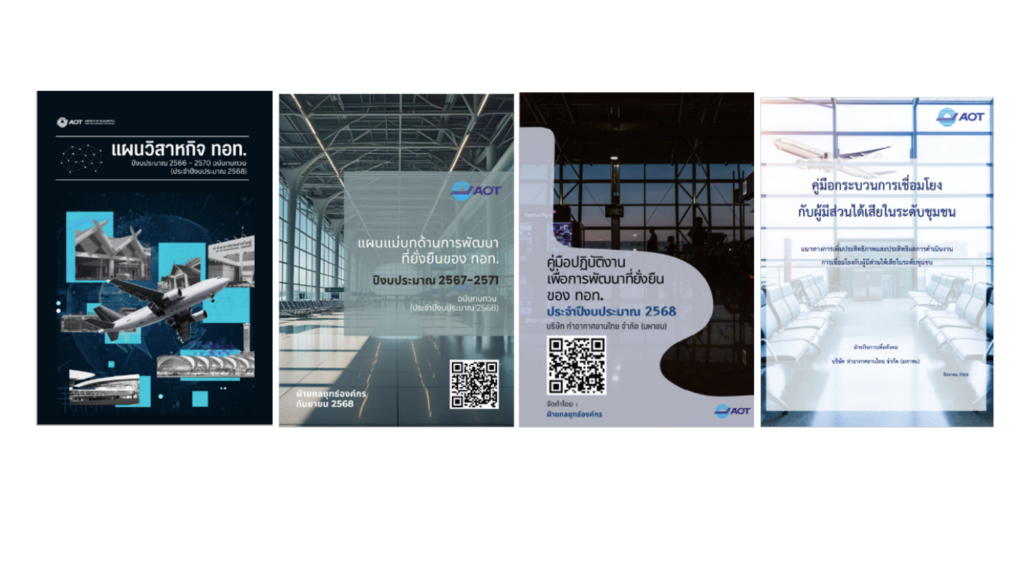
Master Plan
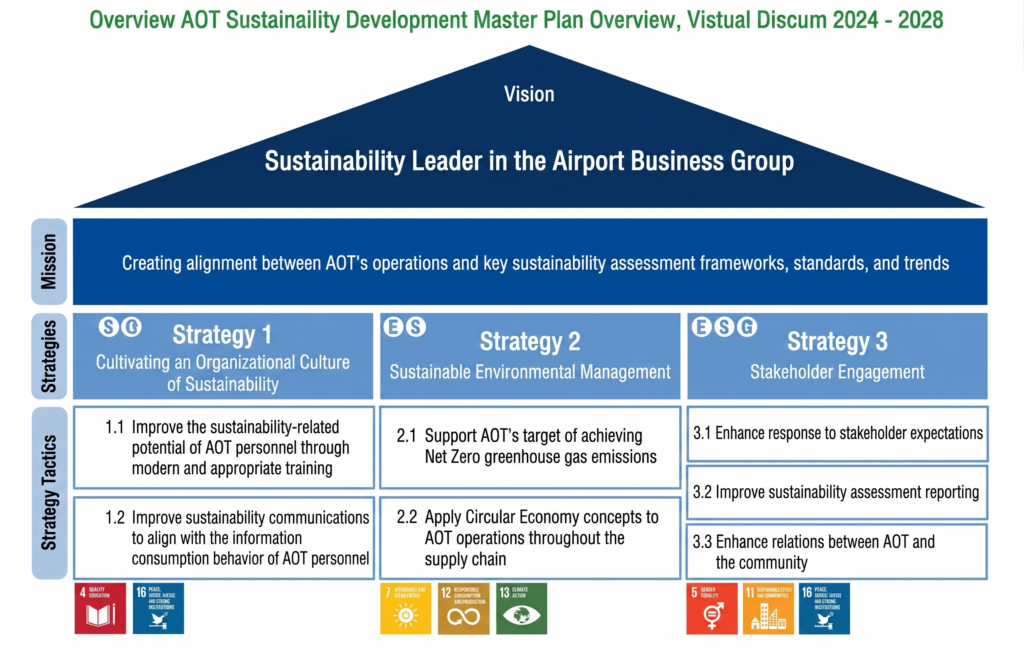
AOT Sustainability Master Plan (FY 2024 2028) Strategy 3: Stakeholder Engagement Tactic 3.3: Strengthening Relationships between AOT and Communities
The operational foundation for fostering relationships, building trust, and establishing long-term cooperation is as follows:
Empathetic Listening Stakeholder engagement provides an opportunity for AOT and its stakeholders to exchange perspectives. It offers vital information regarding community expectations and concerns, enabling AOT to understand and respond to community needs appropriately and effectively.
Collaborative Development of Services or Products Engaging stakeholders in the development of products or services helps create a dimension of sustainability through improvements or innovations that meet community expectations. AOT focuses on operations that support business sustainability while simultaneously fostering growth and enhancing the potential of our stakeholders.
Connecting and Building Mutual Understanding Fostering cooperation between the organization and communities—or stakeholder groups—through activities and projects that promote creativity and community development. This builds positive relationships with surrounding communities, such as providing opportunities for the community to participate in projects with a positive social impact.
To ensure that AOT can achieve its defined goals effectively, the following aligned action plans have been implemented:
| Action Plan: Community and Social Engagement | ||||
|---|---|---|---|---|
| Sustainability Materiality Assessment Project | Human Rights Risk Assessment Project | Sustainability Assessment Reporting Improvement Project | Sustainability and Environmental Database Development Project | Community Tourism and Local Products Promotion Project (AOT Selected) |
Community Engagement Manual
- AOT Sustainability Operating Manual, Fiscal Year 2025
The guidelines for AOT’s community engagement under this Sustainability Operating Manual aim to foster positive relationships and sustainable cooperation between airports and their surrounding communities. This is achieved through systematic and transparent operations, guided by these key principles:
Planning and Operational Framework
AOT has developed a Community Stakeholder Engagement Guideline to ensure a unified standard across all airports. This framework facilitates the analysis of material issues, strategic planning, and the implementation of activities tailored to the local context, ensuring that community needs are genuinely addressed.
Continuous Engagement Processes
AOT provides opportunities for communities to participate in every stage of development—ranging from information sharing and providing feedback to joint decision-making and performance monitoring. This approach fosters mutual understanding and ensures operational transparency.
Integrated Social Development Projects
AOT implements projects that directly respond to community needs, such as:
AOT Selected Project: Aimed at strengthening the local grassroots economy.
AOT Side-by-Side and Sharing Project: Aimed at enhancing positive relationships.
These initiatives are designed to cultivate a spirit of volunteerism and maintain a positive, continuous, and sustainable bond between AOT and the community.
Roles and Responsibilities
AOT has established a clear sustainability management structure that spans all levels, from policy-making to operational execution. This ensures that AOT’s sustainability initiatives are systematic and effective, emphasizing the participation of all departments and the integration of sustainability into the organization’s core business processes.
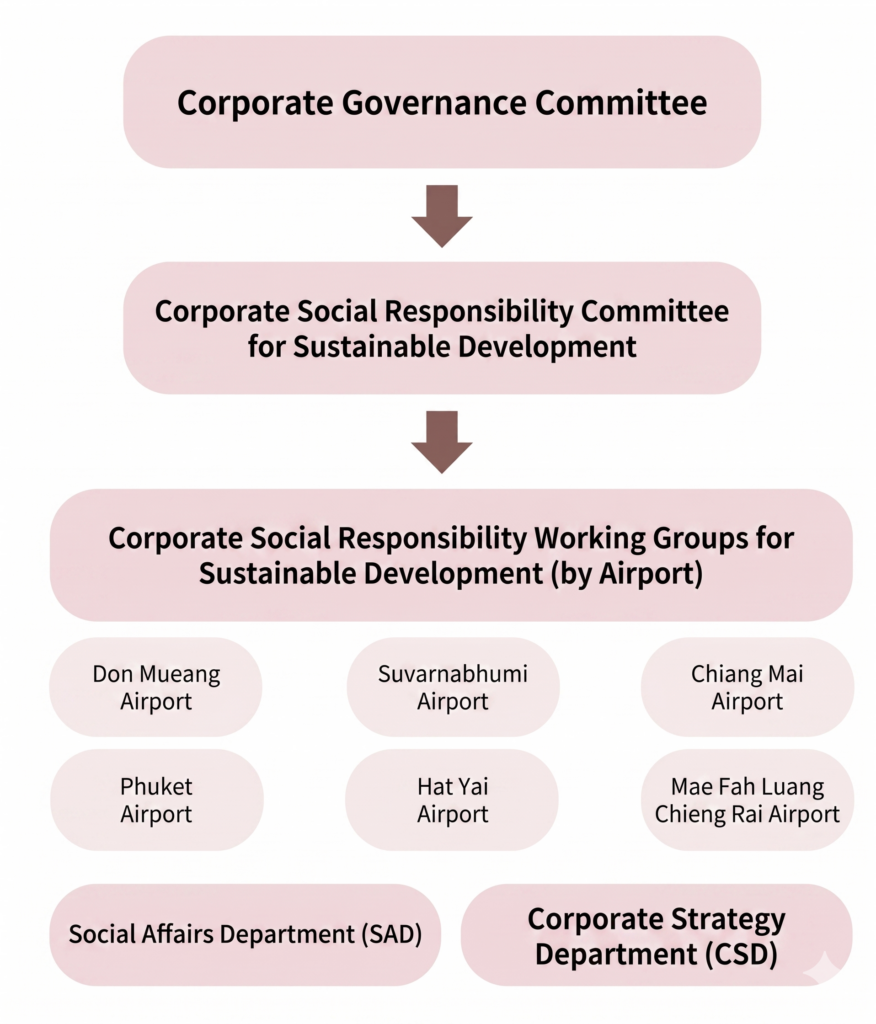
AOT has established a clear sustainability management structure covering all levels, from policy-making to operations, to ensure that AOT’s sustainability initiatives are systematic and effective. The focus is on participation from all departments, as well as the integration of sustainability into the organization’s core business processes. This structure consists of:
The Corporate Social Responsibility Committee for Sustainable Development, and the Corporate Social Responsibility Working Groups for Sustainable Development (stationed at all 6 airports), under the oversight of the Corporate Governance Committee. Additionally, there is the Social Affairs Department (SAD), serving as the main supporting unit for social affairs operations, and the Corporate Strategy Department (CSD), which is responsible for defining the direction, strategies, and operational plans for sustainability.
AOT’s Community Relation Framework
AOT operates under the core concept of “Being a Good Corporate Citizen and a Good Neighbor to the Community,” in alignment with the Revised AOT Corporate Enterprise Plan (FY2023 – 2027) (Revised FY2025 version). These community initiatives are integrated into AOT’s Enterprise Plan and Sustainable Development Plan to foster airport growth alongside sustainable community development, as detailed below:
Strategic Objective 4: To balance business operations with responsibility toward natural resources, the environment, society, and governance (ESG), ensuring stable and sustainable business growth (Lead Changes Toward Sustainability).
Strategy 6: To become a socially and environmentally friendly airport.
Strategy 6.2: To gain and strengthen acceptance from stakeholders.
Goals and Performance
| Indicator | Goal of 2025 | Performance in 2025 |
|---|---|---|
| Ability to calculate Social Return on Investment (SROI) for projects | Calculate SROI for at least 1 airport | 0.83 : 1 for Phuket International Airport |
| Satisfaction rate of communities participating in CSR activities | 75% | 83.8% |
AOT has developed the Revised AOT Stakeholder Master Plan (FY2024 – 2027) (Revised FY2025 version) and the Community Stakeholder Engagement Manual. These documents cover the entire supply chain and align with the Revised AOT Corporate Enterprise Plan (FY2023 – 2027), which reflects current aviation industry trends and international sustainability frameworks. Key benchmarks include:
AA1000 Stakeholder Engagement Standard (AA1000SES)
ISO 26000 (Social Responsibility)
S&P Global Corporate Sustainability Assessment (Dow Jones Best-in-Class)
Global Reporting Initiative (GRI 2021)
These guidelines serve as a strategic roadmap for community engagement around AOT’s six airports. The primary responsibility lies with the Office of the President (Social Corporate Affairs Department) and the Special Affairs and Community Relations Departments of each airport. The plan establishes long-term targets for Community Satisfaction and Social Return on Investment (SROI) as follows:
Management Approaches
Community and Social Participation
Approaches to Managing Impacts
AOT has established a framework for delivering social value, which serves as the core for defining and implementing Corporate Social Responsibility (CSR) activities at both the corporate and airport levels. This framework aligns with the United Nations Sustainable Development Goals (SDGs) and consists of four primary pillars:
- Community Relationship Building
To foster trust and ensure sustainable coexistence between the airport and surrounding communities. - Local Economic Development
To promote local employment and increase income opportunities within the area. - Ecosystem Conservation
To monitor, protect, and restore the environment and ecosystems surrounding the airports. - Human Capital Development
To enhance the potential and capabilities of local citizens and youth within the community.
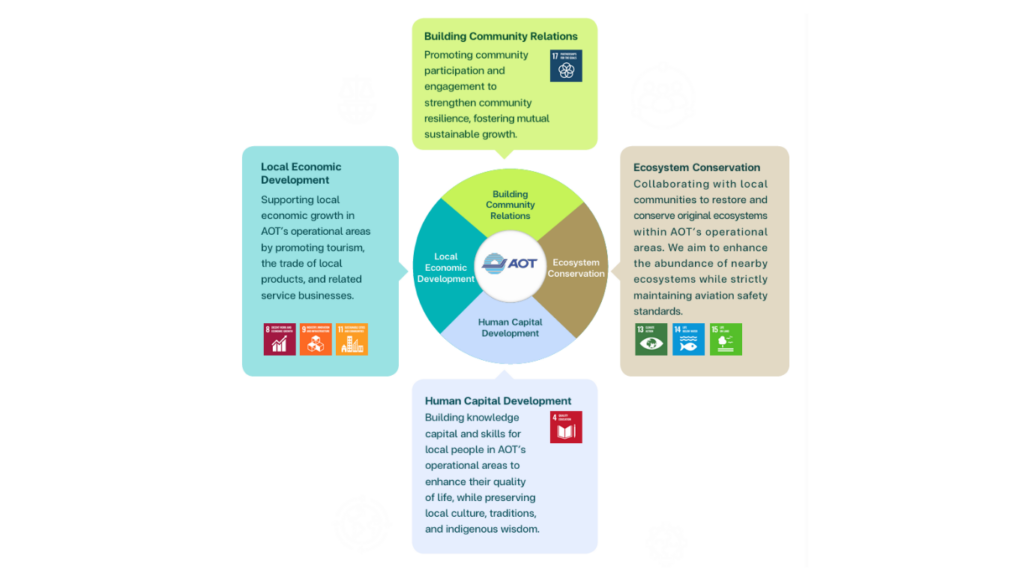
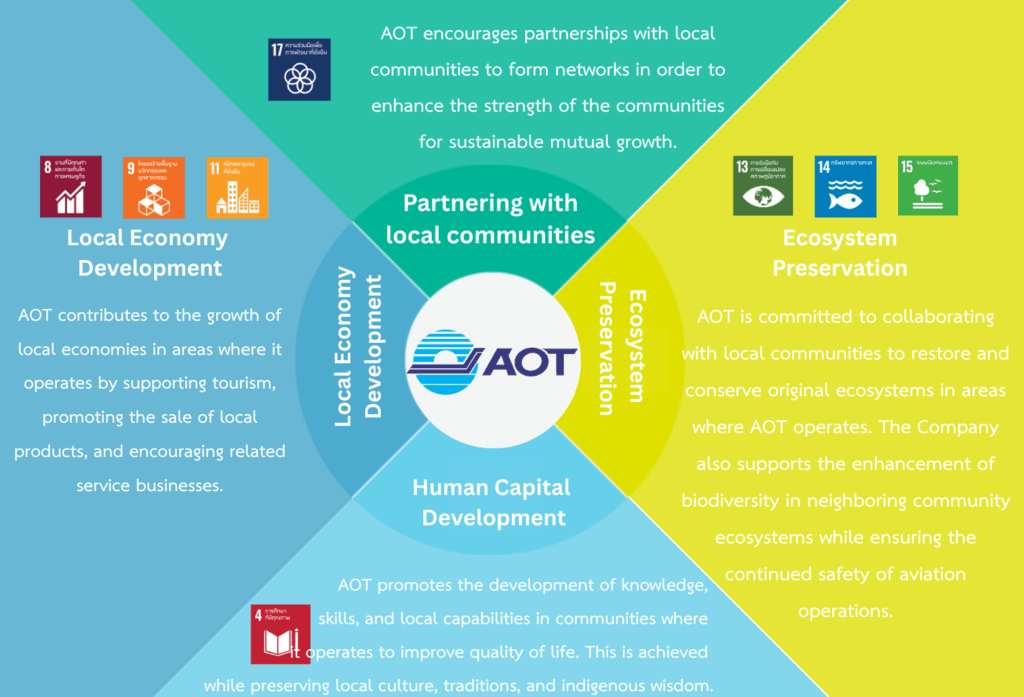
AOT has established a framework for investment and community initiatives, prioritizing key issues that align with the airport context and corporate strategy. This framework is built upon four core pillars that serve as the heart of social activity planning at both the corporate and airport levels.
These pillars also support the Sustainable Development Goals (SDGs), namely: Community Relations, Local Economic Development, Ecosystem Conservation, and Human Capital Development. AOT is committed to the continuous care of communities and society by leveraging its core organizational competencies to create positive impacts and foster collaboration between airports, local residents, and society as a whole.
AOT's Social Responsibility Initiatives
Social Responsibility Activities
AOT categorizes its Corporate Social Responsibility (CSR) activities into two primary types: CSR In-Process, which is integrated directly into AOT’s core business operations, and CSR After-Process, which consists of activities conducted beyond normal business operations to deliver benefits to society. The details are as follows:
| ⚙️ CSR In-Process | 🌍 CSR After-Process | |
|---|---|---|
|
🎯
Goal
|
To create shared economic and social value between the business and surrounding communities. | To continuously foster public spirit, unity, and positive relationships with the community. |
|
📋
Projects
|
✓
Sustainable environmental management within airports to mitigate impact on communities (Reducing pollution, noise, and waste).
✓
Prioritizing local employment within the airport and supporting local entrepreneurs.
✓
Implementing the "AOT Selected" project to promote community products and tourist attractions.
|
✓
"AOT Side by Side and Sharing" Project: Volunteer activities donating essential supplies to the community.
✓
"AOT Volunteer Reforestation" Project: Planting and maintaining forest ecosystems.
✓
Educational scholarships, blood donations, and disaster relief assistance.
|
Operational Framework for “AOT Selected” Project”
AOT has established a corporate-level CSR Framework to systematically define the direction and guidelines for driving social responsibility. This framework encompasses both the headquarters and airport levels, focusing on designing projects that align with the organization’s business context while authentically addressing societal needs.
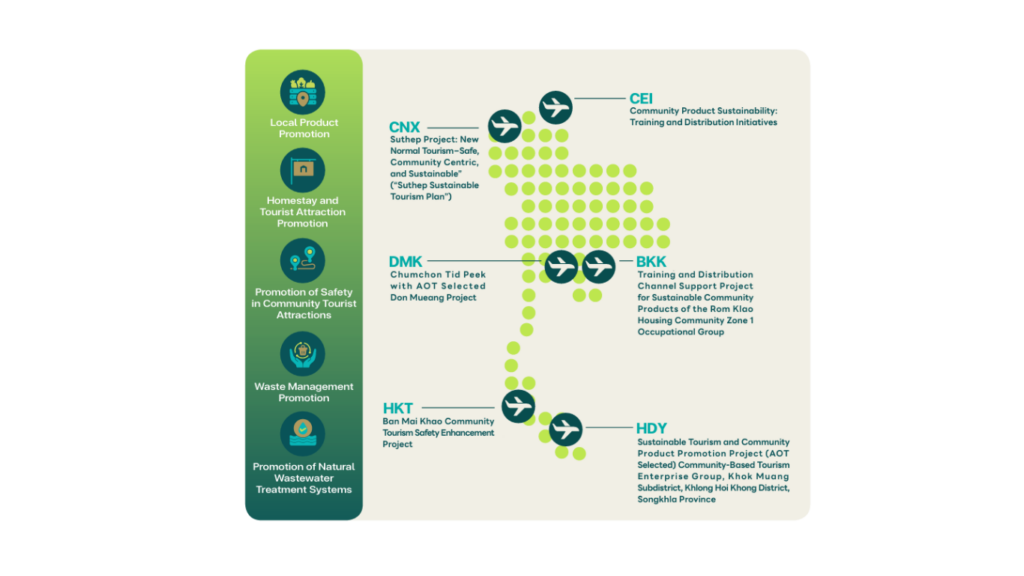
At the corporate level, AOT implements highlight CSR initiatives, most notably the “AOT Selected” project. This flagship initiative supports Thailand’s tourism industry by co-developing tourist attractions and community products surrounding its airports. The project aims to bolster the grassroots economy and generate sustainable employment and income for local residents through five targeted project groups designed to enhance community potential across various dimensions.
Simultaneously, AOT carries out localized social activities across all six airports to ensure that development is inclusive and tailored to the specific needs of each area. This includes community relations projects managed through the headquarters to build strong relationships and trust with surrounding neighbors.
Furthermore, AOT plans to expand its social initiatives by fostering an internal CSR Culture, encouraging employees at all levels to participate in creating shared value with society. It also promotes CSR Collaboration with external agencies to scale project outcomes and amplify positive social impact.
Concept - Symbolic
Corporate Level
(CSR Signature)
Implementation
Framework - Corporate
Level (CSR Framework)
Corporate-Level
CSR Program
(Highlight CSR Programs)
Focus Areas
(Focus Areas)
to Thai
Heritage
a Good
Environment
Prosperity
Community
Products*
Homestays
and Community
Tourism
Safety in
Community
Tourism Sites
Waste
Management
Natural
Wastewater
Treatment
Systems
Community Tourism and Product Development Initiative: AOT Selected
The “AOT Selected” Project is a corporate-level initiative dedicated to promoting sustainable community tourism and local products. AOT has identified five targeted project groups that encompass environmental, social, and economic dimensions. To ensure effective implementation, pilot projects have been selected from all six airports to assess the readiness and potential of local communities in executing project activities.
AOT plans to scale the “AOT Selected” project into a key strategic mechanism for linking sustainable tourism with community products. By integrating the unique knowledge, expertise, and distinctive characteristics of its six airports, AOT aims to develop community-based tourism that delivers sustainable experiences for both travelers and residents.
This initiative focuses on providing tourists with authentic and meaningful experiences through close engagement with local culture and nature. Simultaneously, it strives to create long-term positive impacts on the environment, society, and economy, ensuring that natural and cultural resources are preserved without degradation for future generations.
Identifying Affected Communities and Range of Local Stakeholders
AOT has developed a Community-Level Stakeholder Database for all six airports to identify relevant stakeholder groups, analyze their expectations, and evaluate engagement approaches. This ensures that the needs of community stakeholders are addressed with precision. Currently, AOT defines key community areas based on three primary criteria:
Environmental Impact Assessment (EIA): Areas defined by environmental impact boundaries.
Airport Emergency Plan: Areas categorized under the airport’s emergency response protocols.
Noise Contour: Areas assessed based on aircraft noise impact zones.
Furthermore, the database accounts for vulnerable groups, such as minors, the elderly, and migrant workers, and is regularly reviewed to reflect evolving contexts. Data from this community-level database is also utilized to select appropriate tools, methods, and engagement plans for High-Priority Stakeholders. AOT employs engagement strategies for these key groups through collaborative decision-making, two-way communication, and long-term operational commitments.
Community Investment Focus Areas
AOT has integrated community investment and engagement into its corporate strategy through the “AOT Selected” approach, which serves as a framework for identifying and prioritizing community investment initiatives that align with AOT’s role as Thailand’s leading airport operator and aviation infrastructure provider.
Under the AOT Selected framework, AOT prioritizes community investments that:
- Align with the operational context and impacts of airport activities;
- Address the needs and expectations of communities surrounding airport areas; and
- Support the Company’s long-term strategic objectives.
These principles guide the selection of community investment priorities to ensure alignment with AOT’s business operations and strategic direction. As Thailand’s primary airport operator, AOT plays a vital role in facilitating air transportation and serving as the country’s gateway for both domestic and international travelers. Recognizing this responsibility, AOT places significant emphasis on supporting and developing communities within its stakeholder engagement boundaries.
Through community-focused initiatives, AOT contributes to local economic development, particularly in the travel and tourism sectors, while creating shared benefits for society as a whole. Leveraging its expertise in airport services and its commitment to delivering value and exceptional experiences, AOT strives to enhance the well-being of surrounding communities and create positive impacts for both Thai and international visitors.
| 4 Core Pillars of Engagement | |||
|---|---|---|---|
| Enhancing Quality of Life and Well-being for Surrounding Communities to support harmonious co-existence between the airport and the community. | Promoting Safety, Health, and the Environment, which are fundamental factors for sustainable airport operations. | Developing Children, Youth, and Education in Surrounding Areas to strengthen human capital and social resilience in the long term. | Promoting Local Career Development and Economy to create economic opportunities and bridge the connection between the airport and the local economic system. |
This focus reflects the integration of community investment into AOT’s core business strategy. By fostering Creating Shared Value (CSV) among the organization, local communities, and relevant stakeholders, AOT establishes a vital foundation for the long-term sustainable growth of its airports.
Support for Children and Youth Development Activities
AOT recognizes the importance of promoting and protecting the rights and well-being of children and youth in communities surrounding its airports. The Company supports a wide range of activities and initiatives aimed at enhancing safety, health, education, and personal development for young people. Target beneficiaries include children and youth living in communities near airport areas, employees’ children, as well as young airport users.
AOT implements these initiatives through dedicated programs and collaborative partnerships with educational institutions, government agencies, and local communities. Support may be provided in the form of financial contributions, materials and equipment, knowledge sharing, and the creation of safe and child-friendly environments that foster learning and development.
Target Groups
- Children and youth living in communities surrounding AOT airports
- Employees’ children and family members
- Children and youth using airport facilities and services
Areas of Support
- Safety and health promotion
- Education, learning, and capacity development
- Environmental awareness and quality of life improvement
- Safe access to public spaces and community facilities
- Ethics, values, and character development
Implementation Approaches
- Organizing dedicated activities and development programs
- Collaborating with schools, government agencies, and local communities
- Providing financial support, materials, equipment, and knowledge resources
- Developing child-friendly spaces and supportive environments
Expected Outcomes
These initiatives contribute to improving the well-being, knowledge, skills, and safety of children and youth across communities surrounding AOT airports. Depending on the nature of each program, activities may be implemented on a continuous or periodic basis and may benefit local communities, airport users, and employees’ families. Through these efforts, AOT seeks to create positive and lasting impacts while supporting the sustainable development of future generations.
Community Impact Assessment & Capacity Building
AOT has designated the Corporate Social Responsibility Section under the Office of the President (Head Office) and the Special Affairs and Community Relations Departments (at all six airports) as the primary units responsible for overseeing and monitoring the potential negative impacts of AOT’s operations on local communities and society.
These units are also tasked with strengthening community capacity in communication and engagement by facilitating regular on-site interactions, thereby enhancing mutual understanding and fostering long-term relationships between AOT and surrounding communities.
Social Return on Investment: SROI
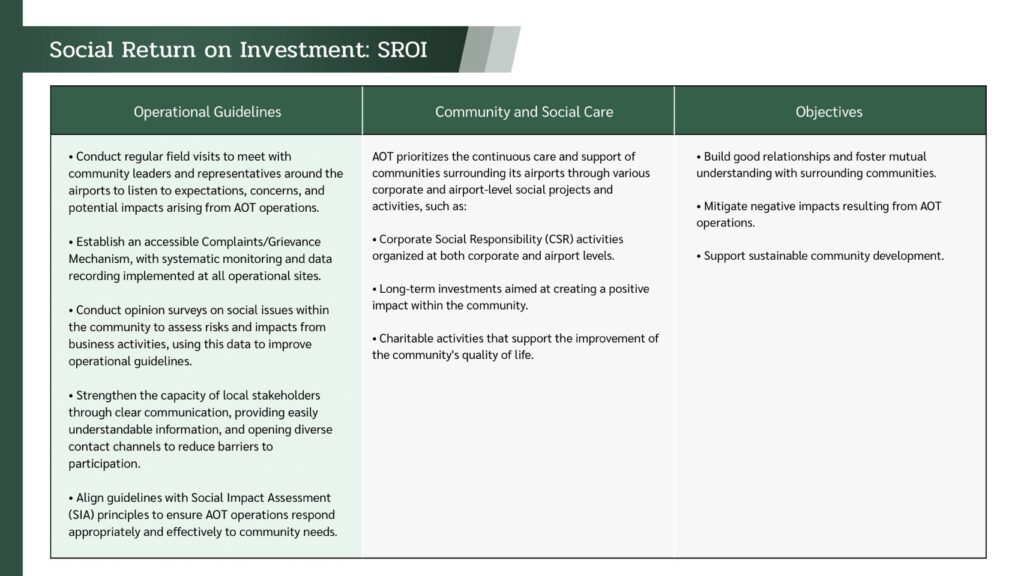
AOT has adopted the Social Return on Investment (SROI) analysis as an economic evaluation framework. This approach translates social and environmental outcomes, as well as stakeholder benefits, into monetary value.
The objective is to tangibly measure the “social return on the organization’s investment” and utilize these insights to enhance future operational planning. In implementation, AOT has defined the SROI analysis framework according to the following sequential steps:
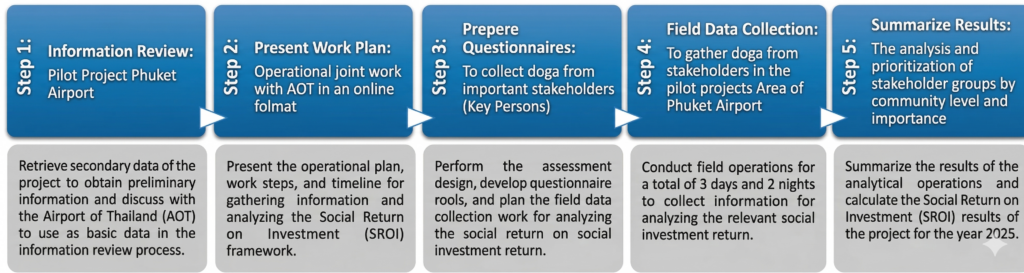
Comprehensive community stakeholder engagement
AOT’s community stakeholder engagement is conducted in accordance with the AA1000 Stakeholder Engagement Standard (AA1000SES), as follows:
| Phase | Operational Details |
|---|---|
| Planning (Plan) |
|
| Preparation (Prepare) |
|
| Implementation (Implement) |
|
| Review (Review) |
|
Complaints/Grievance Mechanism Available For Communities
AOT is committed to minimizing its impacts on communities and society at large. To achieve this, the Company has established systematic approaches to address concerns and grievances raised by communities and stakeholders across all sectors, while implementing appropriate mitigation measures to reduce potential impacts and foster sustainable stakeholder relationships.

|
Suvarnabhumi Airport Environmental Impact Coordination Center Tel: 0 2132 9088, 0 2133 1888, 0 2132 9089 Hours: 08:00 – 17:00, daily (excluding public holidays) Corporate Communications Department Email: aotpr@airportthai.co.th Or visit www.airportthai.co.th under the “Contact & Grievance Submission” section |
| 6 Airports under AOT |
Airports of Thailand Official Website https://www.airportthai.co.th/th/ |
Operational plan for FY2025
Local Employment
| Target | Measurement Examples (Under Operational Category) to Confirm Commitment |
|---|---|
|
|
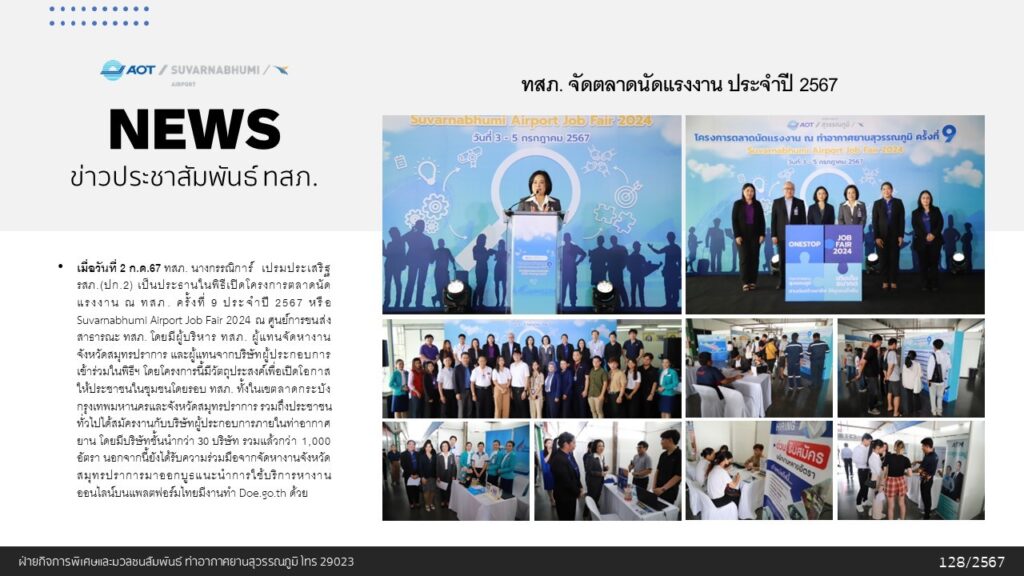
Job Fair 2024
Job Fair 2025
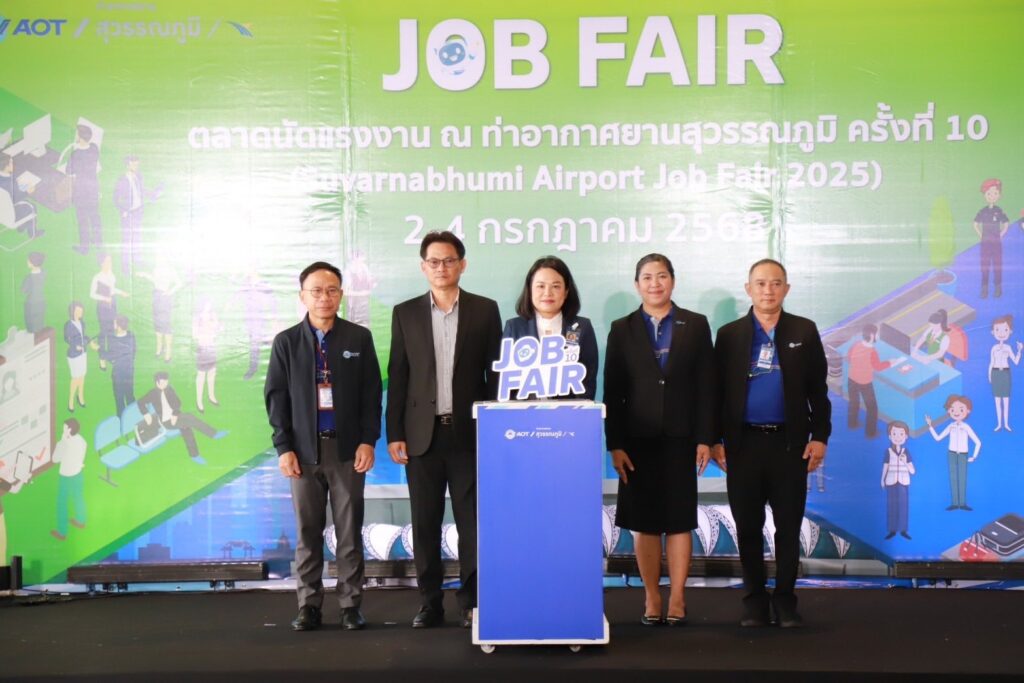
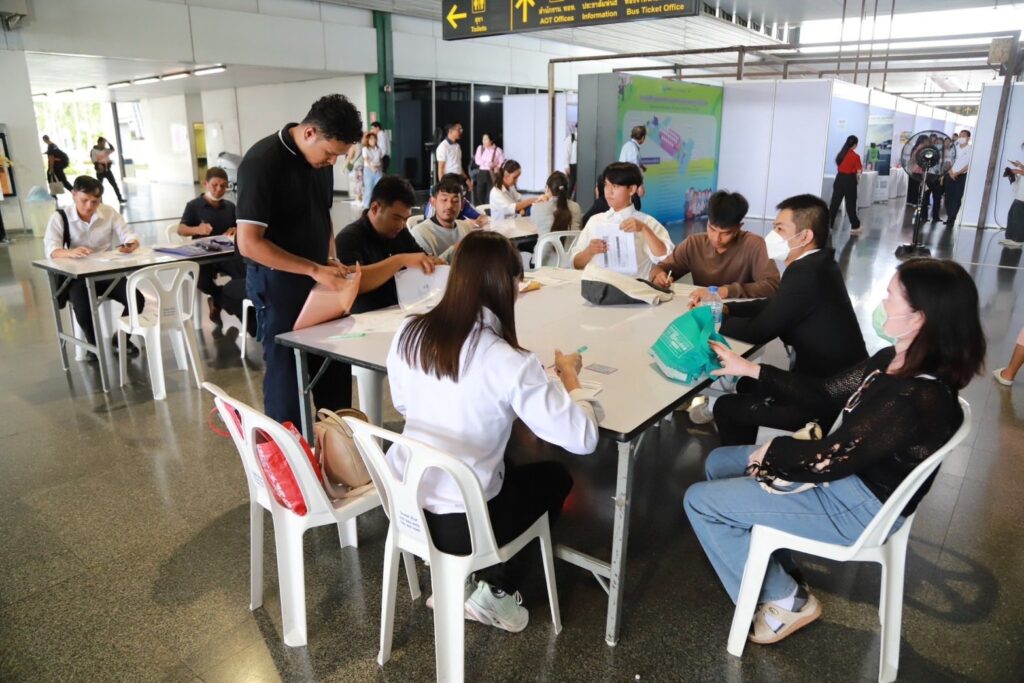
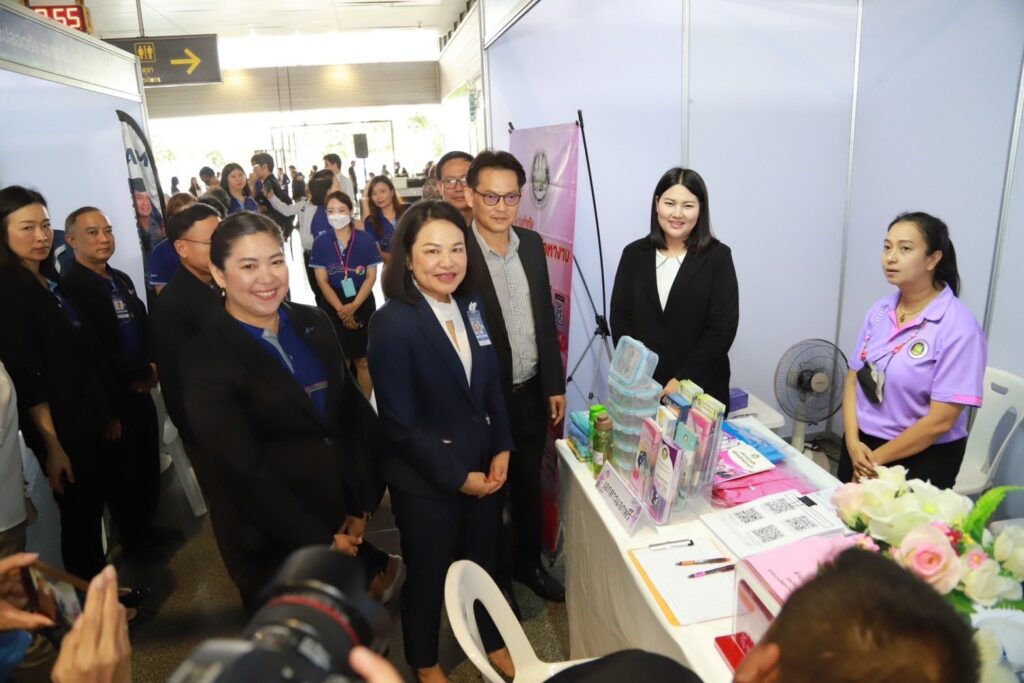
Suvarnabhumi Airport (BKK) is organizing the 10th Annual Job Fair 2025 (Suvarnabhumi Airport Job Fair 2025), scheduled from July 2 – 4, 2026, at the Suvarnabhumi Airport Public Transportation Center. The event is monitored by the airport’s Corporate Social Responsibility (CSR) team as part of an ongoing effort to support sustainable community development and actively engage in addressing social issues.
The primary objective of this project is to provide career opportunities for residents in the communities surrounding the airport—including the Lat Krabang district of Bangkok and Samut Prakan province—as well as the general public. Attendees can apply for positions with over 30 leading companies operating within the airport. This initiative aligns with Airports of Thailand (AOT)’s core policy of conducting business and airport management alongside a strong commitment to social responsibility.
As one of the airports under AOT’s supervision, Suvarnabhumi Airport has developed projects specifically designed to engage with and improve the surrounding communities across various dimensions, including the local economy, society, and sustainable environment. Since its inception in 2013, the Job Fair has created continuous employment opportunities and encouraged airport operators to prioritize local hiring. This approach fosters career growth and strengthens the local economy. To date, the project has successfully facilitated the employment of over 3,200 individuals in various positions within the airport’s business ecosystem.
Local Employment
AOT prioritizes the promotion of local employment alongside its airport business operations, aiming to create career opportunities for residents in communities surrounding its airports and support sustainable local socio-economic development. A key mechanism driving this initiative is the regular organization of the Airport Job Fair, which directly links the labor requirements of airport-based operators with local job seekers.
Furthermore, AOT encourages airport concessionaires and operators to prioritize recruiting personnel from neighboring communities. This includes supporting the skill and potential development of the local workforce to meet airport operational standards in areas such as services, safety, and various support functions.
Parallel to these efforts, AOT promotes local procurement and the utilization of services from local entrepreneurs—specifically Small and Medium Enterprises (SMEs) and Community Enterprises that meet relevant standards and requirements. These initiatives aim to distribute income and strengthen the economic resilience of the communities surrounding AOT’s airports.
| Job Fair Project Indicators 2025 | ||
|---|---|---|
| Community and Society | AOT | |
| Output | Over 1,300 participants joined the project. | Number of operational partners > 30 entities. |
| Outcome |
|
Over 3,200 individuals have been employed in various positions with airport operators at Suvarnabhumi Airport (BKK). |
Airport Site Visit
Airport Site Visit Project
The Airport Study Visit Program provides opportunities for organizations and educational institutions to study and learn about various aspects of airport management, such as safety management and public transport operations within the airport. The program aims to enhance understanding, exchange knowledge, and share operational concepts. Furthermore, it serves as a platform to attract high-potential talent to join AOT’s workforce in the future.
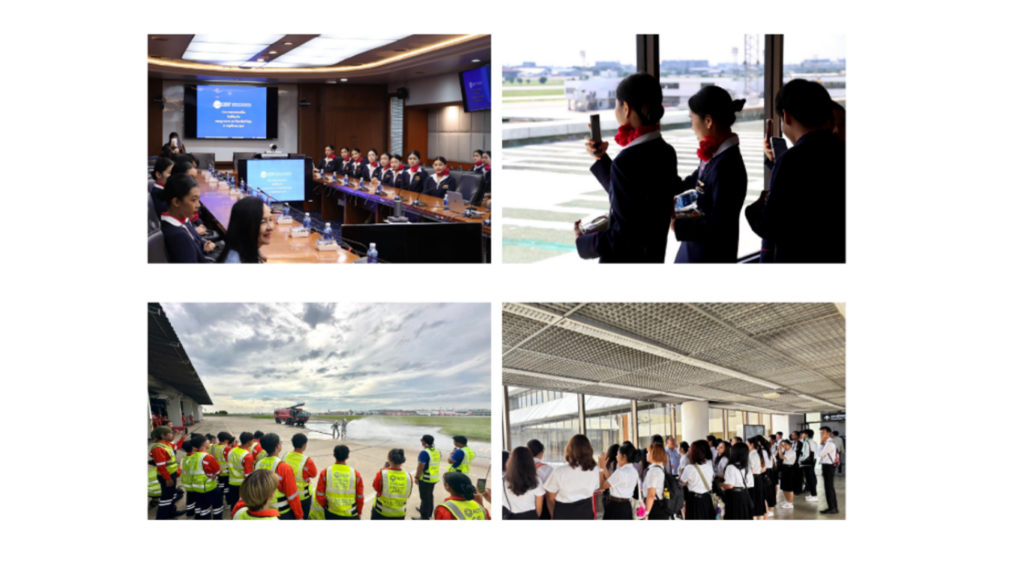
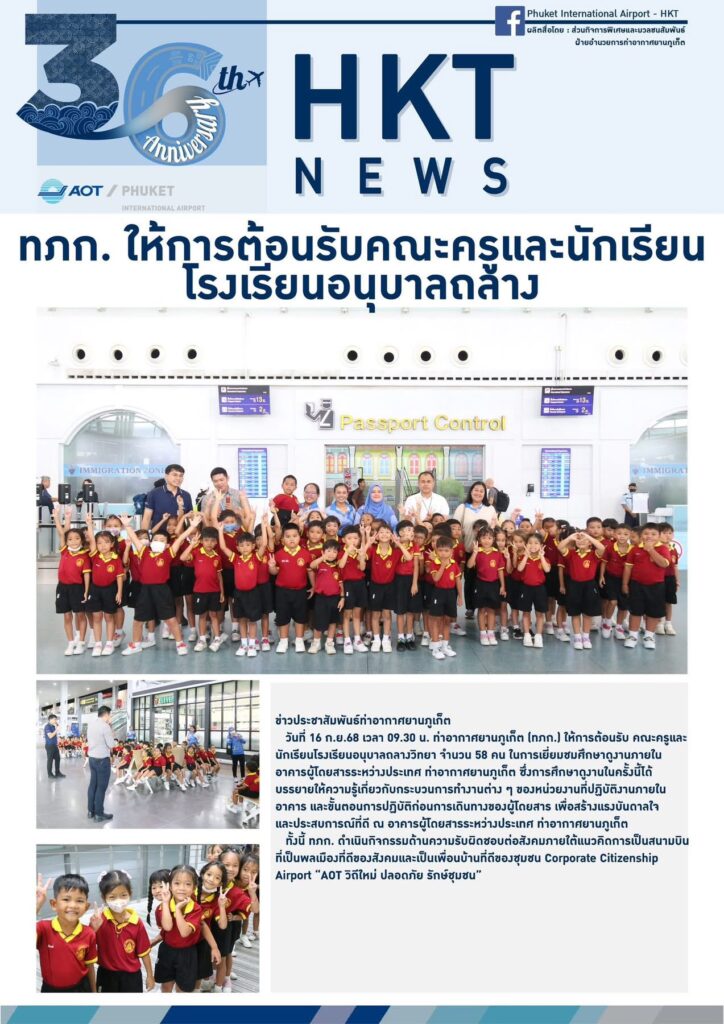
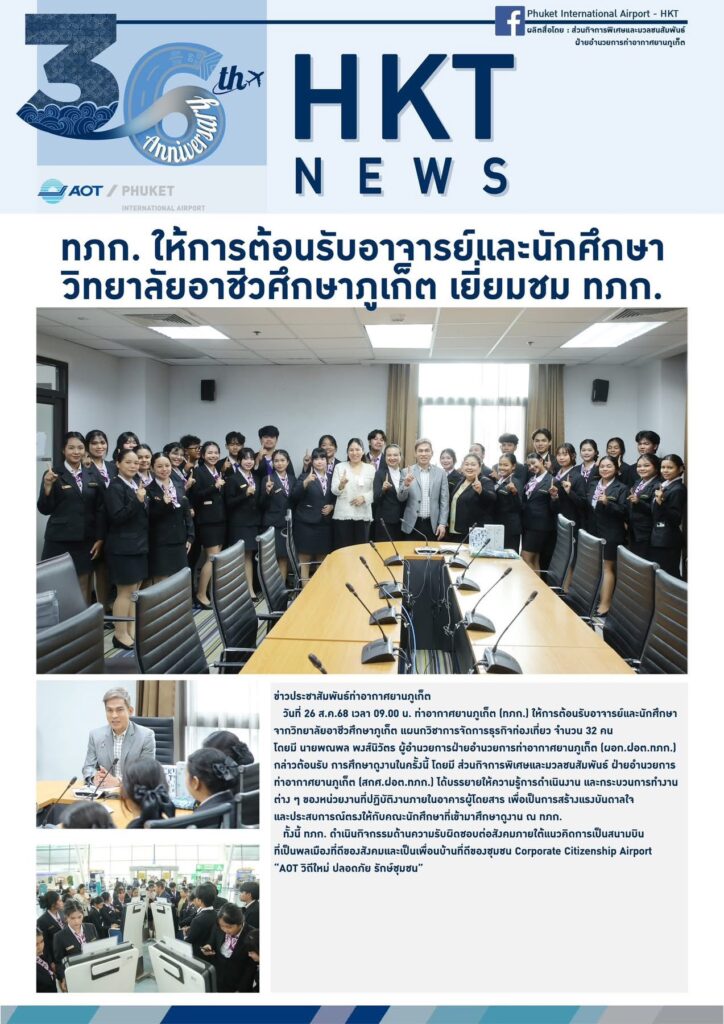
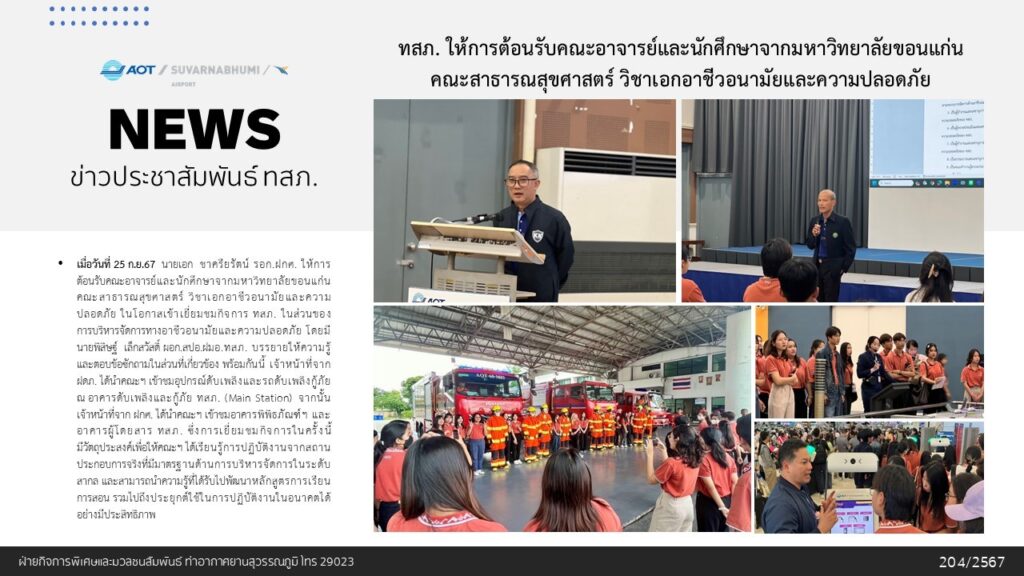
Example of a Site Visit Program
Employee Engagement in Social Responsibility Activities
Employee engagement in social responsibility initiatives is a key driver of AOT’s long-term success in implementing community-focused programs and activities. AOT promotes staff participation through two main approaches:
- Employee Volunteer Programs: AOT encourages employee involvement in various social responsibility activities by inviting participation through internal communication channels, such as the AOT Staff portal and the internal broadcasting system.
- Coordination by Lead Departments: The Corporate Social Responsibility Department and the Special Affairs and Community Relations units at all six airports serve as the key coordinating bodies. These departments are responsible for recruiting and organizing employee volunteers, coordinating with external organizations, and continuously promoting diverse and meaningful social activities that foster sustained employee participation.
Conducting Local Community Impact Assessment
| AOT’s Community Engagement, Impact Assessment, and Social Contribution Implementation | |
|---|---|
|
|
83% |
|
|
100% |
|
|
100% |
|
|
100% |
Remark: The majority of AOT’s airports are designated as airport expansion areas required to prepare and report Environmental Impact Assessment (EIA) and EIA Monitoring Reports under applicable environmental and health protection regulations. However, some airports are not obligated to conduct an EIA due to the nature of their operations and are exempt under the Enhancement and Conservation of National Environmental Quality Act B.E. 2535 (1992).
Charitable Contributions & Sponsorship
AOT supports social contribution initiatives through various means, including financial contributions, approval of employee working hours for participation in social activities, donation of goods or services, and expenses related to community relations management. These initiatives are categorized into three types: charitable donations (non-profit-driven), community investments (for public benefit), and commercial social activities. The classification follows the internationally recognized Business for Societal Impact (B4SI) framework. AOT discloses the proportion and monetary value of such contributions in its Sustainability Report on an annual basis.
| Fiscal year 2024 | |
|---|---|
| AOT’s Social Contribution Value | THB 10,476,146.77 |
| Project | Social Return on Investment (SROI) |
|---|---|
| Phuket Airport Loves the Beach Project | 0.83 : 1 |
| Phuket Airport Loves the Mangrove Project |
Regarding the performance of the Phuket International Airport pilot project, the Social Return on Investment (SROI) was valued at 0.83 : 1 (0.83 Baht for every 1 Baht invested) over the past four years of operation (2022 – 2025). Although the SROI ratio is below 1, the analysis provides invaluable insights into the social and environmental impacts of the project. Consequently, AOT has utilized these evaluation results as critical data to continuously improve and enhance future operations, ensuring greater and more sustainable effectiveness.
Corporate Sustainable Development Initiatives
Airport Sustainability Initiatives
In 2025, AOT has established an operational plan consisting of community and social engagement projects across all six airports. These initiatives are strategically aligned with AOT’s Sustainable Development Master Plan, specifically under Strategy 3: Stakeholder Engagement, as detailed below:
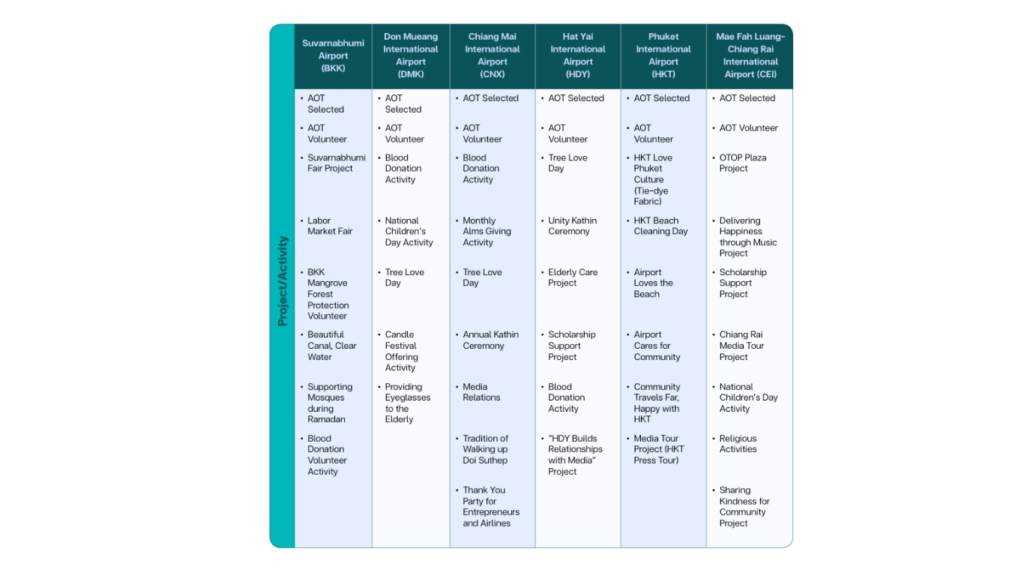
The social activities of all 6 airports aim to create shared value with the community sustainably.The focus is on promoting career creation and developing the grassroots economy, supporting local
entrepreneurs, and elevating people’s quality of life, alongside restoring the environment and livingwith the community in balance.
AOT also emphasizes building good relationships with communities, religious sites, and entrepreneurs, preserving Thai culture and traditions, and promoting public health and safety.
Opportunities are opened for employees to participate in social development continuously toconcretely build an organizational culture of community engagement (CSR Culture).
“First Aid: Everyday Safety Awareness” under the AOT Volunteer Project
Airports of Thailand (AOT) organized the “First Aid: Safety is Close to You” activity, focusing on providing both theoretical and practical knowledge regarding fire safety. This initiative leverages AOT’s specialized expertise and continuous training in emergency response.
AOT deployed volunteer personnel from the Firefighting and Rescue Department to provide training to over 1,000 students and residents in the communities surrounding its airports between May and September 2025. The activity was specifically designed to align with the International Civil Aviation Organization (ICAO) safety service guidelines, emphasizing the transfer of practical knowledge that can be applied in daily life.
This initiative was led by the Corporate Social Responsibility Department from the Head Office, in collaboration with the Special Affairs and Community Relations Departments across all six airports. These departments are responsible for the annual monitoring and evaluation of the project to ensure continuous development and to maximize long-term benefits for the surrounding communities.
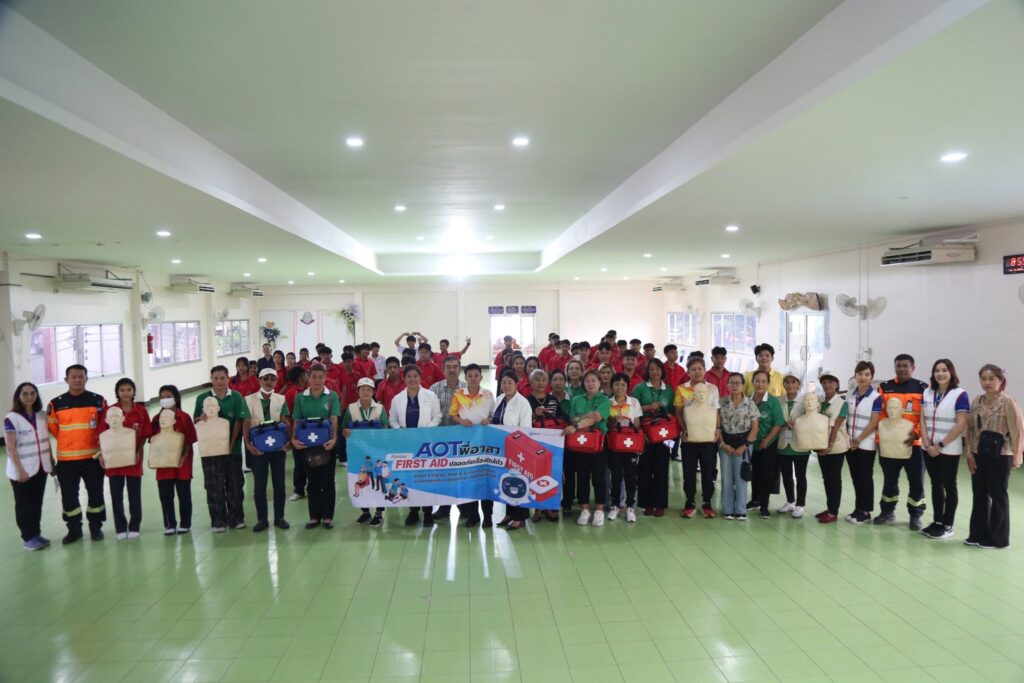
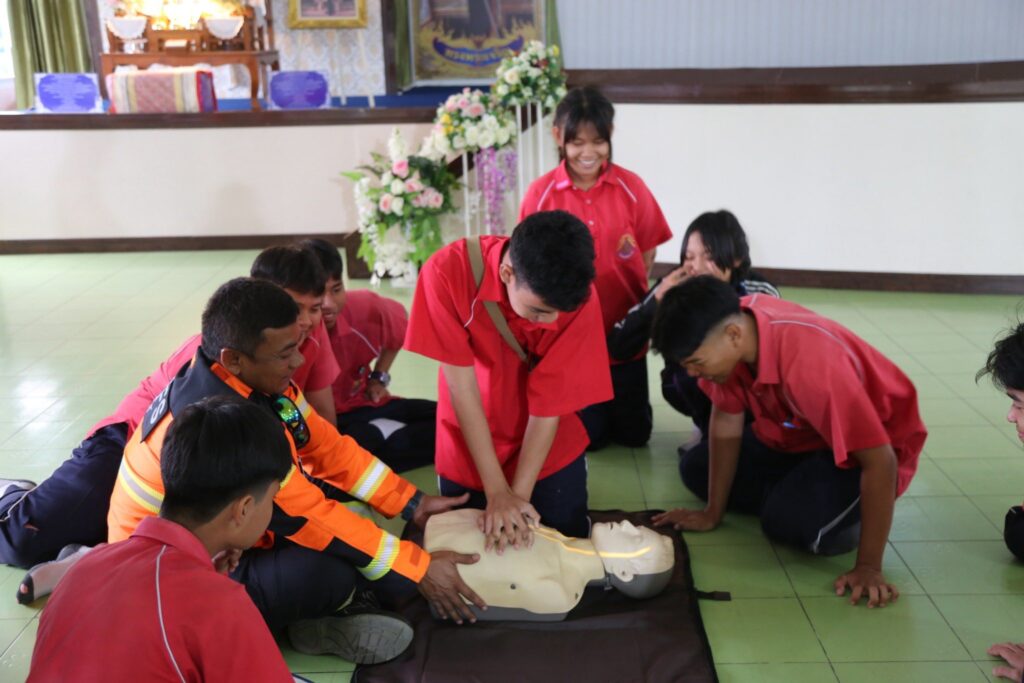
Example: Suvarnabhumi Airport
Key Outcomes:
- 95.4% of participants reported satisfaction with the activity and AOT instructors.
- Participants were able to apply basic first aid knowledge in daily life.
- Fire and rescue personnel had the opportunity to refresh and reinforce their emergency response procedures through continuous practice.
Outstanding Activities and Key Projects of AOT in FY2025
AOT Selected Project Framework
| Objectives | To conduct site visits to communities surrounding all 6 airports to monitor the progress of pilot projects, while comprehensively listening to community concerns and suggestions. This data will be analyzed to determine sustainable development paths for tourist attractions and community products. The visits also aim to co-establish guidelines for future development activities (2026) and analyze activities to define Social Return on Investment (SROI) indicators, preparing for systematic social impact assessments in the future. |
|---|---|
| Alignment with AOT Corporate Plan |
SO4: Lead Changes toward Sustainability Strategy 6: Striving to become socially and environmentally friendly airports. |
| Project/Activity Details |
Conducted site visits to 6 airports in collaboration with sustainability consulting firms to monitor ERM operations. This included organizing a workshop with pilot community representatives under the topic "Creative Path to Environmental Sustainability #1," focusing on development in the following dimensions:
|
| Lessons Learned from the Project |
AOT has gained key lessons to improve project efficiency as follows:
|
| Benefits Gained by AOT from the Project/Activity |
Relationship Building and Trust
|
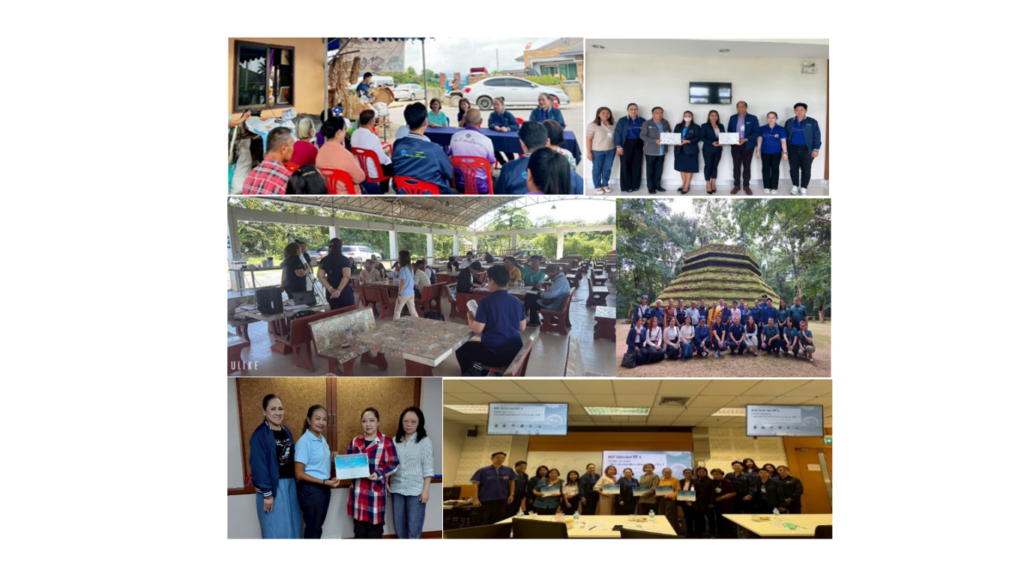
The Social Corporate Affairs Department, in collaboration with the Special Affairs and Community Relations Departments of all six airports, is committed to driving the ‘Sustainable Tourist Attractions and Community Products Promotion Project (AOT Selected).’ This initiative aims to support sustainable tourism and local merchandise by selecting standout attractions and products from communities surrounding the airports. AOT provides essential knowledge for development and quality enhancement to meet market standards, thereby generating income and boosting local economic potential. Furthermore, AOT provides budgetary support and leverages its diverse communication channels for public relations to enhance sustainable market opportunities for the communities.
Phuket Airport Beach Care Project and Phuket Airport Mangrove Forest Care Project: Social Return on Investment (SROI) Analysis
| Objectives | To conserve and restore coastal ecosystems in Phuket through continuous activities, including beach cleaning at Mai Khao Beach and mangrove reforestation. The project aims to raise environmental awareness and promote participation among AOT personnel and local communities. By utilizing Social Return on Investment (SROI) analysis, the project measures and evaluates social, economic, and environmental impacts, using the results to continuously develop the project and scale it to other AOT airports in the future. |
|---|---|
| Alignment with AOT Corporate Plan |
SO4: Lead Changes toward Sustainability Strategy 6: Striving to become socially and environmentally friendly airports. |
| Project/Activity Details |
AOT has implemented the Phuket Airport Beach Care and Mangrove Forest Care projects (2022-2025) as follows:
SROI Analysis Results:
The pilot project assessment at Phuket Airport revealed a Social Return on Investment (SROI) value of 0.83 : 1 (0.83 THB for every 1 THB invested). Although the value is less than 1, it reflects valuable insights for understanding the actual impact. Project Development Guidelines
|
| Number of Participants |
Total cumulative participants: 3,771 people, categorized as:
|
| Benefits Gained by AOT from the Project/Activity |
|
Suvarnabhumi Go Green Project 2025
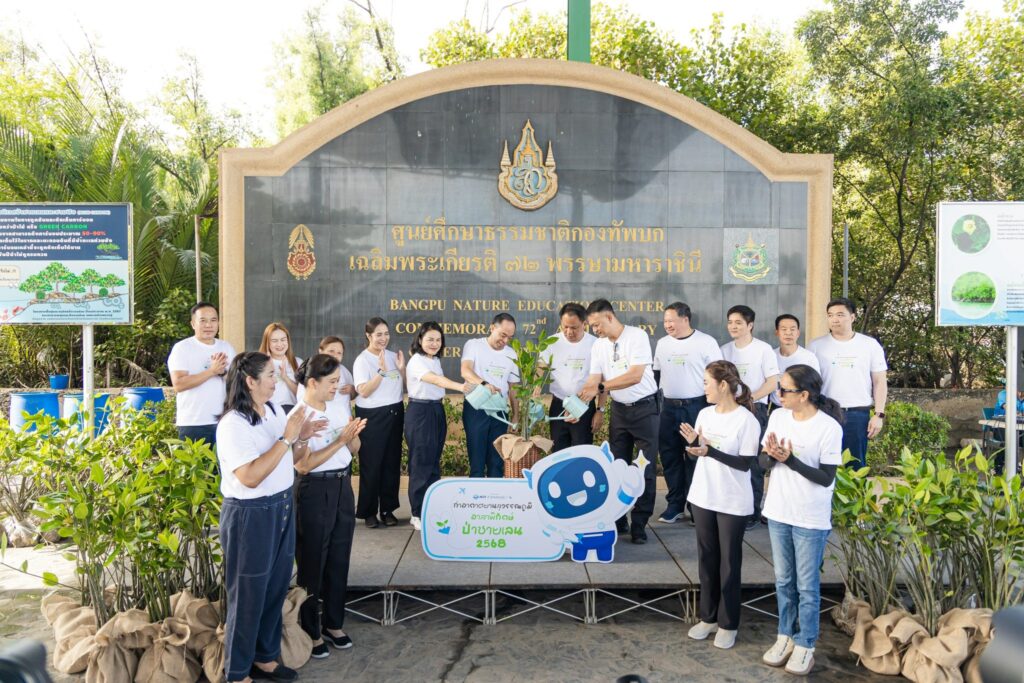
Suvarnabhumi Airport organized the “Suvarnabhumi Go Green 2025” project on September 5, 2025, at the Army Nature Education Center in Samut Prakan Province. Led by executives and staff, more than 200 participants, including local youth, joined forces to plant 9,999 mangrove trees to restore the coastal ecosystem and return natural fertility to the community. The primary objectives were to cultivate environmental awareness among employees and the younger generation, while strengthening positive relationships with communities surrounding the airport.
Mangrove reforestation does more than just prevent coastal erosion; it plays a vital role in carbon sequestration, absorbing carbon dioxide and greenhouse gases to mitigate global warming. Furthermore, these mangroves serve as essential breeding grounds for marine life, maintaining ecological balance. This initiative reflects Suvarnabhumi Airport’s commitment to its “Green Airport” strategy, driving toward Net Zero greenhouse gas emissions and supporting sustainable development through a stakeholder engagement framework.
The project’s success is evidenced by its results, with 88% of participants reporting a high level of satisfaction. The planted trees will receive ongoing care to ensure they grow into a lush, sustainable mangrove forest for the future.
Employee Engagement Results in Corporate Social Responsibility (CSR) Activities
To strengthen corporate culture and foster awareness and engagement between AOT and local communities, AOT consistently supports employee participation in social and community activities every year. Employees are given opportunities to participate in volunteer programs and community development initiatives within the areas surrounding the airports.